The Heart of the System: How to Accurately Select a Carbon Steel Centrifugal Fan for an Air Pollution Control System
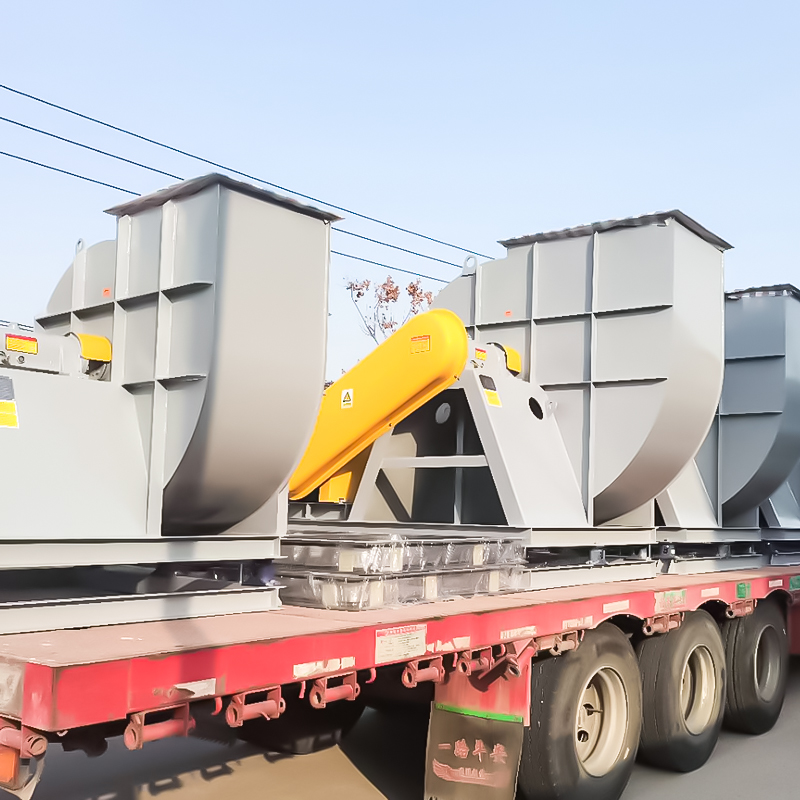
In any industrial air pollution control system, the fan functions as the critical heart, responsible for moving contaminated air through a series of treatment processes. Selecting the right unit is therefore not a mere purchasing decision, but a foundational engineering task that dictates the entire system's performance, efficiency, and compliance. A Carbon steel centrifugal fan is a common choice due to its robustness and cost-effectiveness, but its selection must be precise. An undersized fan will fail to achieve the required flow rate, rendering the entire system ineffective. An oversized fan will lead to wasted energy, excessive noise, and higher operational costs. Therefore, a systematic approach to selection, grounded in a thorough understanding of system dynamics and fan performance, is essential for any successful project.
- Understanding System Resistance - The primary job of the fan is to overcome the total resistance of the system. This resistance, or pressure drop, is the cumulative friction and turbulence caused by air moving through ductwork, elbows, dampers, and, most significantly, the pollution control equipment itself, such as scrubbers, filters, and thermal oxidizers.
- The Importance of a Safety Margin - Real-world conditions can differ from design specifications. Dust accumulation in ducts, filter loading, or unforeseen bends can increase system resistance over time. A professional selection process always includes a safety margin (typically 10-15%) on the calculated pressure to ensure the fan can maintain performance under less-than-ideal conditions.
- Integrating Fan Selection into System Design - The fan cannot be selected in a vacuum. Its performance is intrinsically linked to the design of the entire air handling system. This is why a holistic approach, where the fan is considered an integral part of the system from the very beginning, is crucial for achieving optimal results.
Key Technical Parameters for Fan Selection
To make an informed decision, one must move beyond brand names and focus on quantifiable performance data. The following table outlines the critical parameters that define a fan's suitability for a specific application.
Core Technical Parameters of a Carbon Steel Centrifugal Fan
| Parameter Category |
Technical Parameter |
Description and Importance |
| Performance |
Airflow Rate (m³/h) |
The volume of gas the fan moves per hour. This must meet or exceed the volumetric flow rate required by the process and the pollution control equipment. |
|
Total Pressure |
The total energy increase imparted to the gas stream. It must be high enough to overcome the total static pressure of the entire system at the design flow rate. |
|
Rotational Speed (RPM) |
The speed at which the impeller rotates. It directly influences airflow, pressure, and power. It can be adjusted using variable frequency drives (VFDs) for fine-tuning. |
|
Power (kW) |
The power required by the motor to drive the fan. The selected motor power must be sufficient to handle the peak operating conditions. |
| Structural |
Impeller Type |
Types include forward-curved, backward-inclined/curved, and radial. Backward-inclined impellers are most common for industrial applications due to their high efficiency and non-overloading power characteristics. |
|
Casing Material |
Carbon steel is standard for general use. For corrosive environments, it can be coated with epoxy or galvanized, or fabricated from stainless steel. |
| Motor & Drive |
Motor Protection (IP Rating) |
For example, IP55 ensures protection against dust ingress and low-pressure water jets, which is essential for harsh industrial environments. |
|
Drive Type |
Options include direct drive (simpler, compact) and belt drive (allows for speed adjustment). The choice depends on the application's flexibility and efficiency requirements. |
The Role of a System Integrator in Fan Selection
Selecting the correct Carbon steel centrifugal fan is a complex task that underscores the value of working with a full-service provider. A company that integrates scientific research, design, manufacturing, installation, and after-sales service possesses the holistic understanding necessary for optimal system performance. They don't just sell a fan; they engineer a solution.
- Expertise in System Design - A qualified provider will have the design capabilities, such as the "Zhejiang Province Environmental Pollution Control Special Design Class B" qualification, to accurately calculate system resistance and specify a fan that provides perfectly matched performance.
- Quality Assurance - By controlling the entire process from design to manufacturing under an ISO9001 certified quality management system, a provider ensures that the fan delivered meets the exact specifications required for reliable, long-term operation.
- Comprehensive Service - The relationship doesn't end with the sale. A provider offering installation, commissioning, and after-sales support ensures the fan is integrated correctly into the system and operates at peak efficiency throughout its lifecycle, providing true peace of mind for the end-user.
A Collaborative Approach to Success
Ultimately, the successful selection of a Carbon steel centrifugal fan is a collaborative effort. It requires the client to provide accurate process data and the system supplier to apply deep engineering expertise. Companies like Hangzhou Lvran Environmental Protection Group Co., Ltd., with their extensive R&D background and numerous patents, embody this collaborative spirit. They leverage their technical know-how to ensure that the "heart" of your air pollution control system is not just functional, but optimized for efficiency, reliability, and long-term value.
FAQ
How do I determine the correct fan size for my application?
Determining the correct fan size is a two-step process. First, you must establish your required Airflow Rate (m³/h), which is typically dictated by your process or the capacity of your pollution control equipment. Second, you must calculate the Total Pressure (Pa) of your entire system, which is the sum of all pressure drops from ducts, fittings, filters, and other equipment at that required airflow. It is highly recommended to work with a qualified engineer or a system integrator who can perform these calculations accurately and recommend a fan that meets these specific performance points with an appropriate safety margin.
What is the difference between a forward-curved and a backward-inclined centrifugal fan?
The main difference lies in the blade orientation and the resulting performance characteristics. A forward-curved fan has blades that curve in the direction of rotation. It is designed to move large volumes of air at low pressure, but its efficiency is lower, and its power consumption increases continuously with airflow. A backward-inclined fan has blades that lean away from the direction of rotation. It is more efficient, especially at higher pressures, and has a non-overloading power characteristic, meaning its power draw peaks near its highest efficiency point and then decreases. For most industrial air pollution control applications, the backward-inclined fan is preferred for its superior efficiency and stable power draw.
Can a standard Carbon steel centrifugal fan be used for corrosive gases?
No, a standard carbon steel fan should not be used for highly corrosive gases without protection. While carbon steel is strong and economical, it is susceptible to corrosion from acids, alkalis, and other corrosive agents. For such applications, you must specify a fan with protective measures. These can include coating the internal surfaces of the fan with a corrosion-resistant epoxy, using hot-dip galvanizing, or, for the most aggressive environments, fabricating the entire fan from a more resistant material like stainless steel (e.g., 304 or 316L).
What is the significance of fan efficiency, and how does it affect my costs?
Fan efficiency is a measure of how effectively the fan converts the electrical energy from its motor into useful air energy (airflow and pressure). It is a critical factor in your long-term operational costs. A higher-efficiency fan will require less electricity to perform the same job as a lower-efficiency one. Over the lifespan of a fan, which can be many years of continuous operation, even a small percentage difference in efficiency can result in thousands of dollars in energy savings. Therefore, investing in a more efficient fan upfront often yields a significant return on investment through reduced electricity bills.
What kind of maintenance is required for a Carbon steel centrifugal fan?
Regular maintenance is key to ensuring a long and reliable service life. The primary maintenance tasks include: 1) Bearing Lubrication: Regularly checking and greasing the motor and fan bearings according to the manufacturer's schedule. 2) Belt Inspection: For belt-driven fans, checking belt tension and condition for wear and tear. 3) Cleaning: Periodically inspecting and cleaning the impeller and housing to remove any dust or material buildup, which can cause imbalance and reduce performance. 4) Vibration Monitoring: Routinely checking for excessive vibration, which can indicate issues with alignment, bearing wear, or impeller damage.


 English
 русский
 عربى
عربى 中文简体
中文简体


 16
Mar,2026
16
Mar,2026

