English
 русский
 عربى
عربى 中文简体
中文简体How to Calculate the Service Life of Activated Carbon Adsorption Equipment for Industrial VOCs?
HOME / NEWS / Industry News / How to Calculate the Service Life of Activated Carbon Adsorption Equipment for Industrial VOCs?

Content
Accurately predicting the service life of your Activated Carbon Adsorption Equipment is not an academic exercise; it is a cornerstone of operational budgeting, maintenance planning, and environmental compliance. An unplanned shutdown due to prematurely exhausted carbon can lead to costly production stoppages and compliance violations. Conversely, replacing carbon too frequently wastes valuable material and inflates operational costs. For plant managers and process engineers, a precise calculation model transforms this critical component from a black-box consumable into a predictable and manageable asset. Understanding the interplay of factors like VOC mass loading, carbon capacity, and system design allows for optimized scheduling, accurate cost forecasting, and demonstrable compliance reporting. This guide provides an engineer-level methodology to move from estimation to precise calculation.
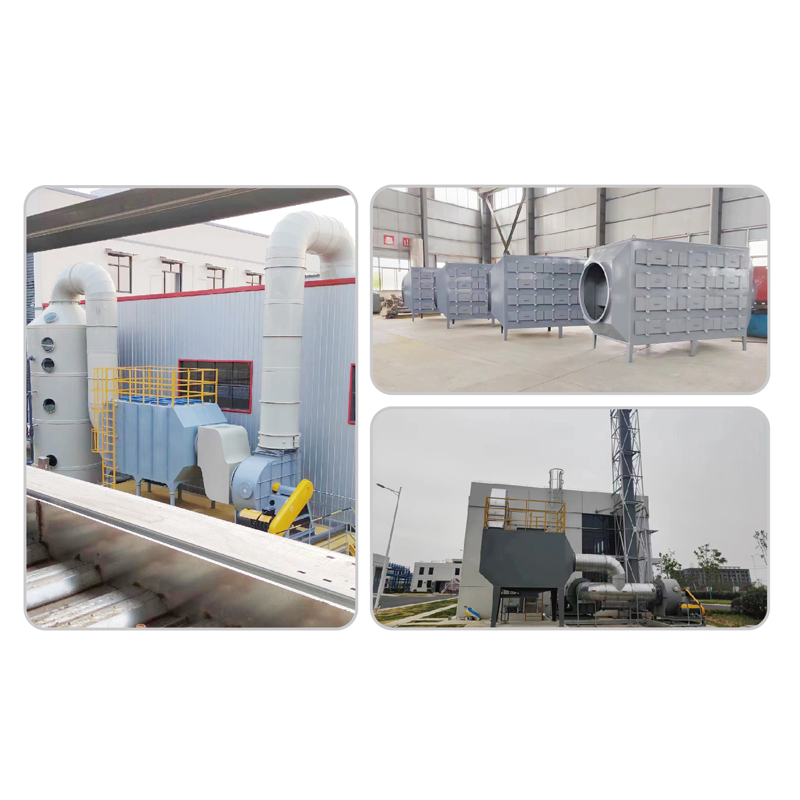
The process at the heart of this industrial activated carbon air filtration system is adsorption, distinctly different from absorption. In absorption, a substance is dissolved throughout a volume (like a sponge soaking up water). Adsorption is a surface-based phenomenon where VOC molecules are physically trapped within the vast network of microscopic pores on the carbon surface due to van der Waals forces. The enormous internal surface area of activated carbon—often exceeding 1000 square meters per gram—provides the capture sites. "Breakthrough" occurs when these sites become saturated, and VOC molecules begin to exit the bed. The shape and size distribution of these pores determine the carbon's affinity for different molecules, making selection based on the target volatile organic compounds removal profile crucial.
A robust service life calculation is entirely dependent on accurate input data. Assumptions here will propagate significant errors in the output.
This methodology provides a fundamental engineering estimate. For a detailed design, computational modeling incorporating multi-component isotherms and mass transfer zones is recommended.
Calculate the mass of VOCs entering the activated carbon adsorption unit for manufacturing per unit of time.
Formula: M_load (kg/h) = Concentration (mg/m³) * Airflow (m³/h) * (10^-6 kg/mg)
This is the effective capacity under operating conditions, not the ideal isotherm capacity. It is typically 25-50% of the equilibrium capacity from supplier data to account for the mass transfer zone and incomplete utilization. For a robust estimate, use 30% (0.3) of the equilibrium capacity (q_sat) for the primary VOC.
Formula: q_e (kg VOC/kg carbon) = q_sat * Utilization Factor (e.g., 0.3)
This gives the baseline operating time until saturation.
Formula: T (hours) = [W (kg carbon) * q_e (kg VOC/kg carbon)] / M_load (kg VOC/h)
The following table illustrates the calculation for a sample scenario:
| Parameter | Value | Unit | Notes |
| Primary VOC | Toluene | - | Common industrial solvent |
| Inlet Concentration | 500 | mg/m³ | Measured via PID |
| Airflow Rate (Q) | 10,000 | ACM/h | Actual cubic meters per hour |
| VOC Mass Load (M_load) | 5.0 | kg/h | = (500 * 10,000 * 10^-6) |
| Carbon Bed Weight (W) | 2,000 | kg | For a large custom designed solvent recovery plant |
| Toluene Equilibrium Capacity (q_sat) | 0.35 | kg/kg | From supplier isotherm at relevant RH/Temp |
| Utilization Factor | 0.3 | - | Conservative engineering factor |
| Dynamic Capacity (q_e) | 0.105 | kg/kg | = 0.35 * 0.3 |
| Theoretical Service Life (T) | 4,200 | hours | = (2000 * 0.105) / 5.0 ≈ 175 days @ 24/7 operation |
The theoretical life is a best-case scenario. Real-world factors necessitate a safety margin. A primary threat is the presence of high boiling point compounds or polymers that irreversibly adsorb (foul) the carbon, permanently reducing capacity. Particulate matter can physically block pores and create channeling, where airflow bypasses most of the carbon bed. This underscores the necessity of an effective pretreatment stage—such as a particulate filter, demister, or cooler—upstream of the adsorption unit. According to the latest report by the U.S. Environmental Protection Agency's Air Pollution Control Technology Fact Sheets, proper pretreatment is consistently identified as the most critical factor in maintaining the design efficiency and lifespan of fixed-bed adsorbers in industrial applications.
Source: U.S. EPA Air Pollution Control Technology Fact Sheet - Adsorption (Carbon) - epa.gov/air-emissions-control-technologies
Mastering the service life calculation empowers engineers to transition from reactive maintenance to proactive asset management for their VOC control systems. By gathering precise inlet data, applying conservative engineering factors, and accounting for real-world degradation mechanisms, you can establish a reliable replacement schedule. This approach minimizes media waste, maximizes operational uptime, and provides auditable data for environmental compliance. Ultimately, treating your Activated Carbon Adsorption Equipment as a calculated, integral part of the production process is key to achieving both economic and environmental performance goals.
There is no universal interval; it is entirely application-specific. For a high-concentration solvent recovery application in a printing facility, carbon may last 6-12 months. For a low-concentration, high-airflow odor control activated carbon scrubber at a wastewater plant, it might last 1-3 years. The only reliable way to determine frequency is through the detailed calculation described, followed by confirmed breakthrough monitoring.
On-site reactivation is generally not practical for most industrial facilities. Thermal reactivation requires specialized rotary kilns or multiple hearth furnaces operating at 700-900°C in a steam atmosphere to desorb VOCs and regenerate the pore structure. This is a capital-intensive process best handled by large, centralized, permitted reactivation facilities. For most users, off-site reactivation (which can recover 70-90% of the original capacity) is a more viable economic and operational alternative to landfilling virgin carbon, especially for large-volume custom designed solvent recovery plant operations.
The choice is driven by economics and concentration. Carbon adsorption is most cost-effective for recovering valuable solvents from a concentrated, low-to-medium airflow stream (typically >500 ppmv). Thermal oxidizers (TOs) are more suitable for destroying dilute, low-value VOCs in high airflow streams, or when the VOC mixture is complex and recovery is not economical. A simple rule of thumb: if the VOC concentration is high enough to support autothermal combustion (typically above 25% LEL, or ~10,000-15,000 ppmv for many solvents), a TO may be more efficient; below that, adsorption or concentration followed by oxidation may be optimal. An emerging trend noted in recent analyses from the Air & Waste Management Association (A&WMA) is the growing use of hybrid systems, where a concentrator (like a rotary concentrator using adsorption media) feeds a small oxidizer, offering high efficiency for dilute streams.
Source: Air & Waste Management Association - "VOC Control: Selecting the Right Technology" - awma.org
Yes, high relative humidity (RH > 60-70%) almost universally reduces the effective capacity of standard activated carbon for organic vapors. Water vapor molecules compete for adsorption sites in the pores. For applications with consistently high humidity, specially designed hydrophobic or polymer-impregnated carbons are available. More commonly, a best practice is to install a conditioning system, such as a cooling coil or desiccant wheel, upstream of the activated carbon adsorption unit for manufacturing to lower the dew point and reduce the moisture load on the carbon bed, protecting your investment and ensuring design performance.
Increasingly stringent global regulations, such as the U.S. EPA's National Emission Standards for Hazardous Air Pollutants (NESHAP) or the EU's Industrial Emissions Directive (IED), are pushing for higher Destruction/Removal Efficiency (DRE), often exceeding 95-99%. This places greater emphasis on precise system design, reliable monitoring, and thorough documentation. It makes accurate life-cycle calculation and preventative maintenance even more critical to demonstrate continuous compliance. Furthermore, regulations are increasingly addressing "fugitive" emissions from spent carbon handling, necessitating closed-loop change-out systems and proper management of spent media as a potentially hazardous waste.
Request for a call today