English
 русский
 عربى
عربى 中文简体
中文简体What is a Waste Gas Treatment Cyclone Tower and How Does It Solve Industrial Air Pollution?
HOME / NEWS / Industry News / What is a Waste Gas Treatment Cyclone Tower and How Does It Solve Industrial Air Pollution?

Content
Confronting industrial air pollution requires robust, reliable, and often ingenious technology. Among the most versatile workhorses in this field is the Waste Gas Treatment Cyclone Tower. This integrated system is far more than a simple scrubber; it is a sophisticated piece of engineering that combines the principles of inertial separation and chemical absorption to tackle a wide array of gaseous pollutants and particulates. From corrosive acid mists in electroplating shops to high-temperature, dust-laden fumes from metallurgical processes, the cyclone tower serves as a critical first line of defense or a complete treatment solution. Its effectiveness hinges on a elegant two-stage process within a single vessel: first, using centrifugal force to remove heavier dust particles, and second, employing a wet scrubbing stage to absorb and neutralize harmful gases. For industries ranging from chemical production to metal fabrication, understanding the capabilities, design nuances, and economic considerations of this technology—such as the specialized approach needed for acid mist removal cyclone tower design or the material science behind PP material cyclone tower corrosion resistance—is essential for achieving compliance, protecting downstream equipment, and optimizing operational costs. This article delves deep into the mechanics, applications, and strategic implementation of this vital air pollution control asset.

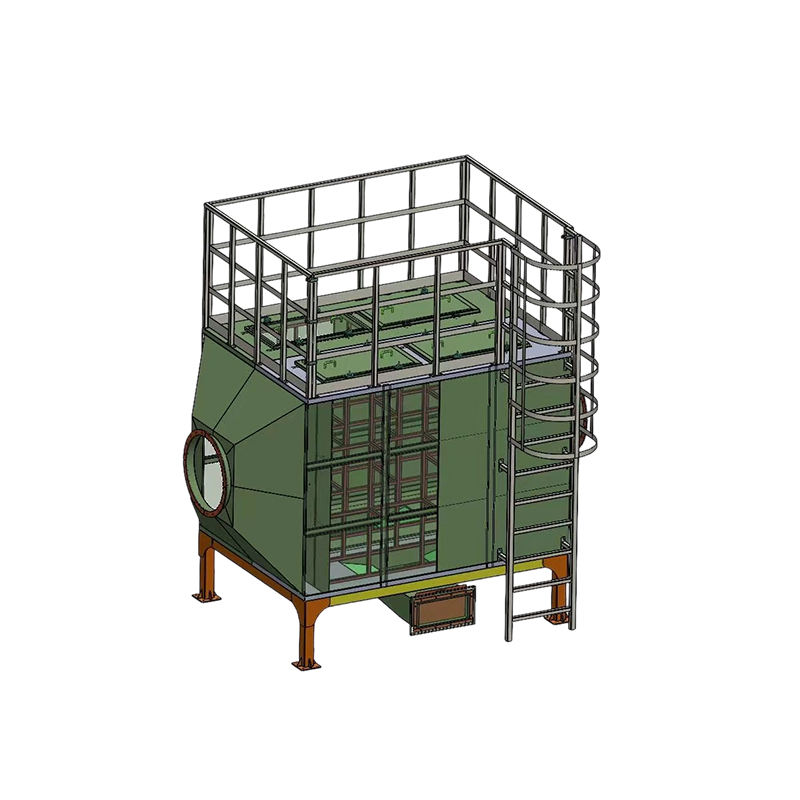
At its heart, a cyclone tower is a marvel of practical physics and chemical engineering, performing multiple purification steps in a compact footprint. The process begins as contaminated gas enters the lower section of the tower tangentially, creating a powerful, spiraling vortex. This cyclonic action is the first purification stage: inertial separation. Heavier particulate matter—dust, soot, metal fines—is flung outward by centrifugal force against the tower wall. Losing momentum, these particles slide down into a collection hopper or are captured in the quench tank at the bottom. The gas, now stripped of coarse particulates but still carrying gaseous pollutants, fine mists, and potentially heat, continues its upward path into the second stage: the wet scrubbing zone. Here, a network of nozzles showers the ascending gas with a carefully formulated scrubbing liquid. The intimate contact between the gas and liquid droplets, often enhanced by packing media or specialized trays, facilitates mass transfer. Acidic gases like HCl or SO2 are absorbed into an alkaline scrubbing solution (e.g., caustic soda), where they are neutralized into dissolved salts. Conversely, alkaline gases like ammonia are treated with an acidic solution. Finally, a demister or mist elimination layer at the top captures entrained moisture droplets, ensuring that only clean, treated gas exits the stack. The durability of this entire system, especially when handling aggressive chemicals, is critically dependent on construction materials, where the PP material cyclone tower corrosion resistance offers a compelling balance of cost and performance for many acidic environments.
The true value of the cyclone tower is revealed in its application-specific designs, which tailor its core principles to meet distinct industrial challenges. In the realm of acid mist removal cyclone tower design, the focus shifts to chemical kinetics and material survival. Here, the scrubbing chemistry must be meticulously controlled; maintaining the recirculation liquid at a stable, optimal pH is paramount to ensure continuous and complete neutralization of acids like hydrochloric, sulfuric, or nitric. The tower internals are designed to maximize gas-liquid contact time and surface area, often using packing resistant to acid attack. Material selection becomes non-negotiable, with polypropylene (PP) or fiberglass-reinforced plastic (FRP) being standard for their inherent resistance. Similarly, when deployed as a high temperature waste gas cooling cyclone scrubber, the tower's design incorporates a quench section. This often involves a primary spray of cool liquid directly into the hot gas inlet, providing rapid evaporative cooling to bring the gas temperature down to a range suitable for the main scrubbing section and downstream equipment, all while managing thermal expansion stresses on the tower structure. For complex environments like a cyclone spray tower for chemical plant fume extraction, the tower must handle variable and mixed streams of particulates, vapors, and mists. Its robustness and relatively low susceptibility to clogging compared to packed beds make it a preferred choice. Safety features, such as explosion vents for handling flammable vapors and leak-proof construction, are integrated to meet the stringent requirements of chemical processing facilities.
| Target Pollutant | Recommended Scrubbing Liquid | Chemical Reaction / Principle | Key Design Consideration |
| Hydrochloric Acid (HCl) Mist | Caustic Soda (NaOH) | Neutralization: HCl + NaOH → NaCl + H2O | pH control (maintain alkaline), PP material for corrosion resistance. |
| Sulfur Dioxide (SO2) | Caustic Soda or Lime Slurry | Neutralization, forming sulfites/sulfates | Potential for scaling; requires blowdown and slurry management. |
| Ammonia (NH3) | Dilute Sulfuric Acid (H2SO4) | Neutralization: 2NH3 + H2SO4 → (NH4)2SO4 | Control acid concentration to avoid over-dosing and mist generation. |
| Particulate Matter (Dust) | Water (often with wetting agents) | Impaction and interception | Optimize droplet size for target particle diameter; manage sludge. |
| High-Temperature Gas (Cooling) | Water | Evaporative cooling | Sufficient liquid volume and nozzle design for effective quench; thermal shock resistance. |
A thorough understanding of the financial implications is crucial for any capital project. The cost of industrial cyclone tower installation is not a single figure but a sum of interconnected factors. Capital Expenditure (CAPEX) is driven primarily by the tower's size (dictated by air volume and required contact time), the material of construction (with PP or FRP offering a cost-effective, corrosion-resistant option compared to high-grade stainless steels), and the complexity of ancillary systems—such as advanced pH control loops, automated chemical dosing, sludge removal mechanisms, and integrated fan packages. However, a savvy evaluation looks beyond initial price to the Total Cost of Ownership (TCO). This is where operational decisions have a massive impact. For instance, selecting a tower with superior PP material cyclone tower corrosion resistance might carry a moderate premium over carbon steel but can dramatically reduce maintenance costs and unplanned downtime over a 15-year lifespan, offering a far lower TCO. Similarly, energy consumption, primarily from the system fan and recirculation pumps, constitutes a major portion of Operational Expenditure (OPEX). Intelligent design that minimizes system pressure drop and incorporates high-efficiency pumps with variable frequency drives (VFDs) can yield significant long-term savings, often paying back the initial investment in a few years through reduced electricity bills.
Specifying the right cyclone tower requires a methodical approach grounded in process data. The foundational parameters are the volumetric flow rate of the waste gas (in m³/hr or CFM) and its composition—including pollutant types, concentrations, temperature, and humidity. From this, engineers calculate the required removal efficiency to meet emission standards, which directly influences the size of the scrubbing section. The Empty Bed Velocity (EBV), or superficial gas velocity through the tower, is a critical design parameter; too high, and liquid will be entrained (carried over), too low, and the equipment becomes unnecessarily large and capital-intensive. The Liquid-to-Gas ratio (L/G) determines the volume of scrubbing liquid needed, impacting pump size and operational cost. Material selection is a parallel, equally critical decision. Engineers must create a matrix balancing chemical compatibility, temperature resistance, mechanical strength, and cost. For many acidic and moderate-temperature applications, the excellent chemical inertness and affordability of PP make it a top contender, justifying its focus in searches for durable solutions. Ultimately, a successful design is one where all these parameters are optimized not in isolation, but in harmony, resulting in a system that is effective, efficient, and economical to run.
| Material | Best Suited For | Temperature Limit | Key Advantage | Primary Limitation |
| Polypropylene (PP) | Broad acid and alkali resistance, cost-effective corrosion protection. | ~80-90°C (176-194°F) | Excellent chemical resistance, low cost, lightweight. | Lower temperature and UV resistance; can be brittle in cold. |
| Fiberglass (FRP) | Strong acids, chlorides, complex chemical streams. | ~95-120°C (203-248°F) | High strength-to-weight ratio, highly customizable, good corrosion profile. | Cost higher than PP; requires expert fabrication. |
| Stainless Steel 316L | High-temperature streams, certain organic vapors, where mechanical strength is paramount. | >400°C (752°F) with care | High mechanical strength and temperature tolerance. | Vulnerable to chlorides (pitting corrosion); highest material cost. |
| Carbon Steel (with Lining) | Abrasive particulate streams where corrosion is secondary. | Depends on lining | High abrasion resistance, structural strength. | Lining can fail; not for highly corrosive gases without intact lining. |
Yes, this dual-purpose functionality is one of the primary strengths of a well-designed Waste Gas Treatment Cyclone Tower. The tower is explicitly engineered with distinct zones to address each pollutant type sequentially. The lower cyclonic section is optimized for inertial separation, efficiently removing heavier dust and particulate matter (typically >5-10 microns) before the gas enters the scrubbing zone. This prevents the scrubbing section from becoming fouled with solids, which would reduce its gas absorption efficiency and increase maintenance. The upper scrubbing section, with its spray nozzles and often packing media, is then dedicated to the mass transfer process of absorbing and neutralizing acidic (or alkaline) gases. For streams with very fine dust (<1 micron), a pre-filter might still be recommended, but for many common industrial applications involving coarse dust and acid mists, a single, properly sized cyclone tower is a highly effective and economical solution.
The wastewater, or blowdown, from a cyclone tower is a saturated solution containing the neutralized salts (e.g., sodium chloride from HCl scrubbing) and any suspended solids from captured dust. It cannot be discharged directly. Management strategies form a crucial part of the overall system design. Common approaches include: 1) On-site Treatment: Adjusting pH and adding precipitants to remove heavy metals (if present), followed by clarification/filtration before discharge to sewer (with permission). 2) Evaporation: Using an evaporator to produce a clean water distillate for reuse and a reduced volume of concentrated brine or solid salt for disposal. 3) Off-site Disposal: Contracting a licensed hazardous waste hauler to collect and dispose of the spent liquor. The chosen method depends on local regulations, wastewater composition, volume, and the availability and cost of water. Factoring in this waste management cost is essential for an accurate assessment of the total operational expense.
Regular maintenance is vital for sustained performance and longevity. A standard schedule includes: Daily/Weekly: Checking and adjusting the pH of the recirculating scrubbing liquid; inspecting chemical feed tank levels; ensuring spray nozzles are not clogged (evidenced by uneven spray patterns); and monitoring pump pressures. Monthly/Quarterly: A more thorough inspection of nozzles and demister pads for fouling; checking for sediment buildup in the tank and scheduling sludge removal; and inspecting the integrity of the tower interior and packing for signs of wear or chemical degradation. Annually: A comprehensive shutdown inspection, potentially involving draining and cleaning the entire system, checking internal surfaces for corrosion/erosion, and calibrating all instrumentation (pH probes, flow meters). The robust design of these towers, especially when constructed with materials like PP for corrosion resistance, allows them to operate reliably for over a decade with this disciplined preventative maintenance.
Both are wet scrubbers, but they excel in different scenarios. A cyclone spray tower is generally more robust and forgiving. It handles gases with high dust loading well, as the open spray zone is less prone to clogging than dense packing. It often has a lower pressure drop, reducing fan energy costs. It's an excellent choice for simultaneous particulate removal and gas absorption, or as a quench cooler. A packed bed scrubber uses a tower filled with plastic or ceramic packing to create immense surface area for gas-liquid contact. This makes it exceptionally efficient for removing soluble gases from relatively clean gas streams, achieving very high removal efficiencies. However, it clogs easily with particulates or reaction precipitates. The choice boils down to the gas stream: cyclone towers are the versatile, rugged choice for "dirty," variable, or high-temperature streams, while packed beds are the precision tool for "clean" gases requiring ultra-high absorption.
Initiating a successful specification begins with gathering precise process data. This foundational information includes:
1) Exhaust Airflow Rate: The maximum and minimum volumetric flow (m³/h) from your process.
2) Gas Temperature and Composition: The inlet temperature and a detailed list of all pollutants (e.g., HCl at 150 mg/m³, dust at 200 mg/m³) and their concentrations.
3) Desired Outlet Concentration: The emission limits you must meet.
4) Space and Utility Constraints: Available footprint, access to water, drain, power, and chemical storage. With this data, an experienced air pollution control engineer can perform the necessary calculations for sizing, select appropriate materials (assessing options like the balance of performance and cost offered by PP material cyclone tower corrosion resistance), and provide a realistic budgetary estimate for both the cost of industrial cyclone tower installation and its ongoing operation. Engaging a provider early in the planning phase is the most reliable path to an optimized, cost-effective solution.
Request for a call today