Why Are TF Series Centrifugal Fans Critical for VOC Gas Treatment?
Overview
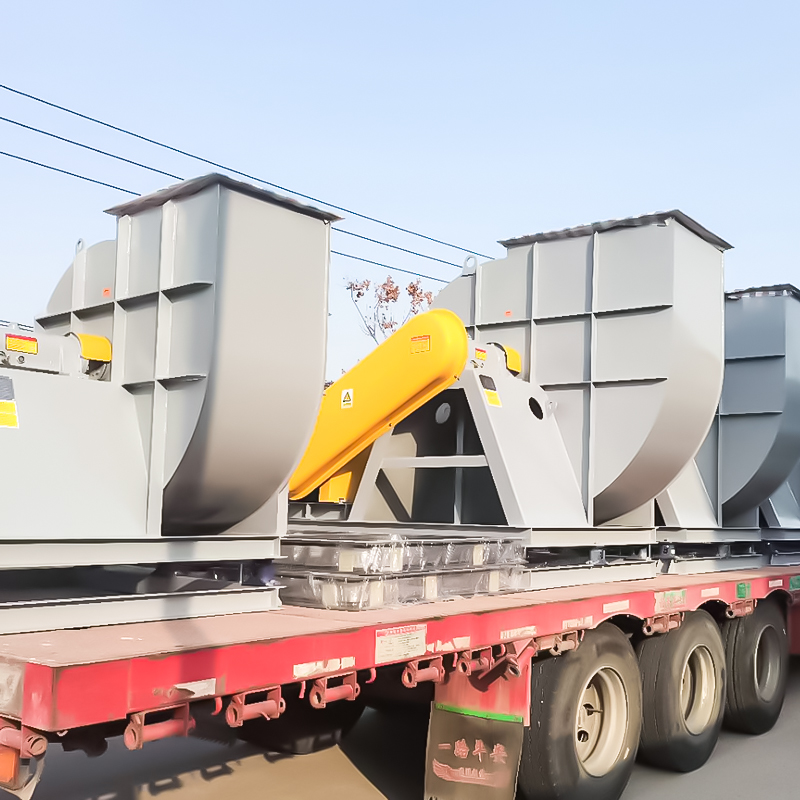
In waste-gas treatment, chemical processing, industrial ventilation, and high-performance purification equipment, centrifugal fans serve as the primary power source for gas transport and pressure conversion. Among them, TF series centrifugal fans are widely applied due to their efficiency, adaptability, and operational stability. By accelerating air through rotating impellers and discharging it radially, these fans convert kinetic energy into pressure, allowing stable airflow through complex duct systems.
As a key component of waste-gas treatment systems, such fans directly influence system resistance matching, energy efficiency, and long-term reliability. In China’s VOC gas-treatment field, Hangzhou Lvran Environmental Protection Group Co., Ltd. provides integrated R&D, design, manufacturing, installation, and after-sales services for waste-gas treatment systems. With core VOC treatment technology, multiple industry qualifications, and certifications under ISO9001, ISO14001, and ISO45001, the company ensures standardized production and reliable engineering performance.
Structural Features and Operating Logic of TF Series Centrifugal Fans
Aerodynamic design
TF series centrifugal fans typically employ optimized impeller profiles that maintain stable acceleration along the blades, improving static pressure efficiency and reducing aerodynamic loss. Forward-curved, backward-curved, or radial blade configurations are selected based on airflow volume, pressure demands, and the nature of the process gas, including dust-laden or corrosive air.
Scroll housing and airflow channel design
The fan housing is formed with an optimized volute profile that controls the diffusion ratio and mitigates secondary turbulence. Precision in the tongue clearance area is crucial for enhancing pressure stability and reducing noise.
Bearings and transmission components
High-strength bearing assemblies and low-vibration transmission structures enable stable high-speed operation. Dynamic balancing ensures that impellers maintain low vibration levels across long-term operations, reducing mechanical wear and improving service life.
Environmental adaptability
For humid, corrosive, or particulate-laden gases, TF series centrifugal fans can be manufactured with stainless steel, FRP, or special anticorrosive coatings, making them suitable for chemical processing, hazardous waste treatment, and VOC exhaust systems.
Functional Role in Waste-Gas Treatment Systems
In a typical VOC treatment process—collection, conveyance, pretreatment, and purification—TF series centrifugal fans perform several indispensable functions:
Primary gas-transport power
The fans deliver the required airflow and static pressure to carry waste gases from the emission source to adsorption, condensation, absorption, thermal oxidation, plasma treatment, or other purification units.
System resistance matching and energy optimization
Waste-gas systems often contain multiple components in series, creating complex resistance profiles. TF fans are selected to provide the necessary pressure across these systems while maintaining high efficiency across the operating curve.
Stable airflow for consistent purification
Continuous operating conditions demand stable airflow to ensure consistent purification efficiency. The structural and aerodynamic stability of TF series fans contributes to reliable system performance.
Key Industry Considerations: Performance, Efficiency, Noise, and Safety
High-efficiency operation
Modern centrifugal fan development emphasizes improved total pressure and static pressure efficiency. TF series centrifugal fans enhance these through optimized blade geometries, volute angles, and turbulence-control design.
Noise reduction
Fan noise originates from aerodynamics and mechanical components. Improved dynamic balance, optimized housing geometry, and flexible connectors help reduce noise emissions.
Operational stability and safety
For flammable or corrosive VOC environments, TF series fans can be equipped with explosion-proof motors, antistatic coatings, and corrosion-resistant materials to comply with industrial safety standards.
System integration
Fans must operate in coordination with ductwork, purification units, and control systems. Hangzhou Lvran Environmental Protection Group Co., Ltd. considers system-wide matching during engineering design to ensure the fan’s performance aligns with overall waste-gas treatment needs.
Key Logic for Selection and Application
Selecting TF series centrifugal fans requires balancing airflow, pressure, gas characteristics, noise limits, environmental constraints, and maintenance considerations:
- Airflow and pressure — ensuring the fan operates within its high-efficiency region.
- Gas characteristics — choosing suitable materials for VOC-laden, particulate, or corrosive air.
- Energy consumption — optimizing with variable-frequency drives and system-matched fan curves.
- Installation environment — accounting for vibration, available space, noise limits, and temperature.
- Maintenance and reliability — selecting designs that reduce operational downtime.
Industry Trends and Technological Evolution
As environmental regulations tighten and energy costs rise, TF series centrifugal fans are evolving in several key directions:
- Higher aerodynamic efficiency through CFD-based impeller and volute optimization.
- Intelligent monitoring, including vibration, flow, pressure, and temperature diagnostics.
- Advanced materials to improve corrosion resistance and extend service life.
- Enhanced noise-control technology for urban industrial facilities.
- System-level integration, where the fan is paired with VOC treatment equipment for optimized overall performance.
Hangzhou Lvran Environmental Protection Group Co., Ltd., with its comprehensive engineering capabilities, integrates fans into complex VOC treatment systems, ensuring that the TF series fans operate safely, stably, and efficiently under various industrial conditions.
Conclusion
TF series centrifugal fans play a critical role in industrial gas transport and waste-gas treatment systems, offering efficient airflow, stable operation, and broad adaptability. As industrial processes become more sophisticated and environmental standards more stringent, centrifugal fans will continue to advance in efficiency, intelligent monitoring, and material technology.


 English
 русский
 عربى
عربى 中文简体
中文简体


 16
Mar,2026
16
Mar,2026

