Waste Gas Treatment Cyclone Tower: The Versatile Workhorse for Air Pollution Control
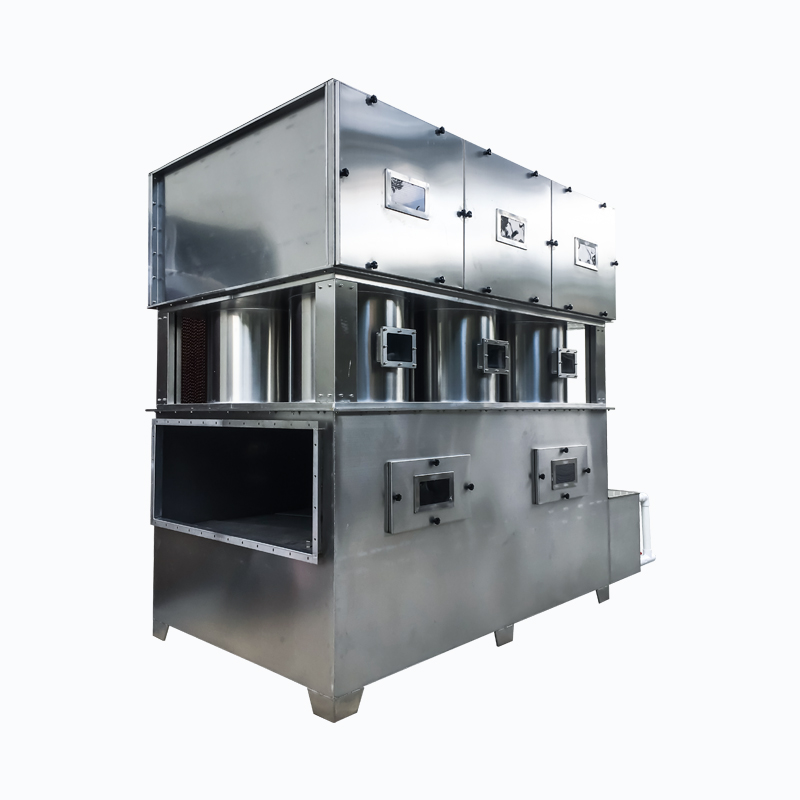
In the complex landscape of industrial air pollution control, effective and reliable pretreatment is often the cornerstone of a successful system. Among the most versatile and widely used solutions is the Waste Gas Treatment Cyclone Tower. This robust piece of equipment skillfully combines mechanical dust separation with chemical scrubbing in a single unit, making it an indispensable first line of defense for a multitude of industries. Engineered to handle challenging streams containing particulates, heat, and corrosive acidic or alkaline mists, the cyclone tower prepares exhaust gases for final treatment or, in many cases, achieves compliance on its own. For comprehensive environmental solution providers like Hangzhou Lvran Environmental Protection Group Co., Ltd., which integrates R&D, design, and manufacturing, mastering the design and optimization of these towers is fundamental to delivering turnkey systems that are not only effective but also cost-efficient and durable over the long term.
| Core Product |
Waste Gas Treatment Cyclone Tower |
| Core Functions |
Pre-dedusting, Gas Cooling, Neutralization/Absorption of Acidic/Alkaline Gases |
| Working Principle |
Centrifugal force for particulate separation, followed by gas absorption via scrubbing liquid |
| Core Structure |
Tower Body, Cyclone Plates/Packing Layer, Spray System, Circulation Tank, Demister |
| Target Pollutants |
Dust-laden gases, Acid Mists (HCl, H2SO4), Alkaline Mists (NaOH, NH3), Hot Exhaust Gases |
| Key Technical Parameters |
Airflow (m³/h), Pressure Drop (Pa), Removal Efficiency (%), Scrubbing Liquid pH Control |
| Primary Advantages |
Simple Structure, Stable Operation, Moderate Pressure Drop, Dual Function, Easy Maintenance |
| Key Industries |
Chemical, Electroplating, Metallurgy, Pharmaceutical, Laboratories, Metal Surface Treatment, Incineration |
Principle and Performance: The Dual-Action Mechanism
The effectiveness of a cyclone tower lies in its clever two-stage process within a single vessel. Contaminated gas enters the tower tangentially at the bottom, creating a powerful cyclonic (spinning) motion as it rises. This is the first stage: inertial separation. Heavier dust and particulate matter are flung outward by centrifugal force against the tower wall, where they lose momentum, slide down, and are collected in a hopper or the bottom quench tank. This pre-cleaning step is crucial for protecting downstream equipment. The gas, now stripped of larger particles but still carrying gaseous pollutants and fine mists, continues upward to the second stage: wet scrubbing. Here, a network of nozzles showers the gas with a carefully formulated scrubbing liquid—typically an alkaline solution like caustic soda for acidic gases, or an acidic solution for alkaline gases. The intimate contact between the rising gas and the falling liquid droplets on specialized packing or cyclone plates facilitates mass transfer, where harmful gases like hydrochloric acid (HCl) or ammonia (NH3) are absorbed and neutralized into harmless salts dissolved in the water. A final demister layer captures entrained moisture droplets, allowing clean, treated gas to exit from the top.
- Simplicity Breeds Reliability: With no complex moving parts inside the tower, the design minimizes mechanical failure points, ensuring high operational availability crucial for continuous industrial processes.
- Inherent Cooling Effect: The scrubbing process naturally cools hot exhaust gases, often serving as a vital quench stage before thermal oxidizers (RTOs) or other temperature-sensitive downstream units.
- Material Science is Key: The choice of construction material—be it corrosion-resistant PP, durable FRP, or specialized alloys—directly dictates the tower's lifespan when handling aggressive chemical mists, a core consideration for any manufacturer.
Designing for Efficiency: Key Parameters and Customization
Moving beyond the basic principle, the actual performance of a cyclone tower is dictated by a precise set of design and operational parameters. The physical dimensions, particularly the tower's diameter-to-height ratio and the design of the internal components (cyclone plates or packing type), directly control the empty tower velocity. This velocity must be optimized: too high, and liquid is carried over (entrainment); too low, and separation/contact efficiency drops. The Liquid-to-Gas ratio (L/G) is another critical factor, balancing scrubbing effectiveness with water and chemical consumption. For acid mist treatment, maintaining the scrubbing recirculation tank at the optimal alkaline pH through automated dosing is essential for consistent high removal efficiency. A well-designed tower from an experienced provider will achieve high particulate removal for particles above 10 microns and absorption efficiencies exceeding 90-95% for target gases, all while maintaining a system pressure drop typically between 800 to 1500 Pa to keep fan energy costs manageable. Customization is paramount, as a one-size-fits-all approach fails in the diverse industrial landscape. Factors like the specific chemical composition of the exhaust, fluctuating airflow rates, available footprint, and local emission standards all necessitate a tailored engineering solution.
Typical Performance and Design Parameter Ranges
| Parameter |
Typical Range / Target |
Impact on Performance |
| Empty Tower Velocity |
1.0 - 2.5 m/s |
Governs particulate separation and gas-liquid contact time; core to sizing. |
| Liquid-to-Gas Ratio (L/G) |
0.5 - 3.0 L/m³ |
Higher ratios improve absorption but increase pump energy and water usage. |
| System Pressure Drop |
800 - 1500 Pa |
Directly impacts the required fan power and operating cost. |
| Acid Mist Removal Efficiency |
> 90 - 98% |
Dependent on pH control, L/G, and packing design. |
| Particulate Removal (>10μm) |
> 90% |
Primary function of the cyclonic inlet section. |
| Gas Temperature Reduction |
Can reduce by 30-80°C+ |
Function of inlet temperature and L/G ratio; critical for thermal protection. |
- Balance is Everything: The art of design lies in balancing these parameters to meet the required outlet concentration standards at the lowest possible lifetime cost (capital + operational).
- The Role of Modeling: Advanced providers use computational fluid dynamics (CFD) modeling to visualize flow patterns, dead zones, and droplet trajectories, optimizing the design before fabrication.
- Beyond the Tower: A complete system view includes the recirculation tank chemistry management, sludge removal mechanism, and integration with the plant's control system (PLC/DCS).
Strategic Integration: The Cyclone Tower in Complete Treatment Trains
The true power of a cyclone tower is often realized when it is strategically integrated as a component within a larger, multi-stage air pollution control system. It excels as a robust pretreatment unit. For complex waste streams containing volatile organic compounds (VOCs), the tower can remove particulates and corrosive mists that would foul or damage downstream, more sensitive, and expensive equipment like Regenerative Thermal Oxidizers (RTOs), Concentrators, or advanced filtration systems. By cooling the gas stream, it brings the temperature into the optimal operating range for subsequent biological scrubbers or activated carbon adsorbers. In such integrated systems, the cyclone tower's role is to condition the gas, ensuring the final polishing stage can operate at peak efficiency and longevity. System design must carefully consider the interplay of pressure drops, material compatibility across different units, and centralized control logic to manage the entire train as one cohesive unit, responding to variations in production load.
- Enabling Advanced Technologies: By providing a clean, cool, and non-corrosive gas stream, cyclone towers make the application of plasma, UV-oxidation, or catalytic oxidation technologies more viable and reliable.
- Waste Minimization: In systems where the scrubbing liquid becomes a waste stream, integrating the tower with an on-site wastewater treatment system or designing for closed-loop operation becomes a critical aspect of the overall environmental solution.
- Safety and Reliability: In integrated systems, the cyclone tower often acts as a safety buffer, preventing catastrophic failures in downstream units due to unexpected process upsets that release large amounts of particulates or corrosive agents.
FAQ
How do I determine the right size (capacity) of a cyclone tower for my factory?
Sizing a cyclone tower is a fundamental engineering task that requires specific data. The primary driver is the maximum exhaust gas volume flow rate, measured in cubic meters per hour (m³/h). This must be determined under worst-case operating conditions. Secondly, the inlet temperature and the chemical composition and concentration of pollutants (e.g., 200 mg/m³ of HCl mist, 100 mg/m³ of dust) are critical. The desired outlet emission concentration, dictated by local environmental regulations, sets the required removal efficiency. With these inputs, engineers perform calculations involving the allowable gas velocity inside the tower (to prevent liquid carryover) and the necessary mass transfer units for absorption. They also factor in future capacity expansions. It is highly recommended to consult with an experienced environmental equipment provider who can perform this sizing based on your specific data, often as part of a complimentary feasibility assessment, to ensure the system is neither undersized (failing compliance) nor oversized (wasting capital and operating cost).
What are the main maintenance requirements for a waste gas scrubber tower?
Regular maintenance is key to sustained performance. Daily/Weekly Checks: Monitor and adjust the pH of the recirculation scrubbing liquid to ensure effective neutralization; check chemical dosing tank levels; inspect spray nozzles for clogging (evidenced by uneven spray patterns); and monitor pump pressure. Monthly/Quarterly Tasks: Conduct a more thorough inspection of nozzle heads, clean the demister pad if accessible, and check for sediment buildup in the bottom tank, scheduling a sludge removal as needed. Annual Shutdown Maintenance: This is the most comprehensive. It involves draining and thoroughly cleaning the entire tank, inspecting internal packing or plates for fouling or degradation, checking the integrity of linings or FRP structures for corrosion, and calibrating all instrumentation (pH probes, flow meters). A well-maintained tower can operate reliably for over a decade, while neglect can lead to clogging, loss of efficiency, and premature failure.
Can a cyclone tower handle explosive or flammable dusts and gases?
Standard cyclone towers are not intrinsically safe for explosive atmospheres and require special engineering considerations if such hazards are present. For explosive dusts (e.g., metal powders, organic dust), the cyclonic action itself can generate static electricity, posing an ignition risk. Mitigation measures include constructing the tower from conductive or static-dissipative materials (like special carbon-filled plastics or grounded metals), ensuring all components are electrically bonded and grounded, and potentially incorporating explosion venting or suppression systems. For flammable gases or vapors mixed with air, the wet scrubbing environment can reduce risk by diluting and cooling, but the area classification and electrical equipment (pumps, sensors) must be rated for the specific hazardous zone (e.g., ATEX, IECEx). Any project involving potentially explosive atmospheres mandates a detailed hazard review and design by specialists to ensure compliance with safety standards like NFPA or ATEX directives.
What is the difference between a cyclone spray tower and a packed bed scrubber?
Both are wet scrubbers, but they differ in internal geometry and strength. A cyclone (or spray) tower primarily uses the cyclonic inlet for dust separation and open space with spray nozzles for gas absorption. It has lower pressure drop, is less prone to clogging from sticky or high-load particulates, and is excellent for simultaneous dust removal and gas absorption. A packed bed scrubber forces gas through a fixed bed of plastic or ceramic packing material, creating a vast surface area for gas-liquid contact. This makes it exceptionally efficient for purely gaseous pollutant removal but vulnerable to clogging (fouling) if significant dust or suspended solids are present. The choice hinges on the waste stream: a cyclone tower is the robust, all-rounder for dirty, dusty, and corrosive streams, while a packed bed is the precision tool for clean gas streams requiring ultra-high absorption efficiency of soluble gases.
How do I dispose of or treat the wastewater (blowdown) from the scrubbing process?
The spent scrubbing liquid, or blowdown, is a wastewater stream that contains the neutralized salts (e.g., sodium chloride from HCl scrubbing) and possibly heavy metals if present in the inlet gas. It cannot be discharged directly. Treatment options depend on volume and composition. For simpler salts, on-site pH neutralization and precipitation followed by sedimentation/filtration may be sufficient before discharge to a sewer (with permission). For streams with heavy metals, specialized precipitation chemistry is required. In water-scarce regions or for stringent discharge limits, evaporator/crystallizer systems can be used to recover clean water and solidify salts for hazardous or non-hazardous landfill disposal. The wastewater treatment strategy must be planned in parallel with the air pollution control system design to ensure a complete, compliant environmental solution. Providers offering integrated water and air treatment expertise are valuable partners for such projects.


 English
 русский
 عربى
عربى 中文简体
中文简体



 16
Mar,2026
16
Mar,2026

