Comprehensive Guide to Photochemical Oxidation Equipment
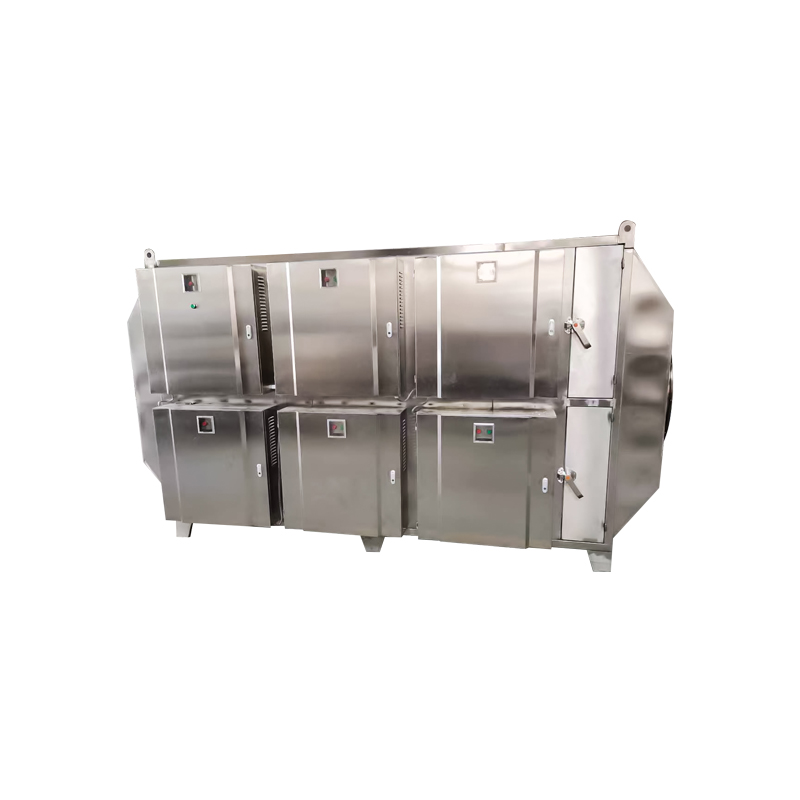
Photochemical oxidation equipment is a state-of-the-art solution for industrial waste gas treatment, designed to control volatile organic compounds (VOCs), odorous gases, and other harmful pollutants effectively. Hangzhou Lvran Environmental Protection Group Co., Ltd. specializes in designing and manufacturing high-efficiency photochemical oxidation systems that combine environmental compliance, energy efficiency, and operational reliability.
How Photochemical Oxidation Works
Photochemical oxidation employs ultraviolet (UV) light and a photocatalyst to trigger chemical reactions that decompose harmful organic compounds into harmless byproducts such as water and carbon dioxide. Unlike traditional thermal oxidation, this process operates at lower temperatures, saving energy and preventing secondary pollution. It is effective for a wide range of pollutants including formaldehyde, benzene, toluene, xylene, and other VOCs, making it ideal for chemical, pharmaceutical, food processing, electronics, and coating industries.
Core Features and Benefits
| Feature |
Benefit |
Application |
| UV Light & Photocatalyst |
Rapid decomposition of VOCs and odorous gases |
Chemical factories, pharmaceutical plants, paint shops |
| Compact Modular Design |
Space-saving installation and easy maintenance |
Small to large-scale industrial facilities |
| Energy-Efficient Operation |
Lower electricity consumption while maintaining high treatment efficiency |
Continuous emission control and regulatory compliance |
| Customizable System |
Flexible configurations for various production scales and gas compositions |
Industries with unique exhaust gas characteristics |
| Durable Materials |
Long service life and reduced maintenance costs |
Heavy-duty industrial applications |
| Intelligent Monitoring |
Real-time monitoring of system performance and pollutant removal rates |
Factories requiring automated process control |
| Low Noise Operation |
Minimizes operational disturbance and improves working environment |
Indoor industrial plants and laboratories |
| Non-Thermal Process |
Prevents formation of secondary pollutants and reduces energy usage |
Industries sensitive to heat-sensitive emissions |
Why Choose Lvran Photochemical Oxidation Systems?
- Over 30 utility model patents, numerous invention patents, and software copyrights ensure leading-edge technology.
- Collaborations with top Chinese universities, including the "Environmental Innovation R&D Center" and "Plasma Energy and Environmental New Technology R&D Center", for continuous innovation.
- ISO9001, ISO14001, and ISO45001 certified for international quality, environmental, and safety standards.
- Level 2 general contracting qualification for municipal projects and Class B special design qualification for environmental pollution control.
- Proven expertise in VOC gas treatment with high efficiency and reliability for various industries.
- Customizable design to meet specific industrial gas compositions and production requirements. Contact us for tailored solutions.
Frequently Asked Questions (FAQ)
- Q1: What pollutants can photochemical oxidation remove?
- A1: It effectively removes VOCs, odorous gases, formaldehyde, benzene, toluene, xylene, and other organic pollutants commonly found in industrial emissions.
- Q2: Is the system suitable for small or medium-sized factories?
- A2: Yes. Lvran's photochemical oxidation systems are modular and scalable, making them suitable for small, medium, and large industrial setups.
- Q3: How energy-efficient is photochemical oxidation?
- A3: Lvran systems optimize UV light usage and airflow, achieving high pollutant removal rates with lower electricity consumption compared to traditional thermal oxidation systems.
- Q4: What is the typical maintenance schedule?
- A4: Routine maintenance involves cleaning UV lamps and replacing photocatalysts every few years, depending on operating conditions.
- Q5: Can this equipment integrate with existing waste gas treatment systems?
- A5: Yes. Lvran engineers provide customized solutions to seamlessly integrate photochemical oxidation systems with your current ventilation and purification infrastructure.
- Q6: Which industries benefit most from this technology?
- A6: Chemical manufacturing, pharmaceutical production, food processing, electronics, and paint/coating facilities benefit significantly from photochemical oxidation systems.


 English
 русский
 عربى
عربى 中文简体
中文简体


 16
Mar,2026
16
Mar,2026

