Content
Aerodynamic Performance and Impeller Geometry Optimization
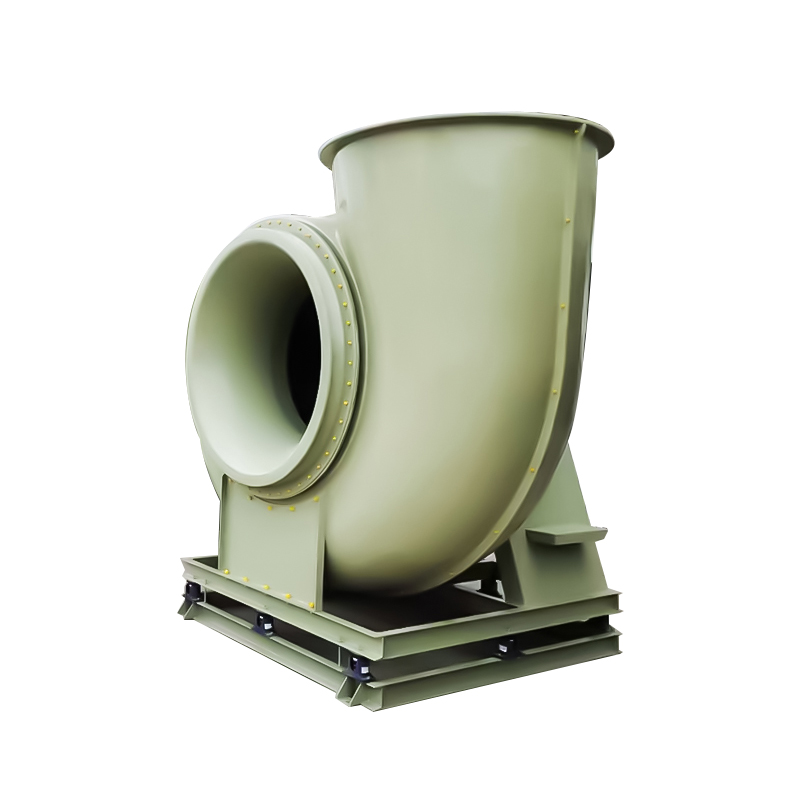
* Impact of Backward-Curved Impeller Geometry: In high-resistance HVAC duct networks, the selection of blade profiles is critical for energy efficiency. Engineers often analyze how backward-curved impeller geometry in commercial centrifugal fans optimizes static pressure efficiency compared to forward-curved designs. The backward-curved variant provides a non-overloading power characteristic, which is essential when the system resistance fluctuates. This geometry allows commercial centrifugal fans to maintain a total efficiency of 75% to 85% at the design duty point. * Dynamic Balance and Mechanical Reliability: To ensure long-term structural integrity, the impeller assembly must undergo precision balancing. Adhering to dynamic balance tolerances for centrifugal fans per ISO 21940 Grade G2.5 prevents localized tensile strength failure in the blade roots. This mechanical precision, combined with L10 bearing life standards for commercial fans exceeding 40,000 hours, ensures that commercial centrifugal fans operate with minimal vibration displacement even under 24/7 duty cycles. * Ra Surface Finish and Flow Friction: The Ra surface finish of centrifugal fan blades significantly influences skin friction losses. A controlled surface roughness of less than 3.2 microns minimizes the boundary layer thickness, facilitating laminar flow across the blade chord. This is a vital technical indicator for centrifugal fan airflow efficiency in large-capacity ventilation systems.
System Effect Factors and Inlet Clearance in Compact Installations
* Quantifying System Effect Factors (SEF): When commercial centrifugal fans are installed in compact mechanical rooms, the proximity of elbows or transitions to the fan inlet causes non-uniform velocity profiles. Engineers must evaluate system effect factors for commercial fans to compensate for the resulting pressure drop. Failure to maintain adequate inlet clearance requirements for centrifugal fans leads to "system effect" losses, where the fan fails to reach its published performance curve. * Inlet Clearance and Velocity Profile Uniformity: To minimize turbulence, a minimum distance of 0.75 to 1.0 times the inlet diameter must be maintained from any obstruction. Optimizing inlet clearance in compact mechanical rooms ensures that the air enters the eye of the impeller at a uniform velocity, preventing premature flow separation. This is the primary way to improve the energy efficiency of commercial centrifugal fans when spatial constraints limit duct straight runs. * Vibration Isolation and Acoustic Compliance: In noise-sensitive office environments, the acoustic compliance of commercial centrifugal fans is governed by the sound power level (Lw) parameters at the octave bands. Utilizing vibration isolation for commercial centrifugal fans with a spring deflection of 25mm to 50mm prevents structural-borne noise transmission through the building's floor slab.
Drive System Technology and Part-Load Efficiency
* Direct-Drive EC Motors vs Belt-Driven Systems: Modern HVAC designs are shifting toward direct-drive EC motors for commercial centrifugal fans due to the elimination of belt slippage losses (typically 2% to 5%). Commercial centrifugal fans equipped with EC motor part-load energy efficiency capabilities can modulate speed via 0-10V signals, maintaining high efficiency even when airflow requirements drop to 50% of peak capacity. * Static Pressure Efficiency for High-Resistance Networks: For high-resistance duct networks with commercial centrifugal fans, the static pressure efficiency must be verified via AMCA 210 testing. This ensures that the fan can overcome the cumulative pressure drop of filters, coils, and silencers without drifting into the unstable "stall" region of the fan curve. * Monitoring and Preventive Maintenance: Integrating sensors to monitor L10 bearing life standards and real-time vibration displacement allows for predictive maintenance of commercial centrifugal fans. This approach reduces the Total Cost of Ownership (TCO) by preventing catastrophic mechanical failures in critical building infrastructure.
| Performance Metric | Industrial Standard | Engineering Requirement |
| Dynamic Balance | ISO 21940 | Grade G2.5 |
| Bearing Life (L10) | ABMA Standard 9 | >= 40,000 Hours |
| Inlet Clearance | AMCA Publication 201 | > 0.75 x D (Inlet Diameter) |
| Surface Roughness (Ra) | ISO 4287 | <= 3.2 microns |
| Acoustic Testing | AMCA 300/301 | Verified Lw Octave Bands |
Technical FAQ
1. How much performance is lost due to poor inlet clearance? Inadequate inlet clearance requirements for centrifugal fans can cause a "System Effect" that reduces airflow by up to 30%. This occurs because the non-uniform air entry prevents the impeller blades from being fully loaded. 2. Why are backward-curved impellers preferred for commercial HVAC? Backward-curved impeller geometry in commercial centrifugal fans offers the highest static pressure efficiency and is "self-limiting," meaning the motor will not overload if the system resistance is lower than anticipated. 3. What is the advantage of an EC motor in commercial centrifugal fans? Direct-drive EC motors for commercial centrifugal fans offer superior part-load energy efficiency and eliminate the maintenance associated with belts and pulleys, such as tensioning and alignment. 4. What vibration standards should I specify for an office building? Specify dynamic balance tolerances for centrifugal fans at G2.5. Additionally, ensure the use of vibration isolation with high-efficiency neoprene or spring mounts to achieve acoustic compliance. 5. How do you measure the L10 life of a fan bearing? L10 bearing life standards for commercial fans represent the life that 90% of a group of identical bearings will achieve or exceed. It is calculated based on radial load, axial load, and operational RPM.
Technical References
* AMCA Publication 201: Fans and Systems - Understanding System Effect. * AMCA Standard 210: Laboratory Methods of Testing Fans for Aerodynamic Performance Rating. * ISO 21940-11: Mechanical vibration — Rotor balancing — Part 11: Procedures and tolerances for rotors with rigid behavior.

English
русский
عربى
中文简体