English
 русский
 عربى
عربى 中文简体
中文简体
Content
- 1 Understanding the Basics of Industrial Filtration
- 2 Technical Configuration and Design
- 3 Cleaning Mechanisms and Technology
- 4 Equipment Selection Strategy
- 5 Comprehensive Solutions from Lvran Group
- 6 FAQ
- 6.1 What is the lifespan of a baghouse filter bag material?
- 6.2 How does the cleaning process work in a reverse air baghouse?
- 6.3 Which is better for my shop: cartridge vs baghouse dust collector?
- 6.4 What factors are critical in baghouse dust collector design?
- 6.5 How does an industrial baghouse dust collector improve safety?
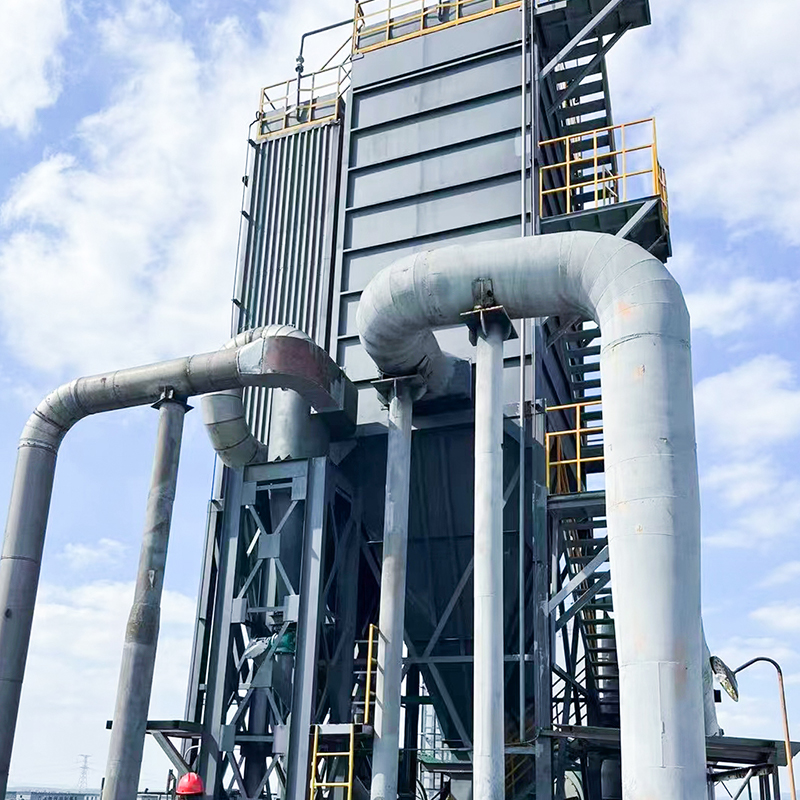
In the complex landscape of modern industrial manufacturing, maintaining air quality is not merely a regulatory requirement but a critical component of operational excellence and workforce safety. Among the various technologies available for particulate matter control, the Baghouse dust collector stands out as one of the most efficient and versatile solutions available today. These systems are designed to handle high volumes of dust-laden air, utilizing fabric filter bags to capture particles as small as sub-micron sizes with an efficiency often exceeding 99.9%. Whether the application involves woodworking, cement production, metalworking, or chemical processing, the ability to maintain a clean environment directly impacts product quality, equipment longevity, and regulatory compliance. The engineering behind these systems involves a sophisticated understanding of fluid dynamics, filtration media, and pulse-jet cleaning technology. As industries face increasingly stringent environmental standards, the demand for reliable, high-performance dust collection systems has surged. This is where the expertise of specialized manufacturers becomes invaluable. Hangzhou Lvran Environmental Protection Group Co., Ltd. is a waste gas treatment system service provider and equipment manufacturer integrating scientific research, design, manufacturing, installation and after-sales. The company was established in April 2011. It is a national high-tech enterprise, a Zhejiang science and technology enterprise, a Hangzhou high-tech industry, a district R&D center, and an AAA-level corporate credit rating unit. It has more than 30 utility model patents and a number of invention patents, software copyrights, and has long-term technical R&D cooperation with domestic universities.
Understanding the Basics of Industrial Filtration
The primary function of an industrial baghouse dust collector is to separate particulate matter from the process air stream before it is vented into the atmosphere. This process is essential for preventing respiratory diseases among workers and reducing the environmental footprint of industrial activities. Unlike simple cyclone separators that rely on centrifugal force, baghouses use porous filter media that trap dust while allowing clean air to pass through. The contaminated air enters the unit and passes through the fabric bags, where a dust cake forms on the surface, which actually aids in the filtration process. Over time, this dust cake accumulates and must be removed to maintain optimal airflow and pressure drop. This is achieved through various cleaning mechanisms such as shaking, reverse air, or pulse-jet cleaning. The choice of technology depends heavily on the specific characteristics of the dust, including its abrasiveness, temperature, and hygroscopic nature. Implementing the right system ensures compliance with emission limits and enhances the overall efficiency of the production line.
- Ensures compliance with EPA and local environmental emission standards.
- Protects workers from inhaling hazardous silica, metal fumes, and organic dust.
- Recovers valuable product from the waste stream for re-use in the process.
Technical Configuration and Design
Baghouse Dust Collector Design Principles
The effectiveness of any dust collection system hinges on a robust engineering plan. A precise baghouse dust collector design must account for the specific air-to-cloth ratio, which is the volume of air flowing through one square yard of filter media. This ratio is critical; if it is too high, the filters will blind quickly, increasing pressure drop and reducing suction. Conversely, a ratio that is too low results in an unnecessarily large and expensive system. Engineers must also consider the can velocity, which is the speed of the air moving upward between the bags. If the can velocity is too high, it can prevent the dust from falling into the hopper during the cleaning cycle, causing re-entrainment of the dust. Modern designs often utilize computational fluid dynamics (CFD) modeling to optimize airflow distribution, ensuring that all bags are utilized evenly and that there are no dead zones where dust can accumulate and cause fire hazards.
| Design Parameter | Low Velocity Scenario | High Velocity Scenario |
| Air-to-Cloth Ratio | Larger system footprint, lower operating cost | Compact footprint, higher maintenance frequency |
| Can Velocity | Efficient dust cleaning, low re-entrainment | Risk of dust retention, filter abrasion |
| Pressure Drop | Lower energy consumption | Higher energy cost for fans |
Baghouse Filter Bag Material Selection
Choosing the correct baghouse filter bag material is perhaps the most critical decision in ensuring the longevity and efficiency of the system. The fabric must withstand the chemical composition and temperature of the gas stream. Common materials include polyester, which is cost-effective and suitable for general dry dust up to 275 degrees Fahrenheit. For higher temperatures, fiberglass or P84 (polyimide) may be used, capable of withstanding temperatures up to 500 degrees Fahrenheit or more. In chemically aggressive environments containing acids or alkalis, PTFE (Teflon) or Ryton (PPS) are preferred due to their superior resistance to hydrolysis and chemical attack. Additionally, the finish of the fabric can be treated with a membrane to improve surface filtration, releasing dust more easily during the cleaning cycle. Selecting the wrong material can lead to catastrophic bag failure, resulting in expensive downtime and potential safety violations.
- Polyester: Economical choice for non-hygroscopic dust and standard temperatures.
- PTFE (Teflon): Exceptional chemical resistance for high-temperature acidic streams.
- Fiblass: Ideal for high-temperature applications but requires careful handling due to fragility.
Cleaning Mechanisms and Technology
Reverse Air Baghouse Systems
The reverse air baghouse operates on a distinct cleaning principle compared to pulse-jet systems. In this configuration, the compartments are taken offline one at a time, and low-pressure air is blown in the reverse direction of the normal airflow. This gentle backflow causes the bags to slightly collapse, flexing the fabric and breaking the dust cake loose, which then falls into the hopper. This method is particularly beneficial for handling large volumes of high-temperature dust where the dust is light and fluffy. Because the cleaning cycle is low pressure, there is less stress on the fabric bags, often resulting in a longer bag life compared to the aggressive shaking or pulse-jet methods. However, these systems are generally larger in physical size because they require a larger housing to accommodate the reverse air plenum and the extra volume needed for the cleaning cycle.
- Gentle cleaning action extends the lifespan of filter media significantly.
- Ideal for high-temperature applications typical in cement and steel industries.
- Lower compressed air consumption compared to pulse-jet systems.
Equipment Selection Strategy
Cartridge vs Baghouse Dust Collector
When evaluating air filtration solutions, facility managers often debate between cartridge vs baghouse dust collector systems. Both technologies serve the same fundamental purpose but utilize different filter media and geometries. Cartridge collectors use pleated filter cartridges, which offer a much higher surface area in a compact footprint compared to bags. This makes them ideal for indoor applications with limited space, fine dust, and lower air volumes. Baghouses, on the other hand, utilize cylindrical bags that are better suited for high-temperature applications, heavy dust loads, and highly abrasive particulates. While cartridges are easier to change, they are generally more expensive per square foot of filter media and may not hold up as well in harsh chemical or thermal environments. The decision ultimately rests on the specific application parameters, such as the type of dust, the temperature, the airflow rate, and the available maintenance space.
| Feature | Cartridge Collector | Baghouse Collector |
| Footprint | Compact (high media area density) | Large (requires more space) |
| Dust Type | Best for fine, dry dust | Handles heavy, abrasive, moist dust |
| Temperature | Typically lower temperatures | High temperature capabilities |
Comprehensive Solutions from Lvran Group
Selecting the right equipment is only the first step; successful implementation requires a partner with comprehensive engineering capabilities. Hangzhou Lvran Environmental Protection Group Co., Ltd. distinguishes itself by offering end-to-end solutions, from initial consultation and R&D to final installation and after-sales service. The company has established an "Environmental Protection Innovation R&D Center" with Anhui University of Science and Technology and jointly developed the "Plasma Energy Environment New Technology R&D Center" with Zhejiang University of Technology to establish its own R&D and production base for in-depth technical cooperation. It possesses core technology for VOC gas treatment and holds numerous qualifications including the "Second-level qualification for general contracting of municipal public works construction", "Safety Production License", "Environmental Protection Zhejiang Province Environmental Pollution Control Special Design Class B", and many others. They have also passed IS09001 international quality system certification, ISO14001 environmental management system certification, and ISO45001 occupational health management system certification. Since its establishment, the group has continued to grow, establishing subsidiaries like "Huaian Green Environmental Equipment Co., Ltd.", "Huzhou Green Environmental Equipment Technology Co., Ltd.", "Changzhou Green Environmental Equipment Technology Co., Ltd.", and production bases in cities such as Zhenjiang, Jiaxing, and Qingdao. With annual sales exceeding 100 million yuan and more than 2,000 engineering cases nationwide involving pharmaceutical chemicals, printing, photovoltaics, and waste power generation, they are truly a leader in the field of waste gas purification.
FAQ
What is the lifespan of a baghouse filter bag material?
The lifespan of filter bags varies significantly based on operating conditions, typically ranging from 1 to 4 years. Factors such as operating temperature, dust characteristics (abrasiveness, stickiness), cleaning frequency, and chemical exposure all play a role. Regular inspections and monitoring of differential pressure can help predict when bag replacement is necessary to avoid unplanned downtime.
How does the cleaning process work in a reverse air baghouse?
In a reverse air baghouse, cleaning is achieved by isolating a compartment from the exhaust stream and introducing low-pressure air in the reverse direction. This causes the flexible bags to collapse, allowing the accumulated dust cake to crack and fall into the hopper. It is a gentle process ideal for fragile fabrics and high-temperature applications typical of large industrial boilers and cement kilns.
Which is better for my shop: cartridge vs baghouse dust collector?
The choice depends on your specific dust type and space constraints. Choose a cartridge collector if you have limited space, process fine dust, and operate at lower temperatures. Opt for a baghouse if you have high dust volumes, high-temperature gas streams, or highly abrasive dust that would clog or damage pleated cartridges.
What factors are critical in baghouse dust collector design?
Critical factors include the air-to-cloth ratio (filter velocity), the can velocity (air speed between bags), the hopper design (for dust discharge), and the cleaning mechanism selection. Proper design ensures efficient filtration, low pressure drop (saving energy), and reliable operation without plugging or excessive wear.
How does an industrial baghouse dust collector improve safety?
These systems improve safety by removing combustible dust that could lead to explosions, protecting workers from respirable dust that causes silicosis or other lung diseases, and ensuring visibility in the workspace. They also help facilities meet strict OSHA and EPA regulations, thereby avoiding legal liabilities and fines.