English
 русский
 عربى
عربى 中文简体
中文简体
Content
- 1 What an Activated Carbon Adsorption Tower Actually Is
- 2 How It Works, Step by Step
- 3 A Brief Look at Why This Technology Matters
- 4 Inside the Tower: Key Structural Elements
- 5 What Determines How Well It Performs
- 6 Where These Towers Show Up in Daily Life
- 7 How Adsorption Compares With Other Odor-Control Methods
- 8 Misconceptions People Often Have
- 9 Conclusion
- 10 Frequently Asked Questions
Industry Knowledge · Air & Gas Treatment
Somewhere behind a factory wall, a restaurant kitchen exhaust, or a wastewater plant, there's often a tall metal cylinder quietly doing a job almost nobody thinks about: pulling smelly, sometimes harmful gases out of the air before they ever reach anyone's nose. That cylinder is usually an Activated Carbon Adsorption Tower, and understanding how it works is a good window into how modern air-cleaning technology actually functions.
What an Activated Carbon Adsorption Tower Actually Is
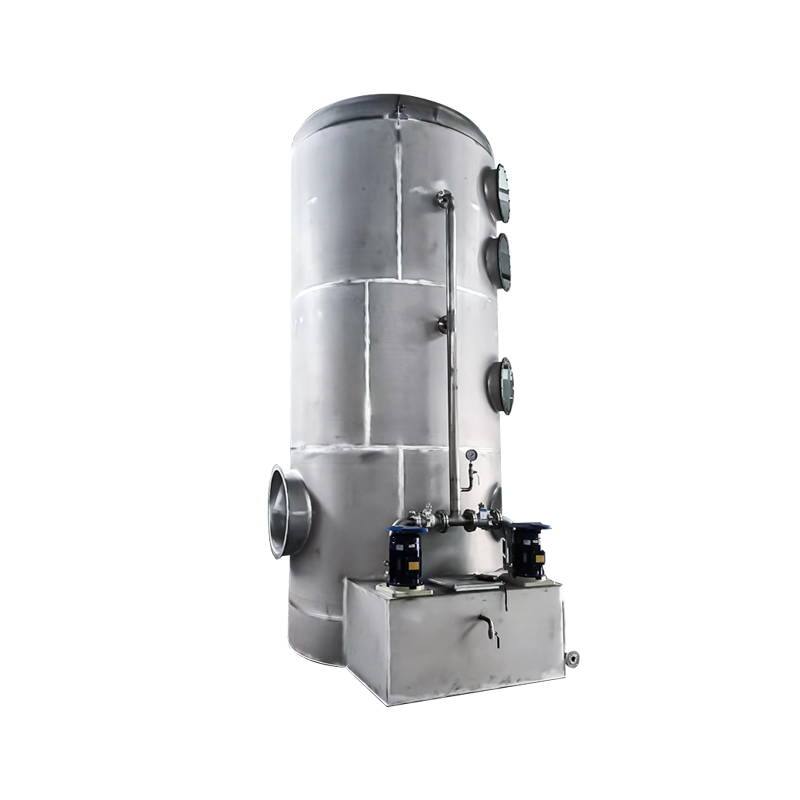
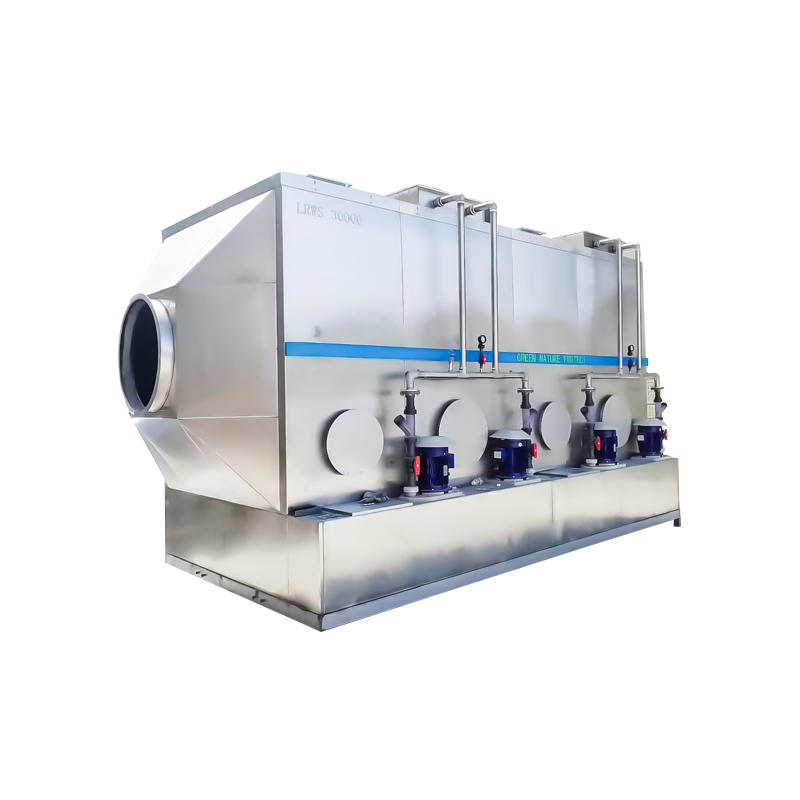
At its core, an Activated Carbon Adsorption Tower is a container filled with a specially processed form of carbon, through which contaminated air is pushed so that pollutant molecules stick to the carbon's surface instead of continuing on into the atmosphere. The word "tower" simply describes its shape: most units are built vertically, since a taller column gives the air more time and more surface area to interact with the carbon as it rises or descends through the bed.
The key term to understand first is adsorption, which is easy to confuse with the more familiar word "absorption." Absorption is what happens when a sponge soaks up water — the liquid is pulled into the material and distributed throughout it. Adsorption is different: it means molecules stick to the outer and inner surfaces of a material without being absorbed into its body. Activated carbon is adsorptive, not absorptive, and that distinction matters because it explains why the surface area of the carbon, not its overall volume, is what really determines performance.
How It Works, Step by Step
The process inside the tower is simpler than the equipment itself might suggest. It generally happens in four stages:
- Air intake. A fan or blower draws contaminated air — often called waste gas or exhaust — into the tower through an inlet duct.
- Contact with the carbon bed. The air is forced to pass through a packed bed of activated carbon granules or pellets. Because the air has nowhere else to go, it is pushed into close contact with millions of tiny carbon particles.
- Molecular capture. Odor and pollutant molecules — things like volatile organic compounds, hydrogen sulfide, or various industrial solvents — are attracted to the carbon's surface through a physical force called van der Waals attraction, similar to the mild static-like pull that holds dust to a screen. The molecules attach to the carbon and stay there.
- Clean air discharge. Air that has passed through the bed and left its pollutants behind exits through an outlet, typically routed to a chimney or stack for release.
What makes activated carbon so effective at step three is its structure. Ordinary carbon, like charcoal from a campfire, has relatively little internal surface area. Activated carbon is manufactured by exposing carbon-rich material — commonly coconut shells, wood, or coal — to high heat and steam or chemical activation, a process that burns away weak spots and opens up an enormous internal network of microscopic pores. A single gram of activated carbon can have an internal surface area equivalent to several tennis courts. That vast, folded surface is where the actual adsorption happens.
It helps to picture the carbon granule not as a solid lump but as something closer to a dense, dry sponge made of stone — except instead of holding liquid inside open channels, it holds gas molecules against the walls of countless tunnels far too small to see. As contaminated air flows past a single granule, molecules of the target pollutant repeatedly bump into its surface. Some simply bounce off and continue moving with the airflow, but others happen to collide with an open pore at just the right angle and become held there by the same weak physical attraction that causes fine dust to cling to a computer screen. Multiply that single interaction by the billions of granules packed into a full bed, and the cumulative effect is a system capable of stripping a meaningful share of pollutant molecules out of a continuous stream of moving air.
It's worth pausing on why pore size matters so much. Activated carbon's internal structure is usually described in three broad categories: micropores, mesopores, and macropores, ranging from extremely narrow channels only slightly wider than a single molecule up to wider passageways that act more like access corridors. Small molecules, such as certain light solvents, tend to be captured most effectively in micropores, while larger, heavier organic compounds often bind more readily in mesopores. Macropores mainly serve as transport routes, letting air move deeper into the granule so that the smaller pores further inside can do their work. This layered pore structure is one reason different activated carbon products are manufactured from different raw materials and processed in different ways — a carbon optimized for one class of pollutant may perform quite differently on another.
A Brief Look at Why This Technology Matters
Activated carbon itself is not a new invention. Simple charred materials have been used to purify water and air in various forms for centuries, but the highly porous, industrially manufactured activated carbon used in modern adsorption towers is a product of more recent chemical engineering, refined through the twentieth century as industries needed increasingly reliable ways to manage airborne emissions. As environmental regulations around the world became stricter, the demand grew for equipment that could consistently and measurably reduce the amount of odor-causing and potentially harmful compounds released into the surrounding air.
What makes this history relevant to a general reader is the underlying shift it represents: air quality management moved from being an afterthought to becoming a standard part of how industrial facilities operate. An activated carbon adsorption tower is one practical outcome of that shift — a piece of equipment designed specifically to sit between an industrial process and the outside air, quietly reducing the impact that process has on nearby communities and ecosystems. Understanding how it works also helps explain why air quality monitoring, facility inspections, and emission standards exist in the first place: because a technology like this only works as intended when it is properly sized, maintained, and monitored over time.

Inside the Tower: Key Structural Elements
Although designs vary by manufacturer and application, most towers share a common set of components, each contributing to a system that needs to move large volumes of air efficiently while giving that air enough contact with the carbon to actually do its job. The table below breaks these down in plain terms.
| Component | Plain-Language Function |
|---|---|
| Shell / housing | The outer body of the tower, usually steel or corrosion-resistant plastic, that contains the airflow and carbon bed. |
| Carbon bed / cartridge | The layer of activated carbon granules, pellets, or blocks where the actual pollutant capture takes place. |
| Support grid or screen | A perforated platform that holds the carbon in place while letting air pass freely through it. |
| Inlet and outlet ducts | Openings that guide contaminated air in and treated air out, often connected to fans elsewhere in the system. |
| Sampling or monitoring ports | Small access points used to check air quality before and after treatment, helping confirm the carbon is still working. |
| Access doors | Panels that allow operators to inspect, replace, or refill the carbon bed once it becomes saturated. |
What Determines How Well It Performs
Not every activated carbon tower performs identically, even with similar equipment, because adsorption is sensitive to several variables:
- Contact time. Air needs enough time inside the carbon bed for molecules to actually find and stick to a pore. Air moving too quickly through a shallow bed simply passes many pollutants straight through.
- Humidity. Water vapor competes with pollutant molecules for space on the carbon's surface. In very humid conditions, some of the carbon's capacity is used up holding water instead of the target contaminant, which lowers overall efficiency.
- Temperature. Adsorption is generally more effective at lower temperatures, since heat gives molecules more energy to break free from the carbon surface rather than staying attached.
- Molecular size and type. Larger, heavier organic molecules tend to be captured more easily than very small or highly volatile ones, which is why carbon type and pore size are often matched to the specific pollutant being targeted.
- Bed saturation. Every batch of carbon has a finite capacity. Once its surface is fully occupied — a state called saturation — it can no longer adsorb new molecules effectively and needs to be replaced or regenerated.
This last point explains why activated carbon towers are considered a maintenance item rather than a "set it and forget it" solution. Operators typically track performance over time and replace the carbon on a schedule, or when monitoring shows that pollutant levels in the outgoing air are starting to rise.
Bed depth and airflow velocity are closely related factors worth understanding as well. A deeper carbon bed generally provides more opportunities for pollutant molecules to find an open pore before the air exits the tower, but a deeper bed also creates more resistance to airflow, which means the fan or blower moving the air has to work harder. Engineers typically balance these two considerations, choosing a bed depth and airflow rate that gives pollutants enough contact time without demanding excessive energy to push air through the system. This is one reason towers are rarely simply "the bigger, the better" — oversizing adds cost and energy use without necessarily improving performance beyond a certain point, while undersizing risks letting pollutants pass through untreated.
Pollutant concentration also plays a role that's sometimes overlooked. A tower designed for a facility with low, steady pollutant levels may perform very differently if that same facility experiences a sudden spike in emissions, such as during a batch process or an unusual operating condition. Because the carbon bed has a finite adsorption capacity at any given moment, unusually high pollutant loads can cause it to saturate faster than expected, which is another reason ongoing monitoring — rather than a one-time installation check — is considered good practice for any facility relying on this kind of equipment.
Where These Towers Show Up in Daily Life
Even though most people never see one directly, activated carbon adsorption is at work in more places than expected. Wastewater treatment plants use it to control odors before they reach surrounding neighborhoods, since the biological processes involved in treating sewage naturally generate compounds like hydrogen sulfide, which has a strong, unpleasant smell even in small concentrations. Chemical and pharmaceutical manufacturers use it to capture solvent vapors released during production steps such as mixing, coating, or drying, where volatile compounds would otherwise escape into the surrounding air.
Food processing facilities, print shops, dry cleaners, and paint or coating booths often rely on similar systems to manage the strong airborne compounds their day-to-day processes generate. In many of these settings, the tower operates continuously in the background, often connected to the same ventilation system already used to keep indoor air breathable for workers, simply redirecting the exhausted air through a treatment step before it leaves the building. Recycling and waste management facilities are another common setting, where organic decomposition can generate persistent and far-reaching odors that neighboring communities are understandably sensitive to.
On a much smaller scale, the same basic principle is behind everyday household products like carbon air filters, refrigerator odor absorbers, and odor-absorbing charcoal bags — they use the same surface-adsorption mechanism, just at a tiny fraction of the size and pollutant load. An Activated Carbon Adsorption Tower is essentially an industrial-scale version of that same familiar idea, engineered to handle far higher airflow volumes and far more demanding operating conditions than a household filter would ever encounter.
How Adsorption Compares With Other Odor-Control Methods
Activated carbon adsorption is one of several approaches used to manage waste gas, and each has different strengths depending on the situation.
| Method | How It Works | Typical Fit |
|---|---|---|
| Activated carbon adsorption | Pollutant molecules physically stick to a porous carbon surface | Moderate concentrations, wide range of organic compounds, low humidity conditions |
| Wet scrubbing | Contaminated air is passed through a liquid, usually water or a chemical solution, that dissolves or reacts with pollutants | Water-soluble or highly reactive gases, high moisture environments |
| Catalytic oxidation | Pollutants are chemically broken down into simpler, less harmful compounds using heat and a catalyst | Higher pollutant concentrations, situations needing permanent destruction rather than capture |
| Biofiltration | Microorganisms growing on an organic medium consume pollutant molecules as a food source | Steady, moderate pollutant loads over long operating periods |
In practice, these methods are sometimes combined. It's common, for instance, to see a wet scrubber positioned before an adsorption tower, so that easily dissolved pollutants and excess moisture are handled first, leaving the carbon bed to focus on the compounds it captures best.
Misconceptions People Often Have
A few ideas about activated carbon persist even though they aren't quite accurate. One is that darker or "stronger-smelling" carbon works better — in reality, color says nothing about performance, since effectiveness comes from pore structure and surface area, not appearance. Another common misunderstanding is that carbon lasts indefinitely once installed. Because adsorption is a surface phenomenon with a fixed capacity, every carbon bed eventually reaches saturation and needs replacement, regardless of how well-built the tower itself is.
Finally, some assume adsorption "destroys" pollutants. It doesn't — it captures and holds them. That's why used carbon must be properly disposed of, incinerated, or regenerated rather than simply discarded, since the trapped pollutants are still present within it. A related misconception is that any activated carbon will work equally well on any pollutant. In reality, carbon type, pore size distribution, and even the raw material used to produce it are often matched to the specific compounds a facility needs to manage, which is why an effective system is usually the result of careful selection rather than a one-size-fits-all approach. It's also common to assume that a working adsorption tower is a permanent guarantee of odor-free air; in practice, performance can shift gradually as conditions change, which is exactly why ongoing monitoring, rather than a single installation milestone, is what keeps a system reliable over the long run.
Conclusion
An activated carbon adsorption tower is, at heart, a straightforward idea executed with careful engineering: push contaminated air through a material with an enormous hidden surface area, and let physics do the rest. The molecules that cause odors or environmental harm get trapped on that surface, while cleaner air continues on its way. Performance depends on manageable factors like contact time, humidity, and how saturated the carbon has become, which is why these systems are monitored and maintained rather than treated as permanent fixtures.
What's easy to miss, given how ordinary the equipment looks from the outside, is how much careful thought goes into getting the details right: selecting a carbon type suited to the pollutants involved, sizing the bed for the expected airflow, and building in a maintenance routine that catches saturation before it becomes a problem. None of that requires exotic technology — it's really an application of well-understood surface chemistry, scaled up and engineered to run reliably day after day. Understanding this basic mechanism makes it easier to see why activated carbon remains one of the most widely used tools for managing air quality across so many different industries, and why a technology built on something as simple as molecules sticking to a surface can quietly do so much to keep the surrounding air cleaner.
Frequently Asked Questions
What is the difference between adsorption and absorption?
Absorption means a substance is taken into the body of a material, like water into a sponge. Adsorption means a substance sticks to the surface of a material without being absorbed into it, which is exactly how activated carbon captures pollutant molecules.
How long does activated carbon last inside a tower?
It depends heavily on pollutant concentration, airflow rate, humidity, and bed size, so there's no single fixed lifespan. Some systems need carbon replaced every few months, while lightly loaded systems may go much longer, which is why regular monitoring is standard practice.
Why is activated carbon used instead of regular carbon or charcoal?
Regular carbon has relatively little internal surface area. Activation with heat and steam opens up a vast network of microscopic pores, dramatically increasing surface area and giving activated carbon far greater capacity to capture pollutant molecules.
Can activated carbon towers remove all types of odors?
No. Activated carbon is highly effective against many organic compounds but performs poorly against certain very small or highly volatile molecules, and its efficiency drops in very humid conditions. It is best used for the pollutant types it's specifically suited to.
What happens to activated carbon once it becomes saturated?
Once its surface is fully occupied, saturated carbon is typically removed and either regenerated through controlled heating to release the trapped pollutants, or disposed of through appropriate industrial waste channels, since the pollutants remain physically attached to it.
Is activated carbon adsorption effective for volatile organic compounds?
Generally yes, especially for medium-to-larger organic molecules, which is why it's widely used in industries dealing with solvent vapors and similar emissions. Effectiveness varies by specific compound, which is why carbon type is often matched to the pollutant profile.
Why does humidity affect activated carbon performance?
Water vapor molecules compete with pollutant molecules for the same surface space on the carbon. In humid air, some of that surface gets occupied by moisture instead of the target pollutant, reducing the carbon's effective adsorption capacity.