English
 русский
 عربى
عربى 中文简体
中文简体
Content
- 1 How A Centrifugal Dust Extractor Fan Works
- 2 Why Dust Extraction Is Important In Manufacturing
- 3 How To Choose A Dust Extractor Fan For Industrial Use
- 4 Industrial Centrifugal Dust Extractor Fan Sizing Reference
- 5 Centrifugal Dust Fan For Factory Settings Versus Axial Fans
- 6 Heavy Duty Dust Extraction Fan Maintenance Basics
- 7 Frequently Asked Questions
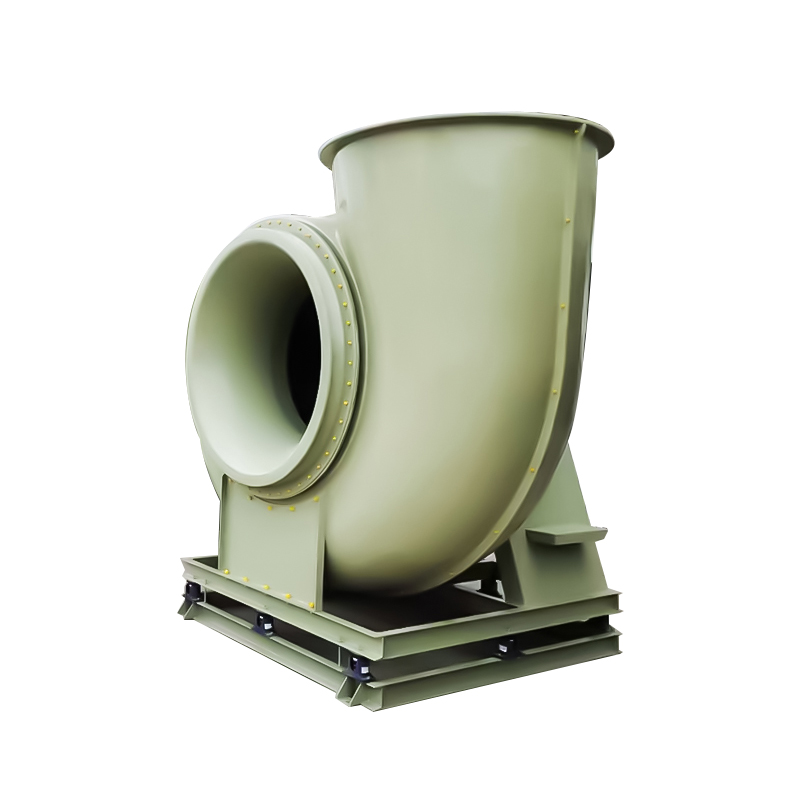
Direct answer: A Centrifugal Dust Extractor Fan works by spinning a bladed impeller inside a curved housing to pull dust laden air in through a central inlet and throw it outward at high velocity toward an outlet duct, generating the strong, consistent suction needed to capture fine particles, wood dust, metal grindings, and other airborne debris in industrial settings. Compared to axial fans, centrifugal designs deliver higher static pressure, which is exactly what dust extraction systems need to pull air through long ductwork and filtration stages without losing suction power.
2 to 3x Higher static pressure than axial fans
0.5 micron Fine particles captured with proper filtration
15 to 20 yrs Typical service life with routine upkeep
How A Centrifugal Dust Extractor Fan Works
Air enters the fan housing through a central inlet aligned with the impeller's axis. As the impeller spins, curved blades accelerate the air outward using centrifugal force, converting rotational energy into both velocity and pressure. This pressurized air is then directed out through a scroll shaped housing toward the outlet duct, which connects to ductwork, cyclone separators, or bag filters depending on the system design.
The scroll shaped housing, sometimes called a volute, is what separates centrifugal fans from simple propeller style axial fans. It gradually widens as it wraps around the impeller, slowing the air just enough to convert velocity into usable static pressure, which is the force that pushes air through resistance such as filters, ducts, and bends in the system.
Why Dust Extraction Is Important In Manufacturing
Airborne dust in a manufacturing environment is more than a cleanliness issue. It carries direct risks to worker health, equipment reliability, and regulatory compliance.
| Risk Area | Impact Without Proper Extraction |
| Worker respiratory health | Prolonged exposure to fine dust particles contributes to long term lung conditions and reduced air quality compliance |
| Combustible dust hazard | Certain wood, metal, and grain dusts pose explosion risk when concentrations build in enclosed spaces |
| Equipment wear | Dust settling on machinery accelerates bearing wear and can interfere with sensitive electronics |
| Product quality | Airborne particulate contamination affects finish quality in coating, painting, and precision assembly work |
| Regulatory compliance | Many jurisdictions set enforceable airborne particulate limits that facilities must document and maintain |
How To Choose A Dust Extractor Fan For Industrial Use
Sizing and specifying the right fan involves matching several technical factors to the actual dust source and facility layout, not just picking the largest available unit.
01
Calculate Required Airflow Volume
Airflow needs, typically measured in cubic meters per hour or cubic feet per minute, depend on the number of dust collection points and the capture velocity needed at each source. Undersizing this figure is the most common cause of poor extraction performance.
02
Match Static Pressure To System Resistance
Longer duct runs, tighter bends, and denser filter media all add resistance the fan must overcome. A fan rated for airflow alone without sufficient static pressure will underperform once connected to the full ductwork system.
03
Select Material For Dust Type
Abrasive dust such as metal grinding debris wears standard steel impellers faster, often requiring wear resistant coatings or heavier gauge construction to reach a reasonable service interval.
04
Confirm Explosion Rated Construction If Needed
Facilities handling combustible dust, including wood, flour, and certain metal powders, typically require spark resistant fan construction rated to relevant explosion protection standards.
05
Check Noise Output Against Facility Limits
Higher pressure fans generally run louder, so facilities with occupied workspace near the fan location should compare decibel ratings before finalizing a model.
Industrial Centrifugal Dust Extractor Fan Sizing Reference
Use this as a general starting point, then confirm with a proper airflow calculation for the specific facility layout.
| Application | Approximate Airflow Needed |
| Single woodworking station | 500 to 1500 cubic meters per hour |
| Small factory workshop, multiple stations | 3000 to 8000 cubic meters per hour |
| Metal fabrication and grinding line | 8000 to 15000 cubic meters per hour |
| Large scale production facility | 15000 cubic meters per hour and above |
Centrifugal Dust Fan For Factory Settings Versus Axial Fans
Factories choosing between fan types should weigh pressure needs against space and cost constraints.
- Choose centrifugal: when ductwork is long, filtration adds resistance, or multiple collection points feed into one system.
- Choose axial: for simple, short duct general ventilation where high airflow matters more than pressure, such as open shop cooling.
- Combination systems: some large facilities use axial fans for general ventilation alongside dedicated centrifugal units for point source dust extraction.
Heavy Duty Dust Extraction Fan Maintenance Basics
Consistent upkeep extends fan life and prevents gradual performance loss that often goes unnoticed until extraction becomes visibly weak.
| Task | Recommended Frequency |
| Impeller balance and vibration check | Quarterly, or continuous monitoring on critical lines |
| Bearing lubrication | Per manufacturer schedule, commonly every 3 to 6 months |
| Housing and impeller buildup cleaning | Every 6 months depending on dust density and material stickiness |
| Belt or drive coupling inspection | Every 6 months, sooner if unusual noise develops |
Frequently Asked Questions
Can one centrifugal fan serve multiple dust collection points. Yes, provided the ductwork is sized correctly and total airflow demand across all points is calculated into the fan selection rather than assuming a single-point rating covers the full system.
Does fan speed affect dust capture efficiency. Yes, capture velocity at the source point depends directly on fan speed and duct diameter, so reducing speed to cut noise can unintentionally weaken extraction if not recalculated.
How much does filter type affect required fan pressure. Significantly, since denser filter media such as HEPA stages add considerable resistance compared to standard bag filters, often requiring a higher pressure rated fan to compensate.
Is regular cleaning really necessary if the fan still runs. Yes, buildup on impeller blades gradually unbalances the wheel and reduces airflow output even while the motor continues running normally, making performance loss easy to miss without inspection.