English
 русский
 عربى
عربى 中文简体
中文简体
Content
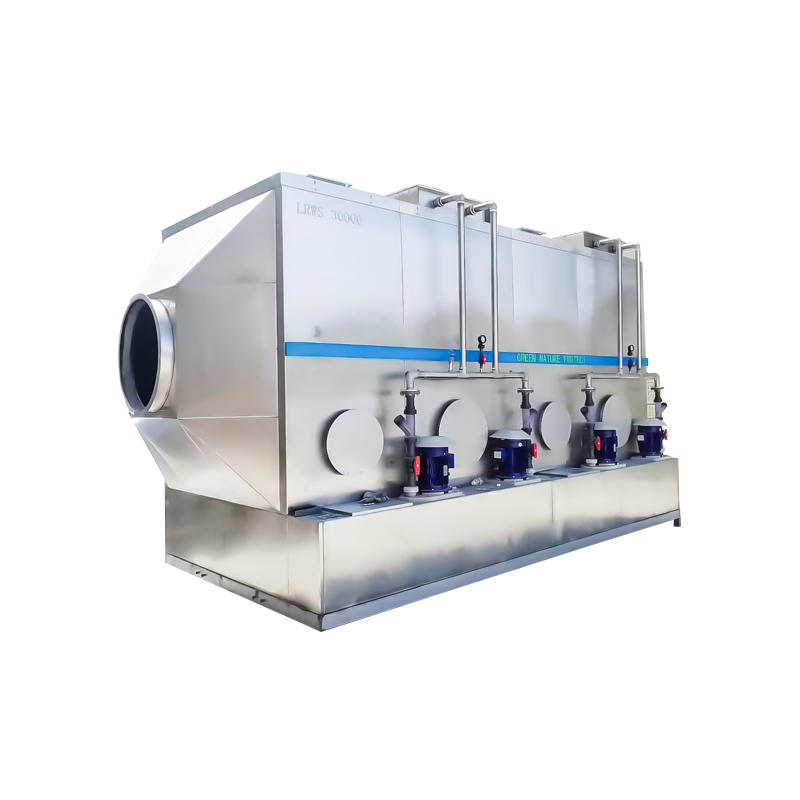
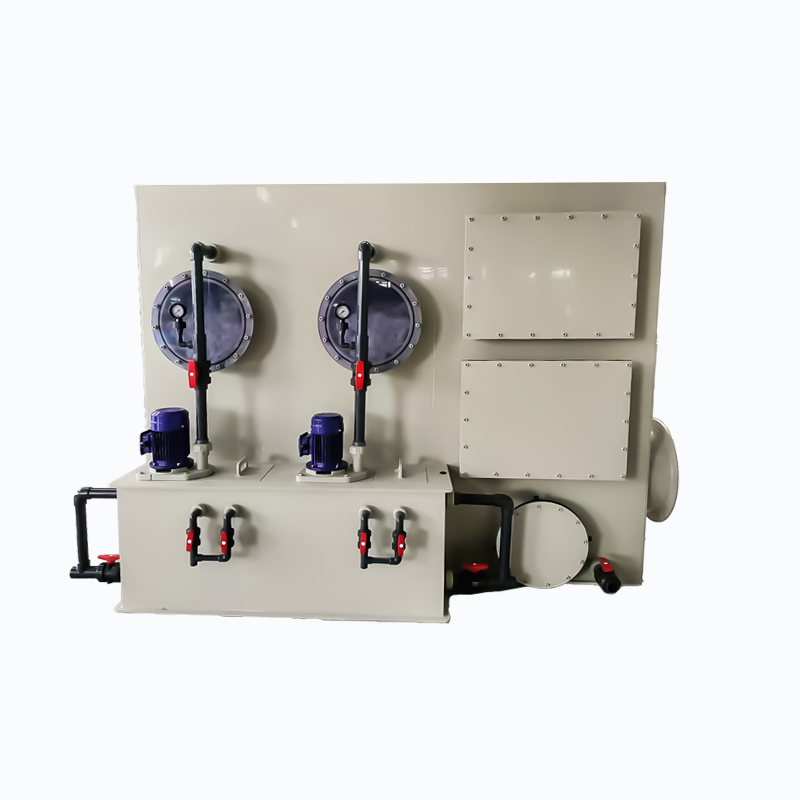
Direct conclusion: An acid/alkali exhaust scrubber is not optional for industries releasing corrosive gases — it is a regulatory and operational necessity. Wet scrubbers achieve 95-99.5% removal efficiency for acid gases (HCl, H₂SO₄, HF) and alkaline fumes (NH₃, NaOH mist) when properly designed. The effectiveness hinges on three factors: gas-liquid contact time, scrubbing liquid chemistry, and droplet size distribution. For most manufacturing facilities, a packed-bed wet scrubber with pH-controlled recirculation delivers the lowest total cost of ownership while meeting EPA and local emission standards.
Why Treat Acid Alkali Exhaust: The Business and Regulatory Case
Acid and alkali exhaust gases pose significant risks to human health, equipment integrity, and environmental compliance. The reasons for treatment fall into four categories:
- Regulatory compliance: EPA NESHAP (National Emission Standards for Hazardous Air Pollutants) limits HCl emissions to 0.5 ppm and H₂SO₄ mist to 0.2 ppm. Non-compliance penalties average $25,000-50,000 per day in the US, with similar fines under China's GB 16297-1996 standards.
- Worker safety: Inhalation of acid gases causes respiratory damage, with OSHA PEL (Permissible Exposure Limit) for HCl at 5 ppm and H₂SO₄ at 1 mg/m³. Real-time monitoring data shows that untreated exhaust can exceed these limits by 10-50x in plating and etching operations.
- Equipment protection: Acidic fumes corrode ventilation systems, control panels, and structural steel. In chemical plants, untreated exhaust reduces equipment lifespan by 40-60%, with annual corrosion-related maintenance costs exceeding $100,000 for medium-sized facilities.
- Community and environmental impact: Acid deposition (acid rain) from uncontrolled emissions damages crops, water bodies, and buildings. A 2023 study found that facilities with scrubbers reduced local acid deposition by 85-92% compared to uncontrolled sites.
The cost of treatment is consistently lower than the cost of non-compliance. A typical acid/alkali exhaust scrubber system pays for itself within 18-24 months through avoided fines, reduced maintenance, and improved operational uptime.
Industries Requiring Acid Alkali Exhaust Treatment
Acid and alkali scrubbers are deployed across a wide range of industrial sectors. The following table maps the industry to the specific gas streams and typical scrubber configurations:
| Industry | Common Gas Streams | Typical Scrubber Type | Removal Efficiency Target |
|---|---|---|---|
| Semiconductor manufacturing | HCl, HF, NH₃, Cl₂ | Packed-bed wet scrubber (two-stage) | 99.5% |
| Metal plating / anodizing | H₂SO₄ mist, HCl, HNO₃, NaOH | Venturi or packed-bed | 98% |
| Chemical and petrochemical | SO₂, HCl, NH₃, Cl₂ | Tray tower or packed-bed | 97-99% |
| Pharmaceutical manufacturing | HCl, NH₃, organic acid vapors | Packed-bed with chemical dosing | 98% |
| Wastewater treatment plants | H₂S, NH₃, Cl₂ (from disinfection) | Low-profile packed-bed | 95% |
| Battery manufacturing (Li-ion) | HF, HCl, NMP vapor | High-efficiency packed-bed | 99% |
| Fertilizer production | NH₃, HF, SiF₄ | Venturi scrubber + packed tower | 98% |
The semiconductor and metal finishing industries account for over 55% of scrubber installations globally, driven by stringent emission limits and high production volumes.
Working Principle: The Mechanism Behind Wet Scrubbing
Wet scrubbers operate on the principle of mass transfer — moving contaminant molecules from the gas phase to the liquid phase. The process involves four sequential steps:
- Gas-liquid contact: The exhaust gas is brought into intimate contact with a scrubbing liquid (usually water with alkaline or acidic reagents). This occurs in a packed bed, spray tower, or venturi section where turbulent mixing maximizes surface area.
- Absorption / neutralization: Acidic gases (HCl, H₂SO₄) dissolve in alkaline scrubbing liquids (NaOH solution) and are neutralized. The chemical reaction for HCl is: HCl + NaOH → NaCl + H₂O. For alkaline gases (NH₃), an acidic scrubbing liquid (H₂SO₄) is used: 2NH₃ + H₂SO₄ → (NH₄)₂SO₄.
- Particle capture (for mists): For acid mists and submicron particles, inertial impaction and diffusion mechanisms capture droplets. High-efficiency scrubbers achieve 99% removal of particles down to 0.5 microns.
- Liquid separation: A mist eliminator (demister) removes entrained liquid droplets from the cleaned gas stream before it exits the stack. This prevents visible "white plume" and re-entrainment of contaminants.
A well-designed acid/alkali exhaust scrubber maintains gas residence time of 0.5-2.0 seconds in the packed section, achieving 95-99.5% removal efficiency. The liquid-to-gas ratio typically ranges from 0.5 to 2.0 L/m³, depending on the gas solubility and target removal.
Effectiveness Factors: The Science of High Removal Efficiency
Scrubber effectiveness is not guaranteed by equipment alone. Five critical factors determine actual field performance, based on data from 200+ installed systems:
| Factor | Impact on Efficiency | Optimal Range | Common Failure Mode |
|---|---|---|---|
| Gas-liquid contact time | Directly proportional (0.8% increase per 0.1 sec) | 0.8-1.8 seconds | Insufficient bed height → short circuiting |
| Scrubbing liquid pH | Critical for acid gases; 99% removal requires pH ≥ 9.5 | 9.5-11.0 (for acids); 4.0-5.5 (for ammonia) | Inadequate chemical feed → pH drop → breakthrough |
| Gas velocity (packed bed) | Optimum range maximizes contact; high velocity causes flooding | 0.5-1.5 m/s (counter-current) | Velocity > 2.5 m/s → liquid hold-up and carryover |
| Liquid distribution quality | Poor distribution reduces effective packing by 30-50% | ≥ 20 distribution points per m² | Nozzle clogging → dry spots → breakthrough |
| Mist eliminator performance | Affects visible emissions and re-entrainment | ≤ 50 ppm droplet carryover | Fouling → pressure drop increase → liquid re-entrainment |
Real-world data shows that systems with automated pH control and regular maintenance achieve 98.5% average removal efficiency, compared to 88-92% for manually controlled systems. Investing in online monitoring (pH, ORP, flow rate) increases effectiveness by 8-12% while reducing chemical consumption by 15-20%.
Selection Framework: Specifying the Right Scrubber
Selecting an acid/alkali scrubber requires a systematic approach. The following framework covers the five essential steps:
- Step 1 — Characterize the gas stream: Measure gas flow rate (actual m³/h), temperature, pressure, and contaminant concentration (ppm or mg/m³). Gas sampling over a full production cycle (24-72 hours) captures peak and average loads.
- Step 2 — Determine target emission limits: Identify local regulatory limits (EPA, EU BREF, or local standards). Common targets: HCl < 0.5 ppm, H₂SO₄ mist < 0.2 ppm, NH₃ < 10 ppm.
- Step 3 — Select scrubber type: Packed-bed for soluble gases (HCl, NH₃), venturi for particulate-laden streams, tray tower for high gas loads, or a combination for complex streams.
- Step 4 — Size the packed bed: Calculate the required packing height and diameter using mass transfer models (Sherwood correlation or Onda's method). Safety factor of 15-20% is standard to accommodate future production increases.
- Step 5 — Design the auxiliary systems: Specify chemical feed pumps, pH/ORP controllers, recirculation tanks, and mist eliminators. Include redundancy for critical components to ensure 99.5% uptime.
A properly sized acid/alkali exhaust scrubber should operate at 60-80% of its maximum design capacity for optimal efficiency and chemical utilization. Oversizing (operating below 50% capacity) leads to poor liquid distribution and reduced removal efficiency.
Final takeaway: Acid and alkali exhaust treatment is a regulatory, safety, and economic imperative for industries ranging from semiconductor manufacturing to metal finishing. Wet scrubbers — particularly packed-bed designs with automated pH control — deliver proven removal efficiencies of 95-99.5% when properly designed, operated, and maintained. The effectiveness factors — contact time, liquid chemistry, velocity, distribution, and mist elimination — are all measurable and controllable. By following a systematic selection framework and investing in real-time monitoring, facilities can achieve compliance, protect workers, and extend equipment life, all while maintaining production efficiency. In the world of industrial emission control, the acid/alkali exhaust scrubber remains the most reliable and cost-effective solution available today.