English
 русский
 عربى
عربى 中文简体
中文简体
Content
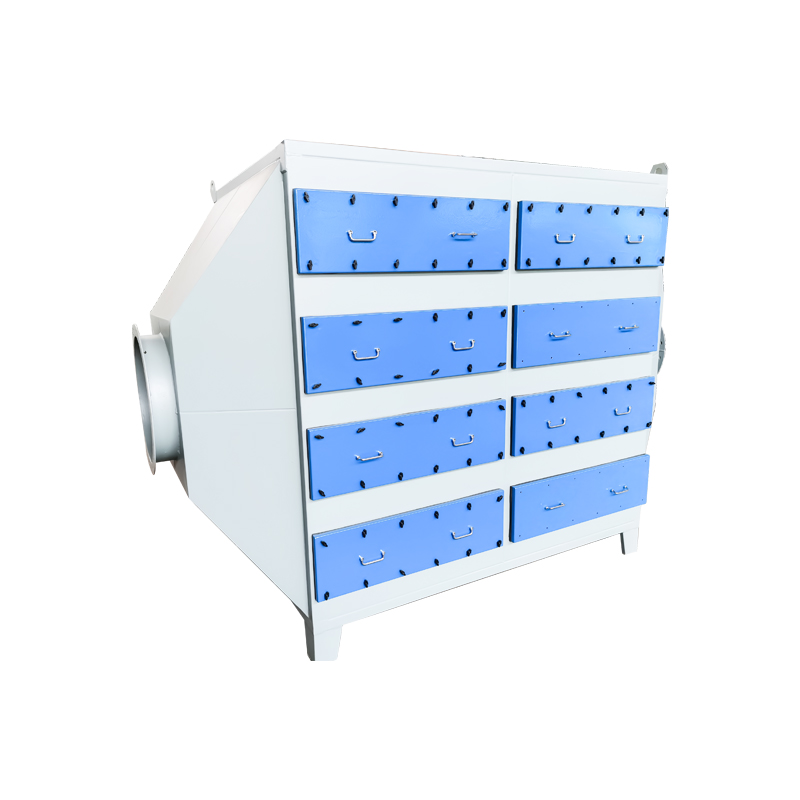
A filter dust collector is an industrial air-cleaning system that captures airborne particulate through a permeable filter medium, returning clean air to the facility or atmosphere. Modern units achieve collection efficiencies of 99.9% or higher on particles as small as 0.5 microns. This guide covers exactly how the system works, how a baghouse operates, and which filter type — bag or cartridge — fits your application.
99.9%
Typical filtration efficiency
0.5 um
Minimum particle capture size
1,000–2,000 Pa
Operating pressure drop range
2–5 yr
Average filter service life
Core MechanismHow a Dust Collector Works
A filter dust collector operates on four consecutive physical stages. Dust-laden air enters, particles are captured, the filter self-cleans, and collected dust discharges to a hopper. Each stage is engineered to minimize energy consumption while maximizing capture rate.
01
Inlet
Dirty air enters through a tangential or straight inlet. Heavier particles drop into the hopper by inertia before reaching the filter surface — pre-separation reduces filter load by 30–60%.
02
Filtration
Air passes through filter media. Particles are captured by four mechanisms: inertial impaction, interception, diffusion, and electrostatic attraction. A dust cake builds on the surface, improving efficiency over time.
03
Pulse-Jet Cleaning
Compressed air (5–7 bar) fires in 100–150 ms bursts through a venturi nozzle, flexing the filter and dislodging accumulated dust. Cleaning is on-line — production does not stop.
04
Discharge
Dislodged dust falls into the collection hopper. A rotary valve, screw conveyor, or manual bin discharges it for disposal or recycling. Clean air exits through the outlet plenum.
Definition
A filter dust collector is defined as any air pollution control device that separates and removes dry particulate from a gas stream using a porous filter medium, with a built-in mechanism for periodic filter regeneration.
Baghouse Deep-DiveHow a Baghouse Works
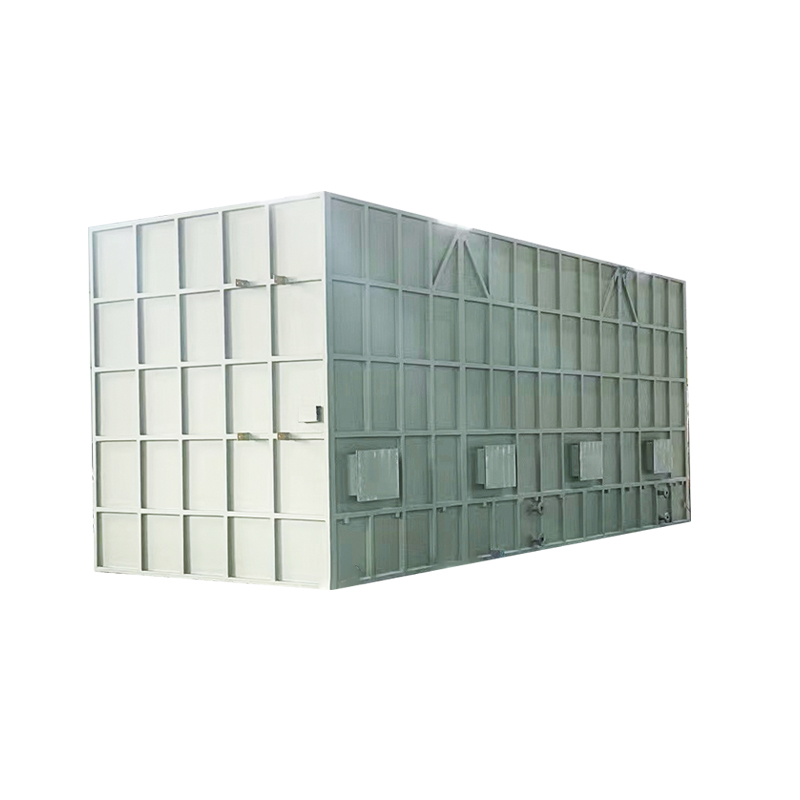
A baghouse is the most widely deployed type of filter dust collector, used in cement plants, steel mills, power generation, and chemical processing. It uses long cylindrical fabric bags as filter elements, typically 5–10 inches in diameter and 8–16 feet in length, arranged in rows inside a steel housing.
Air flow direction determines the cleaning method used. The three standard baghouse configurations are:
- Pulse-jet (reverse pulse): Air flows outside-in through bags; cleaning pulses travel inside-out. Most common — handles 10,000 to 1,000,000+ CFM, operates continuously without airflow interruption.
- Shaker baghouse: Mechanical vibration shakes bags clean during off-line cycles. Lower compressed air requirement, suited to lighter dust loads under 50,000 CFM.
- Reverse-air baghouse: Clean air flows backward through the bag compartment to gently collapse and clean bags. Used for delicate media like PTFE-coated glass fiber at temperatures up to 260 C.
Pressure drop across a healthy baghouse filter runs 1,000–2,000 Pa (4–8 inches water gauge). Values above 2,500 Pa signal blinding or bag damage requiring maintenance. Industry benchmark for bag replacement is typically every 2–5 years, depending on dust concentration (expressed in grains per cubic foot, or g/m3).
Baghouse systems processing fine particles like silica or coal dust must comply with NFPA 654 (combustible dust) and OSHA 1910.94, which mandate explosion venting, grounding, and spark detection upstream of the inlet. Ignoring these requirements carries fines exceeding USD 15,000 per violation.
Technology ComparisonBag Filter vs Cartridge Filter
Choosing between bag and cartridge filter media is the most consequential design decision for a filter dust collector. The two formats differ in geometry, footprint, media surface area, and optimal dust loading range.
Bag Filter
| Media shape | Cylindrical tube, open one end |
| Diameter | 5–10 inches (127–254 mm) |
| Length | 8–16 feet (2.4–4.9 m) |
| Air-to-cloth ratio | 3–6 ft/min (0.9–1.8 m/min) |
| Best dust load | High: above 2 g/m3 |
| Temperature limit | Up to 260 C (fiberglass) |
| Unit cost | Lower per bag |
Cartridge Filter
| Media shape | Pleated cylinder, closed ends |
| Diameter | 12–16 inches (305–406 mm) |
| Length | 26–48 inches (0.66–1.22 m) |
| Air-to-cloth ratio | 1–2 ft/min (0.3–0.6 m/min) |
| Best dust load | Light to medium: under 2 g/m3 |
| Temperature limit | Up to 120 C (polyester) |
| Unit cost | Higher per element |
Cartridge filters pack up to 100 sq ft (9.3 m2) of pleated media into a 26-inch element — roughly 4x the surface area of a comparably sized bag. This means a cartridge-based filter dust collector has a significantly smaller physical footprint for the same airflow volume. However, the dense pleat structure blinds quickly under high-concentration or sticky dust, making bags the better choice for heavy industrial loads above 5 g/m3.
Choose Bag Filter when...
- Dust concentration exceeds 2 g/m3
- Process gas temperature is above 120 C
- Handling hygroscopic, sticky, or fibrous dust
- Continuous high-volume airflow above 50,000 CFM
Choose Cartridge Filter when...
- Space is limited — compact footprint required
- Dust concentration is below 2 g/m3
- Fine sub-micron particulate (welding fume, toner)
- Easier maintenance access and faster change-out
Selection DataPerformance Specifications at a Glance
| Parameter | Pulse-Jet Baghouse | Cartridge Collector | Shaker Baghouse |
| Airflow range (CFM) | 500 – 1,000,000+ | 200 – 100,000 | 1,000 – 50,000 |
| Inlet dust concentration | Up to 100 g/m3 | Up to 15 g/m3 | Up to 30 g/m3 |
| Outlet emission (mg/Nm3) | Less than 10 | Less than 5 | Less than 20 |
| Cleaning method | Compressed-air pulse | Compressed-air pulse | Mechanical vibration |
| On-line cleaning | Yes | Yes | No (compartmentalized) |
| Typical filter life | 2–5 years | 1–3 years | 3–6 years |
FAQFrequently Asked Questions
What is the difference between a dust collector and a baghouse?
A baghouse is one specific type of filter dust collector. The term "dust collector" is broader and includes cyclones, cartridge collectors, wet scrubbers, and electrostatic precipitators. A baghouse specifically refers to a fabric-filter system using cylindrical bags housed in a large steel enclosure.
How often should filter bags or cartridges be replaced?
Bag filters in a pulse-jet baghouse typically last 2–5 years under normal operating conditions (dust concentration under 20 g/m3, temperature under 180 C). Cartridge filters in light-duty applications average 1–3 years. The most reliable indicator is sustained pressure drop above 2,500 Pa, which signals irreversible media blinding regardless of age.
Can a filter dust collector handle explosive dust?
Yes, provided the system includes explosion protection per NFPA 654 and EN 14460. Required safeguards include explosion venting panels (typically rated Kst up to 300 bar·m/s), spark detection and extinguishing upstream of the inlet, earthing continuity below 1 ohm, and isolation valves to prevent flame propagation into connected ductwork.
What air-to-cloth ratio should I design for?
For pulse-jet baghouses handling standard industrial dust (bulk density over 0.5 g/cm3, particle size over 5 microns), design for 4–5 ft/min air-to-cloth ratio. For fine or difficult dust (silica fume, carbon black, pharmaceutical powders), reduce to 2.5–3.5 ft/min. Cartridge collectors should be designed at 1–1.5 ft/min to maintain pleat life. Overshooting these ratios accelerates blinding and raises energy costs.