English
 русский
 عربى
عربى 中文简体
中文简体
Content
- 1 Gas-Liquid Separation Fundamentals
- 2 Wet Chemical Scrubber for Acid Gas
- 3 Industrial Chemical Scrubber System Design
- 4 Chemical Exhaust Scrubber for Laboratory
- 5 Packed Bed Chemical Scrubber Supplier
- 6 Chemical Fume Scrubber Maintenance
- 7 Multi-Stage Treatment Architecture
- 8 Industry-Specific Application Engineering
- 9 Frequently Asked Questions
- 9.1 What removal efficiency guarantees can chemical scrubber suppliers provide, and how are they verified?
- 9.2 How do chemical scrubbers achieve regulatory compliance with evolving EPA and EU BAT standards?
- 9.3 What is the typical life cycle cost breakdown for chemical scrubber operation?
- 9.4 What maintenance protocols prevent packing fouling in chemical fume scrubbers?
- 9.5 Can laboratory chemical exhaust scrubbers handle multiple simultaneous contaminants?
- 10 References
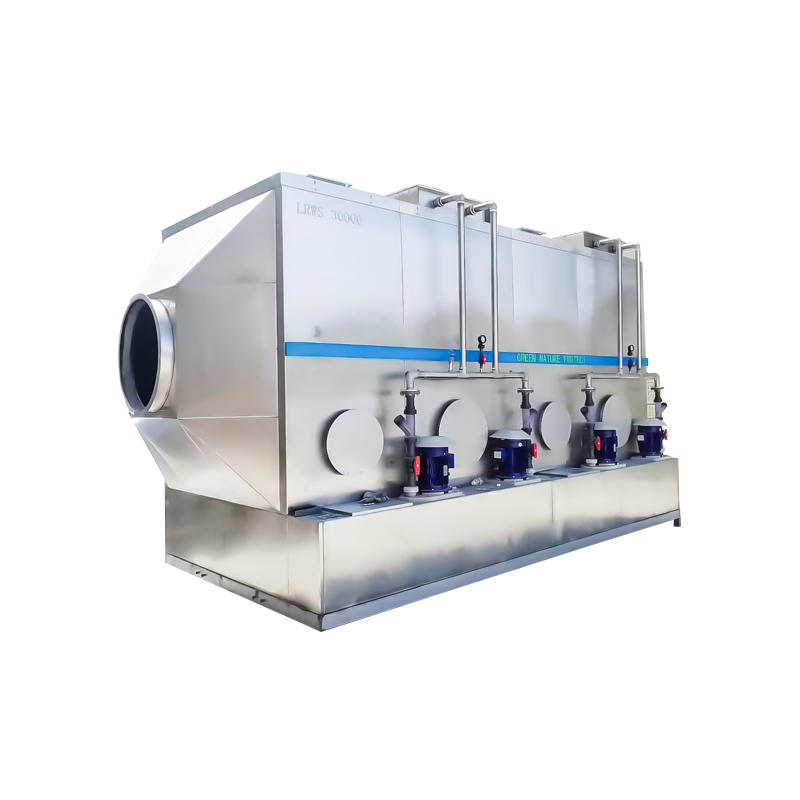
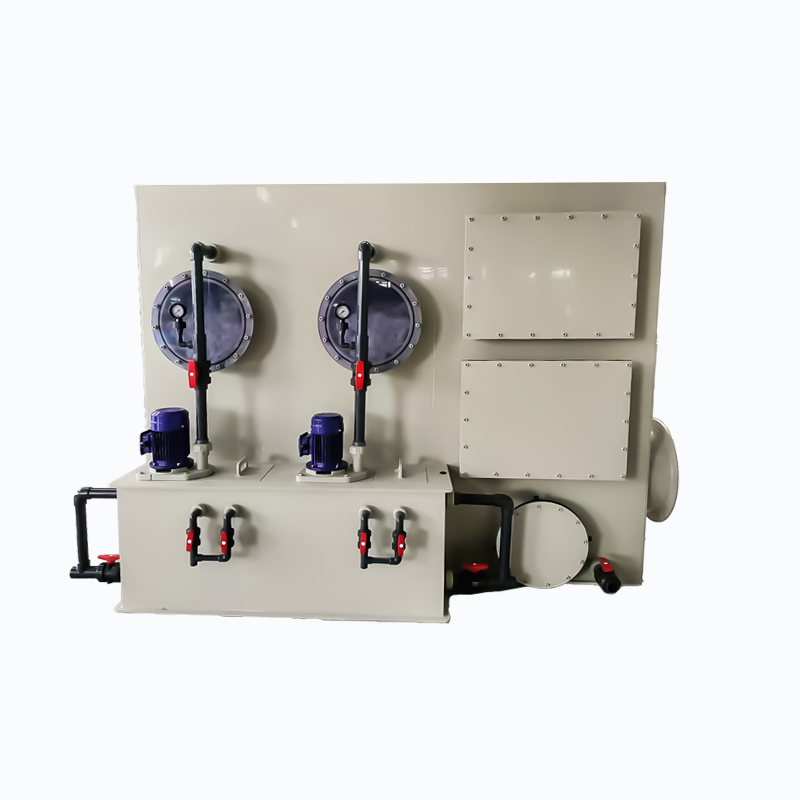
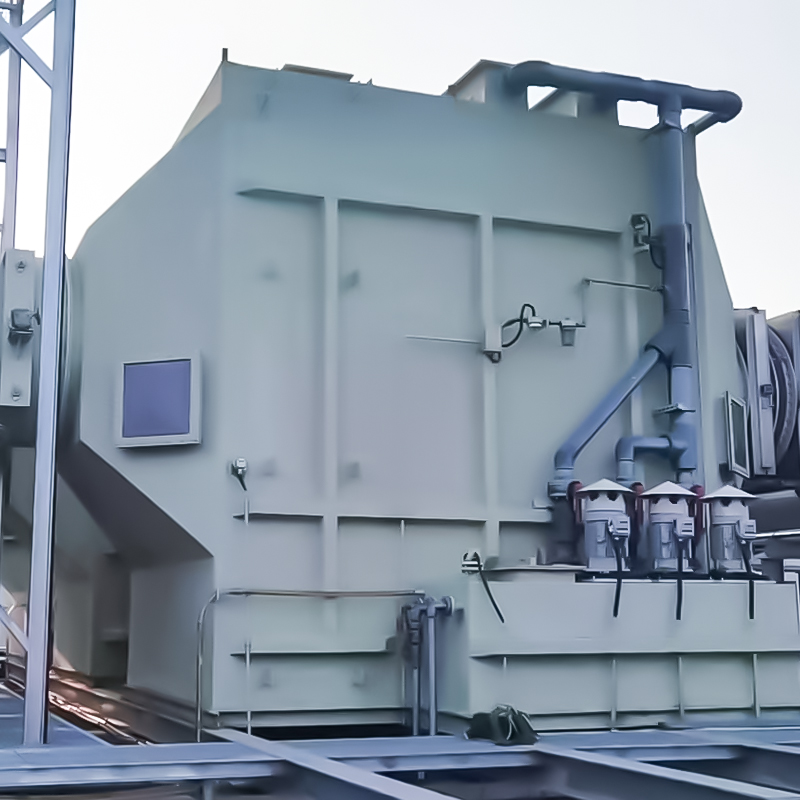
Chemical Scrubber systems neutralize hazardous gas emissions through controlled chemical reactions, protecting both environmental compliance and worker safety. This technical examination covers absorption mechanisms, system design parameters, and operational optimization for industrial procurement teams.
Gas-Liquid Separation Fundamentals
Wet vs. Dry Scrubbing Technologies
Wet scrubbing systems utilize liquid reagents to absorb and neutralize contaminants, achieving high removal efficiencies for soluble gases. Dry scrubbing employs solid sorbents or reaction beds, advantageous for moisture-sensitive processes or where wastewater generation must be minimized.
Scrubbing Technology Comparison:
| Parameter | Wet Scrubbing | Dry Scrubbing | Semi-Dry Scrubbing |
| Removal Efficiency (acid gases) | 95-99.9% | 85-95% | 90-97% |
| Operating Temperature | 5-70°C | 120-350°C | 80-150°C |
| Byproduct Generation | Liquid wastewater | Dry solid waste | Dry to semi-dry solid |
| Capital Cost (relative) | 1.0x (baseline) | 0.8-1.2x | 1.1-1.3x |
| Operating Cost | Moderate (chemical consumption) | Lower (sorbent replacement) | Moderate |
| Particulate Handling | Simultaneous removal | Requires separate filtration | Limited capability |
Mass Transfer Mechanisms
Gas absorption follows two-film theory: pollutants diffuse through gas-phase boundary layer, cross the interface, and diffuse through liquid-phase boundary layer. Enhancement factors (E) quantify chemical reaction acceleration of absorption rates, ranging 2-50x for fast irreversible reactions like acid-base neutralization.

Wet Chemical Scrubber for Acid Gas
Wet chemical scrubber for acid gas applications dominates industrial emission control. Acid gases (HCl, SO₂, NOₓ, HF) require alkaline neutralization, with reagent selection determining reaction kinetics and byproduct characteristics.
Neutralization Chemistry
Sodium hydroxide (NaOH) provides rapid neutralization (reaction time <1 second) with high solubility product, but generates sodium salt wastewater requiring disposal. Calcium hydroxide (Ca(OH)₂) produces insoluble calcium sulfate/sulfite, enabling byproduct recovery but requiring longer residence times (3-5 seconds).
Reagent Performance Matrix:
| Reagent | Reaction Rate | Stoichiometric Ratio | Byproduct Character | Operating pH |
| Sodium Hydroxide (NaOH) | Very Fast | 1:1 (HCl), 2:1 (SO₂) | Soluble salts (NaCl, Na₂SO₃) | 8.5-10.5 |
| Calcium Hydroxide (Ca(OH)₂) | Moderate | 1:1 (HCl), 1:1 (SO₂) | Partially soluble (CaSO₃·½H₂O) | 6.5-8.5 |
| Sodium Carbonate (Na₂CO₃) | Fast | 1:2 (HCl), 1:1 (SO₂) | Soluble salts + CO₂ | 8.0-9.5 |
| Ammonia (NH₃·H₂O) | Fast | 1:1 (HCl), 2:1 (SO₂) | Ammonium salts (fertilizer) | 7.5-9.0 |
pH Control Architecture
Automated pH control maintains optimal reaction conditions. Proportional-integral-derivative (PID) controllers modulate reagent addition based on inline pH electrode feedback (glass electrode, ±0.1 pH accuracy). Control band typically set at ±0.5 pH units from setpoint to prevent reagent waste while ensuring complete neutralization.
Industrial Chemical Scrubber System Design
Industrial chemical scrubber system design requires integration of hydraulic, chemical, and mechanical engineering principles. System sizing determines capital efficiency and operational reliability.
Process Configuration Selection
Single-pass once-through systems suit intermittent operations with low gas flows. Recirculating systems with bleed-and-feed control reduce reagent consumption by 40-60% but require solids management (clarification or filtration).
Hangzhou Lvran Environmental Protection Group Co., Ltd. is a waste gas treatment system service provider and equipment manufacturer integrating scientific research, design, manufacturing, installation and after-sales. Our engineering teams execute complete system design from process simulation through commissioning.
Hydraulic and Sizing Calculations
Column diameter derives from superficial gas velocity (1.0-2.5 m/s for packed beds, 0.5-1.5 m/s for spray towers). Height transfer units (HTU) and number of transfer units (NTU) determine packing depth:
- HTU (Height of Transfer Unit): 0.3-0.8m for random packing, 0.2-0.5m for structured packing
- NTU (Number of Transfer Units): ln(Cin/Cout) for dilute solutions, typically 3-8 for 95-99% removal
- Packing Height: HTU × NTU, typically 2-6 meters
Design Parameter Specifications:
| Parameter | Packed Column | Spray Tower | Venturi Scrubber |
| Gas Velocity (m/s) | 1.0-2.0 | 0.5-1.5 | 15-30 (throat) |
| L/G Ratio (L/m³) | 1.0-5.0 | 0.5-3.0 | 0.3-1.5 |
| Pressure Drop (Pa/m) | 200-500 | 100-300 | 2,000-8,000 |
| Removal Efficiency Range | 90-99.9% | 85-98% | 95-99.9% (particulates) |
| Applications | Acid gases, VOCs | Large gas volumes | Submicron particles |
Chemical Exhaust Scrubber for Laboratory
Chemical exhaust scrubber for laboratory applications addresses low-flow, high-variability fume streams from fume hoods and process enclosures. Compact design and rapid response to intermittent operation distinguish these systems from industrial scale units.
Fume Hood Integration Engineering
Face velocity maintenance (0.4-0.6 m/s per ANSI/AIHA Z9.5) ensures containment. Scrubber pressure drop must not compromise hood performance; typical limit of 250 Pa for dedicated lab exhaust fans. Bypass dampers accommodate emergency high-flow conditions.
Laboratory Scrubber Specifications:
| Parameter | Benchtop Unit | Central System | Perchloric Acid Special |
| Airflow Range (m³/h) | 100-500 | 1,000-5,000 | 300-2,000 |
| Scrubber Volume (L) | 20-50 | 200-1,000 | 100-500 |
| Control System | Basic on/off | Variable frequency drive | Interlocked with fume hood |
| Special Features | Portable, plug-and-play | Multi-point monitoring | Water wash-down, no organics |
| Typical Installation | Under-bench or wall | Roof or mezzanine | Dedicated duct, vertical |
Compact Design Constraints
Space limitations favor horizontal cross-flow scrubbers or multi-stage compact vertical designs. Recirculation pumps (magnetic drive, seal-less) minimize maintenance. UV-resistant polypropylene (PP) construction withstands corrosive environments while maintaining <50 kg unit weight for ceiling mounting.
Packed Bed Chemical Scrubber Supplier
Selecting a packed bed chemical scrubber supplier requires evaluation of mass transfer expertise, fabrication capabilities, and packing media optimization. Packing selection dominates column performance and pressure drop characteristics.
Packing Media Engineering
Random packing (Pall rings, Berl saddles) provides high surface area (100-300 m²/m³) with moderate pressure drop. Structured packing (corrugated sheets) achieves higher capacity and efficiency but at increased cost and sensitivity to fouling.
Packing Media Comparison:
| Packing Type | Specific Surface Area (m²/m³) | Void Fraction (%) | Pressure Drop Factor | Relative Cost |
| Pall Rings (Plastic) | 100-150 | 87-92 | 1.0 (baseline) | 1.0x |
| Intalox Saddles (Ceramic) | 120-180 | 75-80 | 1.3-1.5 | 1.2x |
| Structured Sheet (Metal) | 250-500 | 95-98 | 0.5-0.8 | 3.0-5.0x |
| Grid Packing | 50-80 | 95-99 | 0.3-0.5 | 2.0-3.0x |
| Random Dump (Small) | 200-350 | 70-85 | 2.0-3.0 | 0.8x |
Mass Transfer Efficiency Optimization
Height Equivalent to Theoretical Plate (HETP) quantifies packing efficiency. Typical HETP values range 0.4-0.8m for random packing, 0.2-0.4m for structured packing. Liquid distribution uniformity (within 5% of mean across column cross-section) prevents channeling and ensures design removal efficiency.
The company was established in April 2011. It is a national high-tech enterprise, a Zhejiang science and technology enterprise, with more than 30 utility model patents and a number of invention patents. It has established an "Environmental Protection Innovation R&D Center" with Anhui University of Science and Technology and jointly developed the "Plasma Energy Environment New Technology R&D Center" with Zhejiang University of Technology to establish its own R&D and production base for in-depth technical cooperation.
Chemical Fume Scrubber Maintenance
Systematic chemical fume scrubber maintenance ensures sustained performance and prevents unplanned downtime. Preventive protocols address packing fouling, nozzle erosion, and instrumentation drift.
Preventive Maintenance Protocols
Maintenance intervals align with process severity and contaminant loading:
- Daily: pH calibration check, liquid level verification, pump seal inspection
- Weekly: Pressure drop logging, mist eliminator visual inspection, reagent inventory
- Monthly: Packing inspection (via sight glasses), nozzle cleaning, fan vibration analysis
- Quarterly: Packing pressure drop evaluation, pump performance curves, control system validation
- Annually: Complete packing inspection/replacement, vessel thickness testing, fan balancing
Maintenance Indicator Thresholds:
| Parameter | Normal Range | Alert Threshold | Action Required |
| Pressure Drop (kPa) | 0.5-2.0 | >3.0 or <0.3 | Packing inspection/cleaning |
| pH Deviation | Setpoint ±0.5 | ±1.0 for >2 hours | Reagent system troubleshooting |
| L/G Ratio | Design ±10% | ±20% | Pump/flow meter calibration |
| Removal Efficiency | >Design guarantee | Comprehensive system audit | |
| Effluent Solids | <500 mg/L | >1,000 mg/L | Clarifier/belt filter service |
Troubleshooting Performance Degradation
Reduced removal efficiency typically indicates packing fouling (biological growth or precipitate accumulation), inadequate reagent supply, or gas distribution problems. Pressure drop increase signals packing plugging or mist eliminator blinding. Systematic diagnosis requires gas sampling at multiple column elevations to identify mass transfer limitations.
Since its establishment, the company has been committed to the system services of waste gas treatment. With the development process of nearly ten years, the group has continued to grow. The group has successively established multiple branches and subsidiaries and production bases. The group's annual sales have exceeded 100 million yuan, and it has successfully served more than 1,000 corporate customers, with more than 2,000 engineering cases nationwide.
Multi-Stage Treatment Architecture
Complex gas streams require sequential treatment stages. Pre-treatment removes particulates that would foul scrubber packing. Polishing stages achieve regulatory compliance for trace contaminants escaping primary scrubbing.
Integrated System Design
Typical multi-stage configuration for pharmaceutical exhaust:
- Stage 1 (Pre-treatment): Quench tower or venturi for particulate and temperature reduction
- Stage 2 (Primary): Packed bed scrubber for acid gas neutralization (HCl, HBr)
- Stage 3 (Secondary): Caustic or oxidizing scrubber for VOC and odor compounds
- Stage 4 (Polishing): Activated carbon or thermal oxidation for residual organics
It has core technology for VOC gas treatment, with qualifications including "Second-level qualification for general contracting of municipal public works construction", "Environmental Protection Zhejiang Province Environmental Pollution Control Special Design Class B", and has passed ISO9001 international quality system certification, ISO14001 environmental management system certification, ISO45001 occupational health management system certification.
Industry-Specific Application Engineering
Pharmaceutical and Chemical Processing
Pharmaceutical manufacturing generates halogenated acids (HCl from chlorination, HBr from bromination) and organic solvents. Scrubber materials must resist chlorine-induced stress corrosion (dual-certified 316L/317L stainless or fiber-reinforced plastic). Solvent recovery integration reduces operating costs by 30-50% for high-value organics.
Semiconductor and Electronics Manufacturing
Semiconductor fabs emit toxic hydrides (arsine, phosphine, silane) requiring immediate oxidation to less toxic oxides. Scrubbers utilize oxidizing solutions (sodium hypochlorite, potassium permanganate) with residence times <2 seconds due to extreme toxicity. Redundant systems (N+1) ensure zero bypass during maintenance.
The company has become a leader in the field of waste gas purification, serving users with a professional, efficient and responsible attitude, and protecting green nature with a strong sense of mission. Our engineering cases involve many industries such as pharmaceutical chemicals, printing and dyeing textiles, electronics, photovoltaics, rubber, hazardous waste disposal, food, painting, coatings, municipal administration, etc., with comprehensive treatment technology and strong engineering strength.
Frequently Asked Questions
What removal efficiency guarantees can chemical scrubber suppliers provide, and how are they verified?
Performance guarantees typically specify 95-99.9% removal for designated contaminants at design flow rates. Verification requires stack testing per EPA Method 26A (halides) or 19 (sulfur dioxide) with parallel scrubber inlet/outlet sampling. Packed bed chemical scrubber supplier contracts should include liquidated damages for performance shortfalls and minimum 12-month warranty periods. We provide guaranteed performance contracts with third-party verification for critical applications.
How do chemical scrubbers achieve regulatory compliance with evolving EPA and EU BAT standards?
Compliance requires design margin above current standards. EPA Maximum Achievable Control Technology (MACT) standards for specific source categories dictate Best Available Control Technology (BACT) determinations. EU Industrial Emissions Directive (2010/75/EU) mandates Best Available Techniques (BAT) Reference Documents (BREFs). Industrial chemical scrubber system design must accommodate 20% capacity margin and multi-pollutant capability to address regulatory evolution. Our systems are designed to meet current BAT conclusions while providing upgrade paths for future tightening.
What is the typical life cycle cost breakdown for chemical scrubber operation?
Life cycle cost analysis over 15-year operation reveals: Capital (25-30%), Energy (20-25%), Reagent/Chemicals (30-40%), Maintenance (10-15%), and Labor (5-10%). Wet chemical scrubber for acid gas systems with sodium hydroxide exhibit higher chemical costs but lower maintenance than calcium-based systems. Optimization through automatic reagent control and variable frequency drives on circulation pumps reduces operating costs by 15-25%. Our engineering team provides detailed LCC analysis during proposal development.
What maintenance protocols prevent packing fouling in chemical fume scrubbers?
Chemical fume scrubber maintenance for packing longevity includes: continuous pH control to prevent precipitation (maintain 1.0-1.5 pH units above saturation), periodic high-flow wash cycles (2x normal L/G ratio for 30 minutes weekly), and biological growth control through oxidizing biocide addition (sodium hypochlorite 0.5-1.0 ppm free chlorine) for nutrient-rich gas streams. Packing replacement intervals range 3-7 years depending on fouling severity. We provide predictive maintenance algorithms based on pressure drop trend analysis.
Can laboratory chemical exhaust scrubbers handle multiple simultaneous contaminants?
Chemical exhaust scrubber for laboratory systems accommodate mixed contaminants through multi-stage or multi-reagent configurations. Simultaneous acid and base neutralization requires separate scrubbing stages (acid removal first to prevent salt precipitation). VOC co-treatment may require UV oxidation or activated carbon polishing downstream. Perchloric acid applications demand dedicated water-wash systems with no organic packing materials due to explosion risk. Our laboratory systems are configurable for specific fume profiles identified during pre-design surveys.
References
- Environmental Protection Agency. (2020). EPA Method 26A: Determination of Hydrogen Halide and Halogen Emissions from Stationary Sources—Isokinetic Method. Washington, DC: EPA.
- European Commission. (2010). Directive 2010/75/EU of the European Parliament and of the Council on industrial emissions (integrated pollution prevention and control). Official Journal of the European Union, L 334, 17-119.
- Seader, J.D., Henley, E.J., & Roper, D.K. (2016). Separation Process Principles: Chemical and Biochemical Operations (4th ed.). Hoboken, NJ: John Wiley & Sons.
- American Industrial Hygiene Association. (2012). ANSI/AIHA Z9.5-2012 Laboratory Ventilation. Falls Church, VA: AIHA.
- Cooper, C.D. & Alley, F.C. (2011). Air Pollution Control: A Design Approach (4th ed.). Long Grove, IL: Waveland Press.
- European IPPC Bureau. (2023). Best Available Techniques (BAT) Reference Document for Common Waste Water and Waste Gas Treatment/Management Systems in the Chemical Sector. Seville: Joint Research Centre.