English
 русский
 عربى
عربى 中文简体
中文简体
Content
- 1 How to Select Industrial Dust Collector Equipment for Woodworking Shops
- 2 Central Dust Collector System Design: What Are the Critical Factors?
- 3 Cartridge Dust Collector vs Baghouse: Which Filtration Technology Is Right for You?
- 4 When Do You Need Explosion Proof Dust Collector Equipment?
- 5 How to Create a Cost-Effective Dust Collector Equipment Maintenance Schedule
- 6 Frequently Asked Questions (FAQ)
- 7 References
Selecting the optimal Dust Collector Equipment for an industrial facility is a complex engineering decision that impacts worker safety, regulatory compliance, product quality, and operational efficiency. With stringent standards like OSHA PELs and EPA MACT, procurement managers and plant engineers must evaluate multiple technologies and design parameters. This guide delivers an engineer-level analysis of system selection, design principles, and lifecycle management to ensure your investment meets both performance targets and safety requirements.
How to Select Industrial Dust Collector Equipment for Woodworking Shops
Woodworking applications generate specific challenges: large wood chips, fine sanding dust, and significant fire/explosion risks. Selecting the right industrial dust collector equipment for woodworking requires matching the technology to the particle size distribution and airflow demands of each machine.
Key design considerations for wood dust applications (particle size, fire risk)
- Particle Size Analysis: Wood shops produce a mix of coarse chips (planers, jointers) and fine dust (sanders, routers). A well-designed system must maintain adequate transport velocity (typically 3,500-4,000 FPM) to keep both fractions entrained and prevent duct clogging.
- Fire and Explosion Prevention: Wood dust is a Class II combustible material. Systems must incorporate spark detection, extinguishing systems, deflagration venting, or suppression per NFPA 664 standards.
- Filtration Media: Cartridge filters with flame-retardant media are often preferred over bags due to higher efficiency (MERV 15-16) and smaller footprint, but must be paired with proper pulse-cleaning systems to handle heavy dust loads.
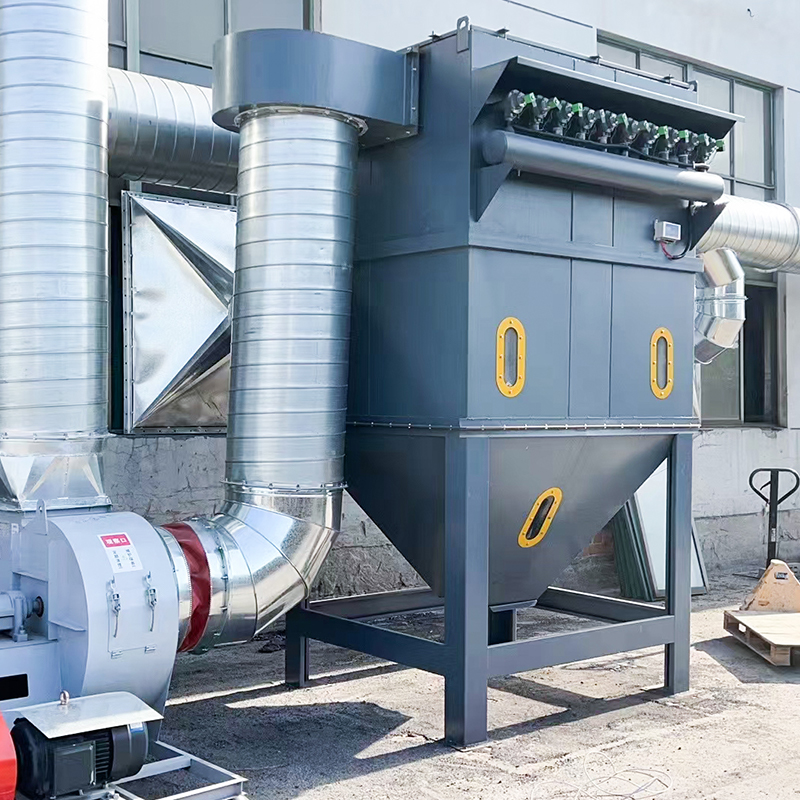
Why choose a professional supplier like Hangzhou Lvran Environmental Protection Group?
Since its establishment in April 2011, Hangzhou Lvran Environmental Protection Group has developed deep expertise in woodworking dust collection through thousands of successful installations. As a national high-tech enterprise, the company holds more than 30 utility model patents and multiple invention patents. Its long-term technical R&D cooperation with domestic universities—including the "Environmental Protection Innovation R&D Center" with Anhui University of Science and Technology and the "Plasma Energy Environment New Technology R&D Center" with Zhejiang University of Technology—ensures that its Dust Collector Equipment integrates the latest advancements in filtration and safety technology. The company's qualifications, including the "Safety Production License" and IS09001/ISO14001/ISO45001 certifications, guarantee that every system meets rigorous safety and quality standards.
Central Dust Collector System Design: What Are the Critical Factors?
A central dust collector system design directly determines capture efficiency, energy consumption, and overall cost. Engineers must calculate system pressure losses accurately to select the correct fan and motor combination.
Calculating air velocity and duct diameter for optimal capture efficiency
The fundamental equation governing system design is Q = A × V, where Q is airflow (CFM), A is duct cross-sectional area, and V is transport velocity. Below are typical velocity requirements for common materials:
| Material Type | Minimum Transport Velocity (FPM) | Recommended Duct Material |
|---|---|---|
| Wood chips & shavings | 3,500 | Galvanized steel (16-20 ga) |
| Fine wood dust | 4,000 | Galvanized steel (16-20 ga) |
| Metal grinding dust | 4,500 | Stainless steel or abrasion-resistant |
| Chemical powder | 3,500-4,000 | Stainless steel, grounded |
Note: Undersized ducts increase velocity but exponentially increase static pressure loss, raising horsepower requirements and energy costs. Oversized ducts allow material to settle, causing blockages.
Engineering expertise and qualification requirements for system design
Proper system design requires both theoretical knowledge and practical experience. Hangzhou Lvran Environmental Protection Group holds a "Second-level qualification for general contracting of municipal public works construction" and "Special Engineering Professional Contracting" certification, along with "Environmental Protection Zhejiang Province Environmental Pollution Control Special Design Class B". These credentials authorize the company to undertake complex, large-scale industrial projects. With a team of over 50 professionals including professor-level senior engineers and registered environmental engineers, the group performs detailed pressure drop calculations, duct network balancing, and fan selection to ensure every central dust collector system design operates at peak efficiency.
Cartridge Dust Collector vs Baghouse: Which Filtration Technology Is Right for You?
Selecting between cartridge and baghouse technology depends on dust characteristics, required emission levels, and available space. The comparison of cartridge dust collector vs baghouse involves trade-offs in efficiency, maintenance, and energy use.
Performance comparison: Filtration efficiency, pressure drop, and energy consumption
| Parameter | Cartridge Dust Collector | Baghouse (Pulse-Jet) |
|---|---|---|
| Filtration Efficiency | MERV 15-16 (99.99% on 0.5-2 µm) | Typically MERV 12-14 (lower on fine particles) |
| Media Area per Unit Volume | High (pleated design) | Moderate to Low |
| Operating Pressure Drop | 3-6 inches w.g. (typical) | 4-8 inches w.g. (higher energy consumption) |
| Space Requirement | Compact (smaller footprint) | Larger (requires more headroom) |
| Best Applications | Fine dust, welding fumes, pharmaceuticals, food processing | Heavy dust loads, high temp applications, abrasive materials |
Application suitability across different industries (chemical, pharmaceutical, food, etc.)
Hangzhou Lvran Environmental Protection Group has successfully deployed both technologies across more than 2,000 engineering cases nationwide. For pharmaceutical chemical plants requiring strict GMP compliance and high-efficiency particulate removal, cartridge collectors are typically specified. For heavy industrial applications such as foundries, power generation, or rubber compounding, properly designed baghouses offer robust performance and longer media life. The group's experience across industries including printing and dyeing, electronics, photovoltaics, and hazardous waste disposal ensures unbiased technology selection based on application-specific data.
When Do You Need Explosion Proof Dust Collector Equipment?
Combustible dust explosions pose a catastrophic risk in many industries. Determining when to specify explosion proof dust collector equipment is a matter of hazard analysis and regulatory compliance.
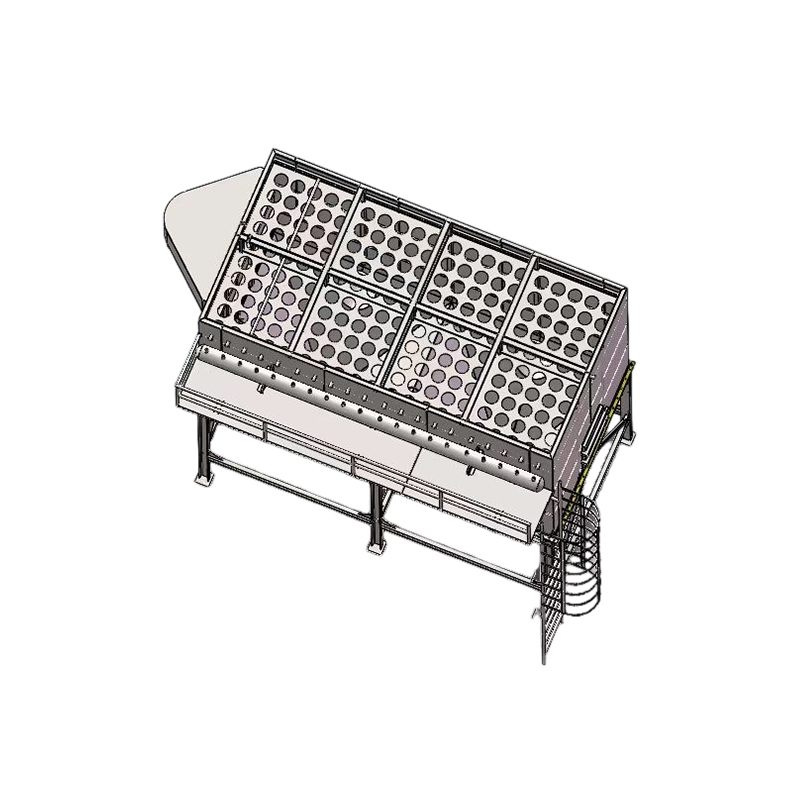
Understanding combustible dust hazards and ATEX/NFPA standards
Any material that can form a dust cloud and ignite—including wood, metal powders, many chemicals, and food ingredients—requires explosion protection. Key standards include NFPA 652 (general requirements), NFPA 664 (woodworking), and ATEX Directives (Europe). Engineering controls may include:
- Deflagration venting: Panels that relieve pressure to a safe outdoor area.
- Oxidation suppression: High-speed chemical injection systems that extinguish flames.
- Isolation valves: Rotary airlocks, flap valves, or chemical barriers to prevent flame propagation back into the plant.
- Grounding and bonding: Prevents static discharge ignition sources.
How certified engineering and safety compliance protect your facility
Hangzhou Lvran Environmental Protection Group's qualifications—including the "Safety Production License", ISO45001 occupational health management certification, and multiple patents in safety-related technologies—demonstrate its capability to design and install explosion-proof systems. The group's "Electronic and Intelligent Professional Contracting Class II" qualification enables integration of advanced monitoring and suppression controls. With a team experienced in hazardous industries, the company ensures each explosion proof dust collector equipment installation meets all applicable codes and provides comprehensive documentation for insurance and regulatory purposes.
How to Create a Cost-Effective Dust Collector Equipment Maintenance Schedule
Proper maintenance is critical to sustaining performance and minimizing operating costs. A structured dust collector equipment maintenance schedule prevents unscheduled downtime and extends equipment life.
Daily, monthly, and annual inspection tasks to prevent downtime
- Daily: Check differential pressure across filters; inspect rotary valves for proper operation; verify compressed air pressure for pulse-jet cleaning (if applicable); look for visible dust leaks.
- Monthly: Inspect filter elements for wear or blinding; check gaskets and door seals; test safety devices (e.g., deflagration panels, spark detection); verify fan bearing temperatures and vibration.
- Annual: Perform thorough internal inspection; replace filters if pressure drop exceeds design limits; check ductwork for erosion or accumulation; recalibrate instrumentation; review system performance against original design specs.
The value of professional after-sales support and nationwide service network
Hangzhou Lvran Environmental Protection Group's nationwide presence—with production bases including Huaian Green Environmental Equipment Co., Ltd., Huzhou Green Environmental Equipment Technology Co., Ltd., and branches in Suzhou, Nantong, Qingdao, and more—ensures rapid response for maintenance and support. With annual sales exceeding 100 million RMB and over 1,000 corporate customers served, the group has built a robust after-sales infrastructure. Customers benefit from genuine replacement parts, factory-trained technicians, and access to the group's extensive engineering knowledge base, minimizing downtime and optimizing system performance over the long term.
Frequently Asked Questions (FAQ)
- Q: How do I determine the required CFM for my dust collector system?
A: CFM requirements are calculated by summing the airflow needs of all connected hoods or machines, with simultaneous operation factors applied. Each hood must maintain minimum capture velocity (typically 200-400 FPM at the point of generation). Professional system design includes detailed duct layout and pressure loss calculations. - Q: What is the difference between primary and secondary dust collectors?
A: Primary collectors (cyclones) remove larger particles before the air reaches the final filter (baghouse or cartridge). This reduces filter loading and extends media life. Secondary collectors provide high-efficiency filtration for fine particulates to meet emission standards. - Q: Can I vent dust collector exhaust back into the plant?
A: In some jurisdictions, recirculation of cleaned air is permitted if the outlet concentration meets indoor air quality standards (typically <1 mg/m³ for certain dusts). This can save heating/cooling costs. However, hazardous dusts (e.g., lead, certain toxics) must be exhausted outdoors. Always consult local regulations and NFPA/OSHA requirements. - Q: How often should filter cartridges or bags be replaced?
A: Replacement frequency depends on dust loading, hours of operation, and cleaning effectiveness. Typical intervals range from 1-5 years. Key indicators include increased pressure drop beyond design limits despite cleaning, visible dust leakage, or visible wear/damage to media. - Q: What certifications should I look for when purchasing explosion-proof dust collectors?
A: Look for compliance with NFPA 68 (explosion venting), NFPA 69 (explosion prevention systems), and ATEX certifications for components. The manufacturer should provide documentation of third-party testing and calculations for deflagration vent sizing, along with proper labeling per applicable codes.
References
- National Fire Protection Association. (2020). NFPA 652: Standard on the Fundamentals of Combustible Dust. Quincy, MA: NFPA.
- National Fire Protection Association. (2018). NFPA 664: Standard for the Prevention of Fires and Explosions in Wood Processing and Woodworking Facilities. Quincy, MA: NFPA.
- Occupational Safety and Health Administration. (2008). OSHA Technical Manual (OTM) Section III: Chapter 5, Industrial Hygiene. Washington, DC: U.S. Department of Labor.
- American Conference of Governmental Industrial Hygienists. (2022). Industrial Ventilation: A Manual of Recommended Practice for Design (30th ed.). Cincinnati, OH: ACGIH.
- European Committee for Standardization. (2014). EN 12779: Safety of woodworking machines – Chip and dust extraction systems with fixed installation – Safety requirements. Brussels: CEN.
- U.S. Environmental Protection Agency. (2021). AP 42, Fifth Edition, Volume I, Chapter 13: Miscellaneous Sources. Research Triangle Park, NC: EPA.