English
 русский
 عربى
 中文简体
Centrifugal Blower for Dust Collector: The Complete Sizing Guide & Selection Tips
HOME / NEWS / Industry News / Centrifugal Blower for Dust Collector: The Complete Sizing Guide & Selection Tips

Content
A dust collector with new filter bags but weak suction at the hood is rarely a filter problem. More often, the centrifugal blower for dust collector duty has been chosen for the wrong operating point. That blower is the component that determines whether the system actually achieves the required capture velocity at every hood and the conveying velocity in every duct. If it is undersized, adding more filter area or increasing pulse frequency will not solve the problem.
Dust collection ducts are rarely short or straight. Elbows, branch take-offs, hoods, and the filter housing all add resistance. Axial fans generate high airflow at low pressure, so they cannot overcome the resistance of a ducted dust collector. A centrifugal blower increases static pressure by accelerating air with a rotating impeller and then converting that velocity energy into pressure. That pressure is what pushes air through the filter media and keeps the ductwork under negative pressure.
A centrifugal blower also responds more predictably as the filter loads. When the filter pressure drop rises, the operating point moves up the system curve. The blower loses some airflow, but a properly selected model does not stall; it settles at a new, still functional point while the cleaning controller reacts.
The starting point for selection is the duty point, which is the intersection of the blower performance curve and the system resistance curve. To define that point, you need the design airflow at the dust collector inlet and the total static pressure required at that flow. The table below summarizes the main parameters to review.
| Parameter | Why It Matters | Typical Range for Dust Collector Service |
|---|---|---|
| Airflow (m3/h) | Sets capture velocity at hoods and conveying velocity in ducts | Varies; confirm by hood capture requirements or duct velocity |
| Static pressure (Pa) | Overcomes duct friction, hood losses, and filter resistance | 1,000-4,000 Pa for small to medium systems; higher for long runs or fine filter media |
| Total pressure (Pa) | Static pressure plus velocity pressure; used for fan curve selection | Usually 5-10% above static pressure at the same flow |
| Rotational speed (rpm) | Changes pressure and airflow; affects noise and belt drive selection | 800-3,000 rpm depending on impeller diameter and drive ratio |
| Shaft power (kW) | Determines motor size and annual energy cost | Use airflow, total pressure, and efficiency to derive; check against the blower curve |
| Efficiency (%) | Shows how much of the motor input becomes useful air power | 55-75% for typical dust collector blowers |
If the existing system has no design data, measure the static pressure across the blower inlet and outlet, and compare the actual airflow with the hood capture requirements. These values are more reliable than guessing from motor size.
Start at the hood. Calculate the capture velocity required for the dust type, then size the ducts to keep that velocity above the falling threshold. Add losses for elbows, branch entries, the filter housing, and the stack. The sum of these losses at the design airflow is the static pressure the centrifugal blower must produce. Do not select a blower by airflow alone; two blowers with identical airflow can have very different pressure capabilities.
For a step-by-step calculation process, follow a dedicated centrifugal dust extractor fan sizing guide. It walks through pressure loss estimation and fan curve interpretation in the context of dust extraction ductwork.
Dust collectors handle everything from dry wood chips to corrosive chemical fumes. The blower material must resist abrasion, moisture, temperature, and chemical attack. Selecting the wrong material usually shows up within the first year as blade thinning or casing corrosion.
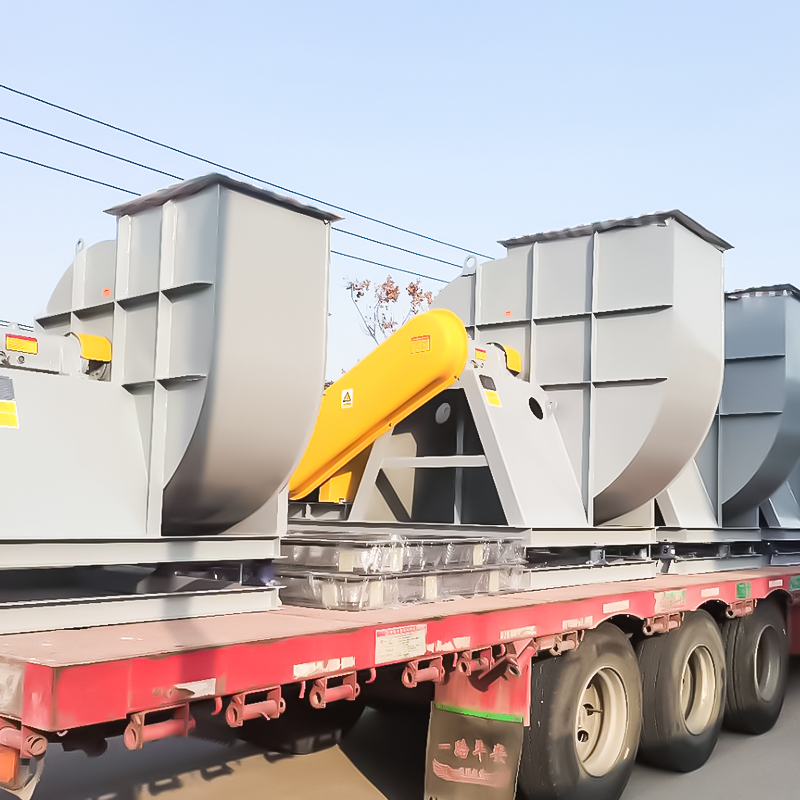
Grinding, sanding, and material conveying produce dust that erodes the impeller over time. A carbon steel centrifugal fan with a heavy-duty impeller is a practical baseline for these applications. The thicker steel resists wear, and the simpler construction makes maintenance easier.
 Heavy-Duty Carbon Steel Centrifugal Fan for Dust CollectionThis TF series fan uses a thickened steel impeller to resist erosion from grinding and conveying dust. It offers a practical baseline for industrial dust extraction while simplifying maintenance in abrasive service.View Product →
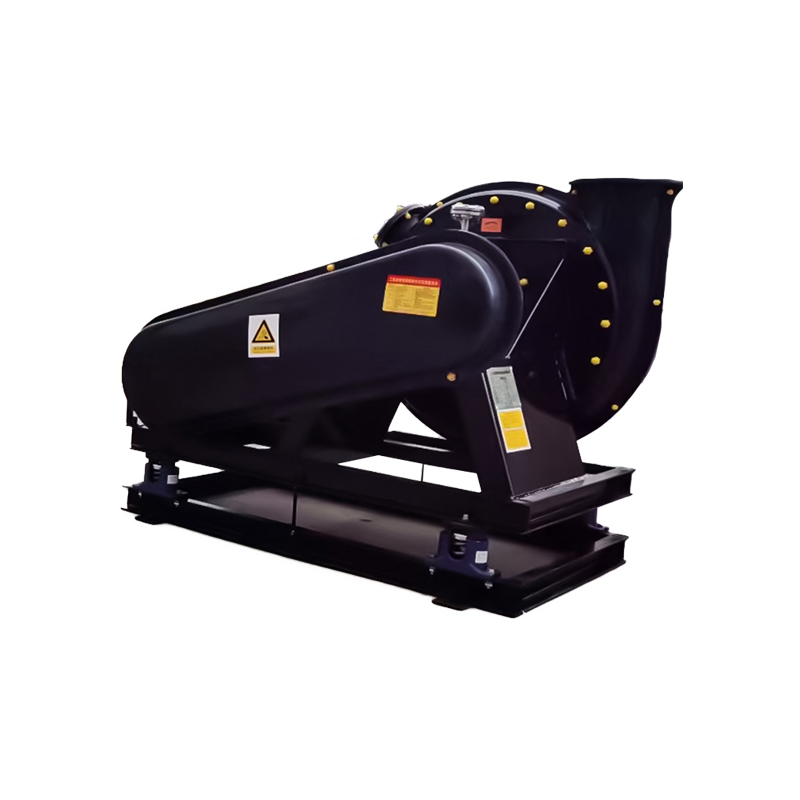
When the dust collector also draws acid gases, solvent vapors, or condensing humidity, unprotected carbon steel may corrode from the inside. A fiberglass-reinforced plastic (FRP) blower can handle many of these chemicals without relying on paint or linings. An FRP high-pressure blower maintains the static pressure needed for baghouse or cartridge service while extending the life of the fan in aggressive environments.
 FRP High-Pressure Corrosion-Resistant BlowerThis GF series fiberglass blower withstands acid gases, solvent vapors, and humidity without paint or linings. It delivers static pressure up to 10,000 Pa for baghouse or cartridge systems in corrosive environments.View Product →
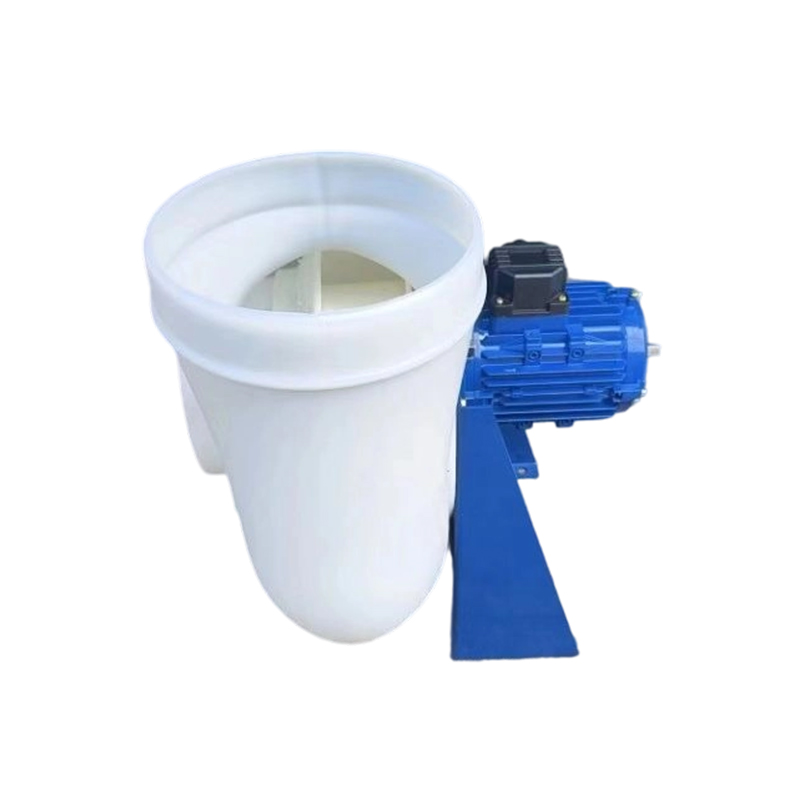
Central vacuum systems, long duct runs, and fine filter media require more static pressure at moderate airflow. When the resistance curve is steep, a standard low-pressure fan will drop below the required flow quickly. A fiberglass D-type centrifugal fan is often chosen in these conditions because it delivers higher pressure while keeping the drive side accessible for maintenance. This configuration is also useful if the collected dust or gas stream has mild chemical content that makes carbon steel too risky.
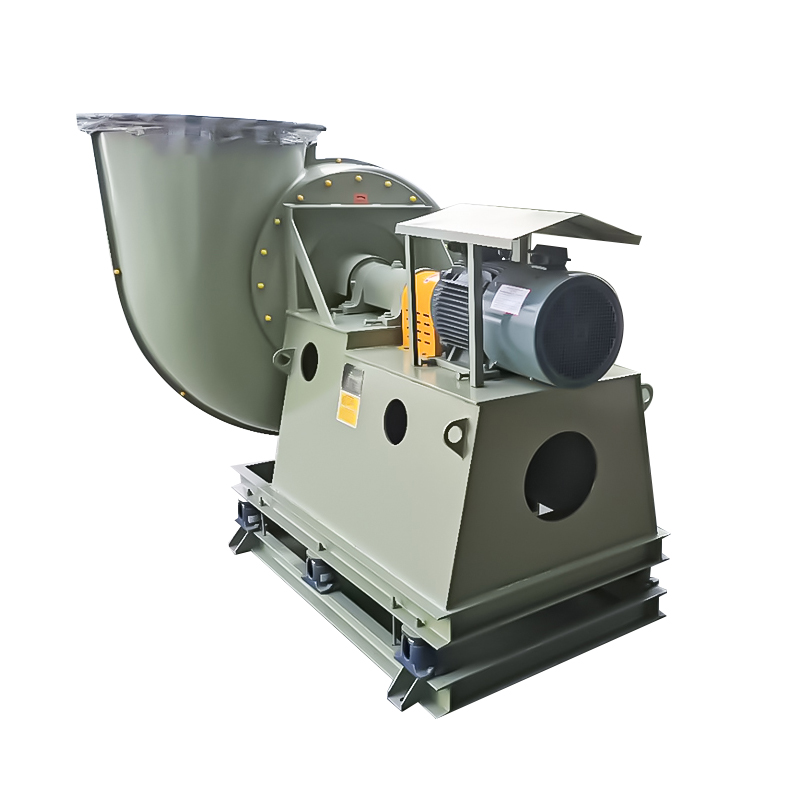 FRP D-Type Anti-Corrosion Centrifugal FanThis D-shaped fiberglass fan resists strong acids, bases, and organic solvents while improving efficiency by 5-8% and lowering noise by 4-6 dB. It suits chemical, electroplating, and metallurgy exhaust systems.View Product →
Even a correctly sized centrifugal blower will perform poorly if the installation creates inlet swirl, excessive vibration, or duct-induced pressure losses. Keep the following points in mind:
If the system uses a variable frequency drive, verify the fan curve at low speeds and avoid sustained operation in a resonant speed range.
A centrifugal blower for a dust collector should not be selected in isolation. The filter housing, cleaning mechanism, duct layout, and discharge stack all affect the system curve. Manufacturers that build both the collector and the blower can match the components more accurately and simplify support. For example, our industrial filter dust collectors are designed with the blower in mind, so the housing pressure drop and inlet conditions are not guessed during startup.
Selecting a centrifugal blower for dust collector service is not about finding the most powerful fan available. It is about matching a predictable pressure-flow curve to the real resistance of a specific duct and filter system. Confirm the duty point, choose a material that fits the dust chemistry, and allow for future filter loading before finalizing the motor size. When those decisions are made together, the dust collector performs as designed, and maintenance stays manageable.
Request for a call today