English
 русский
 عربى
عربى 中文简体
中文简体Horizontal Wet Scrubber Guide: How It Works, Materials and Practical Selection
HOME / NEWS / Industry News / Horizontal Wet Scrubber Guide: How It Works, Materials and Practical Selection

Content
If your plant has the floor area but not the ceiling height, a horizontal wet scrubber delivers packed-bed gas absorption in a low-profile arrangement. It removes the same acid, alkaline, and water-soluble gas streams as a vertical packed tower by running the gas path along the length of the vessel instead of upward. That single change makes it one of the most practical wet scrubber designs for indoor retrofits and low-roof workshops.
The trade-off is straightforward: a horizontal scrubber occupies noticeably more floor space, and the internal gas distribution must be engineered carefully so the stream does not channel through the packing. When the vessel geometry and liquid distribution are designed properly, the horizontal layout achieves removal efficiency comparable to a vertical tower while keeping the top of the unit at working height for inspection and maintenance.
The principle is the same as any packed-bed wet scrubber. Contaminated gas contacts a recirculating liquid across a large wetted surface, and the target pollutant transfers from the gas phase into the liquid phase, where it is absorbed, dissolved, or neutralized. In a horizontal unit, the gas enters at one end, passes horizontally through one or more packed beds, and exits at the opposite end through a mist eliminator.
The vessel shell holds packing media such as polypropylene or ceramic Raschig rings, saddle-type packing, or other structured media. The packing creates the surface area that forces intimate gas-liquid contact. Liquid is distributed from spray headers above the bed and flows downward through the packing by gravity, while the gas flows across the wetted surfaces. Typical packing depths for a single bed range from 400 to 1,000 mm, and multiple beds with intermediate spray banks can be arranged along the vessel when higher removal efficiency is needed.
Scrubbing liquid collects in an integral sump at the bottom of the vessel and is pumped back to the spray headers. For acid gas removal, caustic soda is dosed continuously to keep the pH between 8 and 9, so that HCl, H2SO4, HNO3, HF, and similar pollutants are neutralized into soluble salts. For alkaline gases such as ammonia, a dilute acid scrubbing solution is used instead. An automatic dosing system with a pH probe keeps the chemistry stable and prevents efficiency swings during production changes. Dissolved salts concentrate in the sump over time and are controlled by blowdown and fresh water makeup.
After the gas leaves the packed section, it is saturated with moisture and carries entrained droplets. A mesh pad or chevron-type mist eliminator mounted just before the outlet captures these droplets. This detail matters: if the mist eliminator is undersized or the gas velocity through the vessel is too high, droplet carryover reaches the ductwork and fan downstream, causing corrosion and salt deposits. Keep the gas velocity through a horizontal scrubber between roughly 1 and 2 m/s and give the mist eliminator enough face area.
Most facility engineers compare these two orientations before committing to a design. There is no universal winner; the right layout depends on the building envelope, the air volume, and how the rest of the exhaust system is arranged.
| Consideration | Horizontal scrubber | Vertical scrubber |
|---|---|---|
| Ceiling height required | Low; fits standard factory bays and mezzanine spaces | Tall; often needs roof clearance or outdoor installation |
| Floor footprint | Large | Compact |
| Maintenance access | Side doors at working height | Access ports at various elevations; may need platforms |
| Best application | Indoor retrofit, low-headroom workshops, multi-stage treatment | New installations with space to go vertical |
The rule of thumb is simple: if your building can spare floor area but the roof height stops at 3 to 4 meters, a horizontal wet scrubber is the natural fit. If you are designing a new plant and can place the tower outdoors, a vertical scrubber usually saves ground space and simplifies liquid drainage.
Shell material determines chemical resistance, temperature limit, weight, and cost. For most acid and alkaline exhaust streams in metal finishing, electronics, chemical dosing, and laboratory fume systems, three materials cover the practical range.
Polypropylene is the workhorse material for general acid and alkaline scrubbing. It resists hydrochloric acid, dilute sulfuric acid, moderate nitric acid, and caustic solutions up to about 80°C. PP is weldable, light enough for indoor installation without heavy structural steel, and cost-effective. It is not suitable for concentrated oxidizing acids at high temperature or for streams carrying significant concentrations of aromatic solvents.
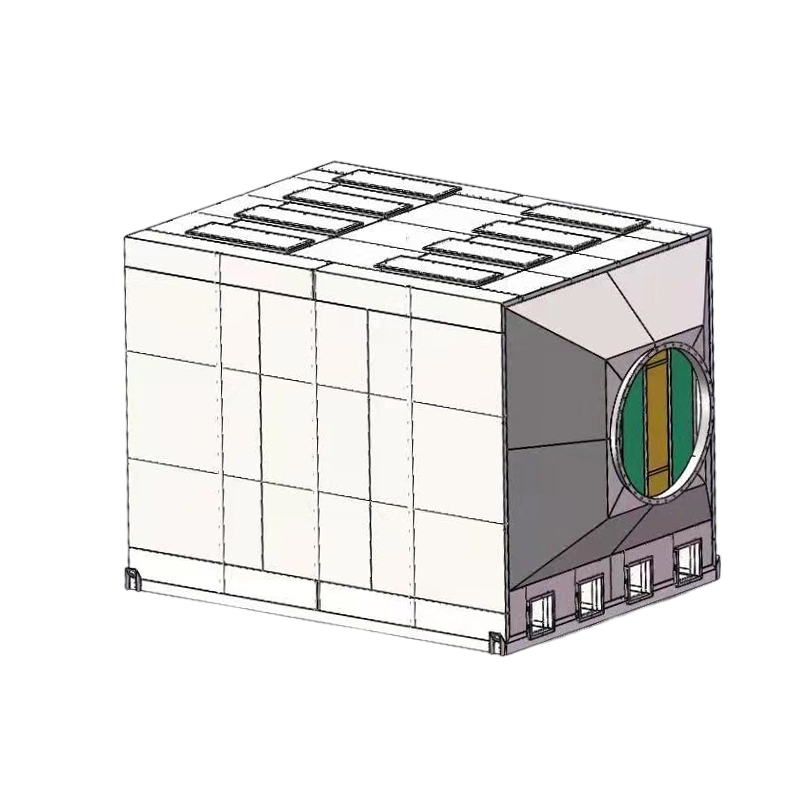
For typical indoor acid and alkali applications, a PP scrubber is the most economical first choice. The PP horizontal washing tower packages the corrosion-resistant shell, integral sump, and spray section for continuous operation.
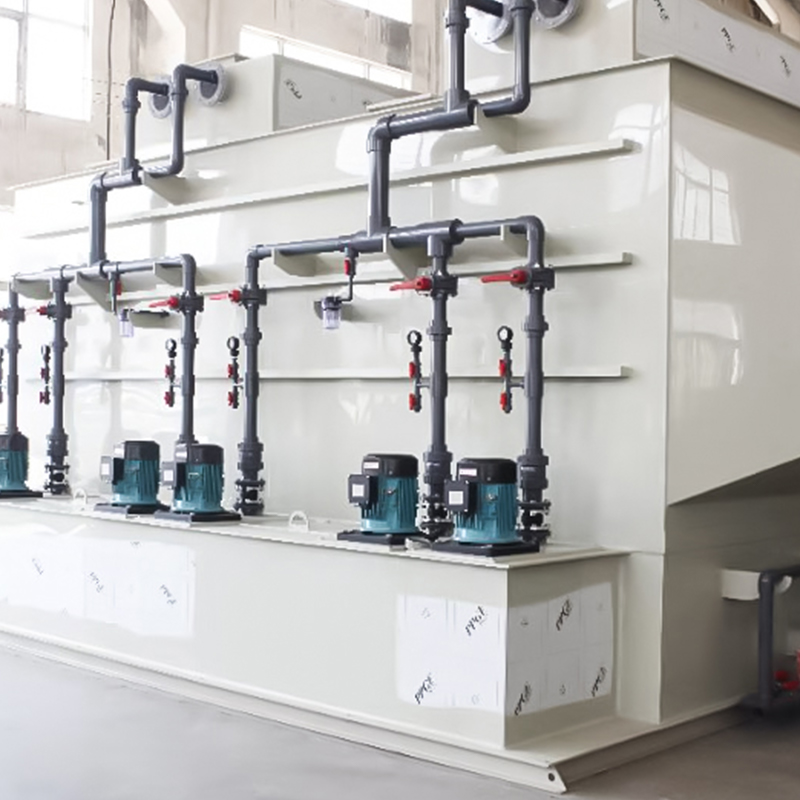 Wholesale PP horizontal scrubber tower Suppliers, Exporter, CompanyHangzhou Lvran Environmental Protection Group Co., Ltd. Is China Wholesale PP horizontal scrubber tower Suppliers, Exporter, Company, Wor...View Product →
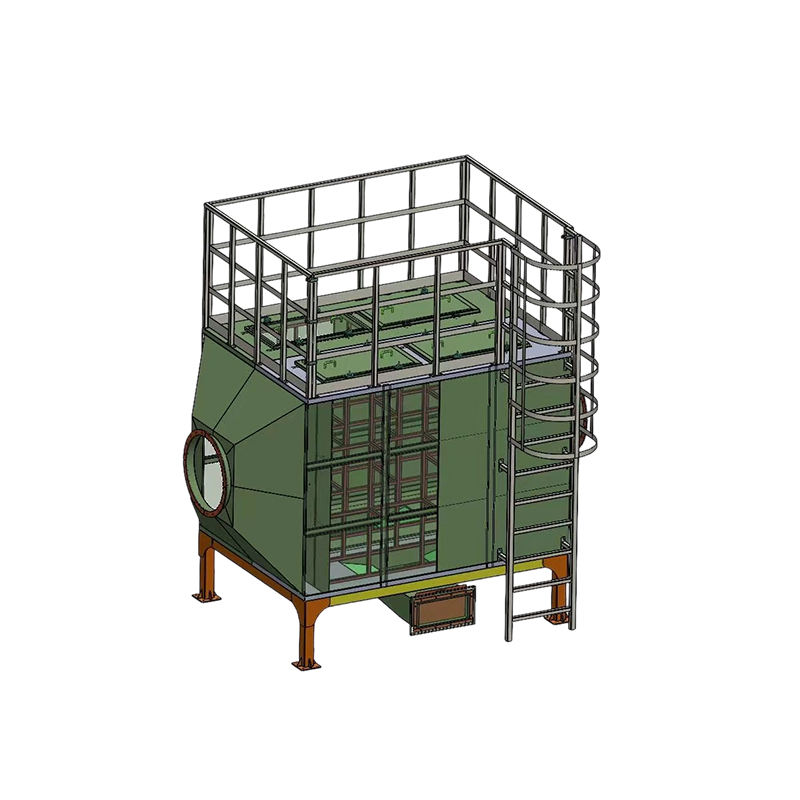
Glass-fiber reinforced plastic combines a thermoset resin with glass-fiber reinforcement, giving higher mechanical strength per unit weight than PP and excellent resistance to chloride attack, wet chlorine, and humid outdoor conditions. With a vinyl ester resin, FRP typically handles service temperatures up to about 80 to 100°C, and fire-retardant grades are available. For larger airflows and outdoor installation, the FRP horizontal washing tower provides the stiffness needed for large-diameter vessels without the corrosion problems of painted carbon steel.
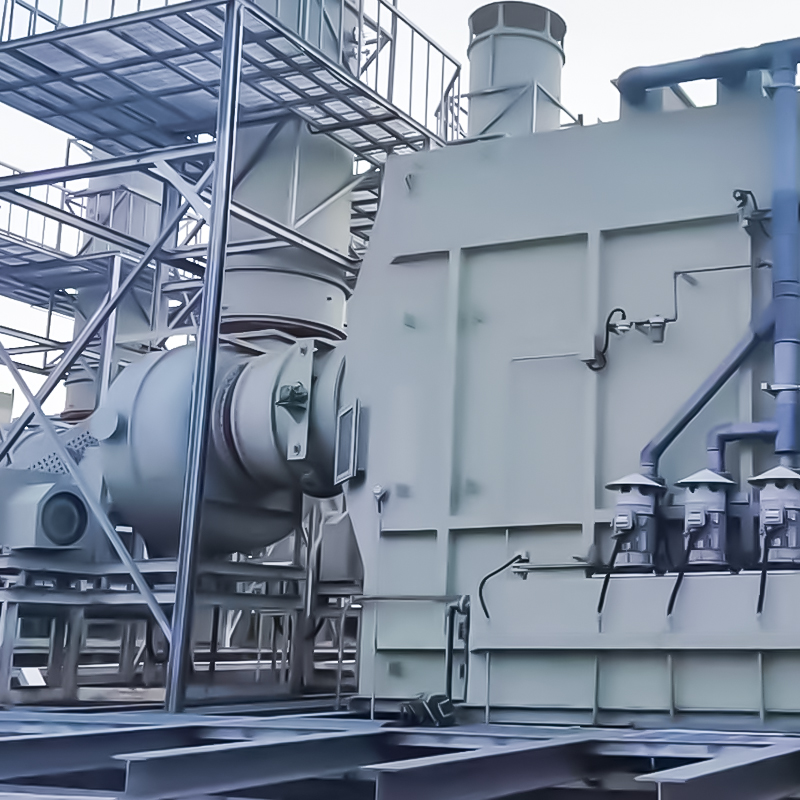 Wholesale FRP horizontal scrubber tower Suppliers, Exporter, CompanyHangzhou Lvran Environmental Protection Group Co., Ltd. Is China Wholesale FRP horizontal scrubber tower Suppliers, Exporter, Company, Wo...View Product →
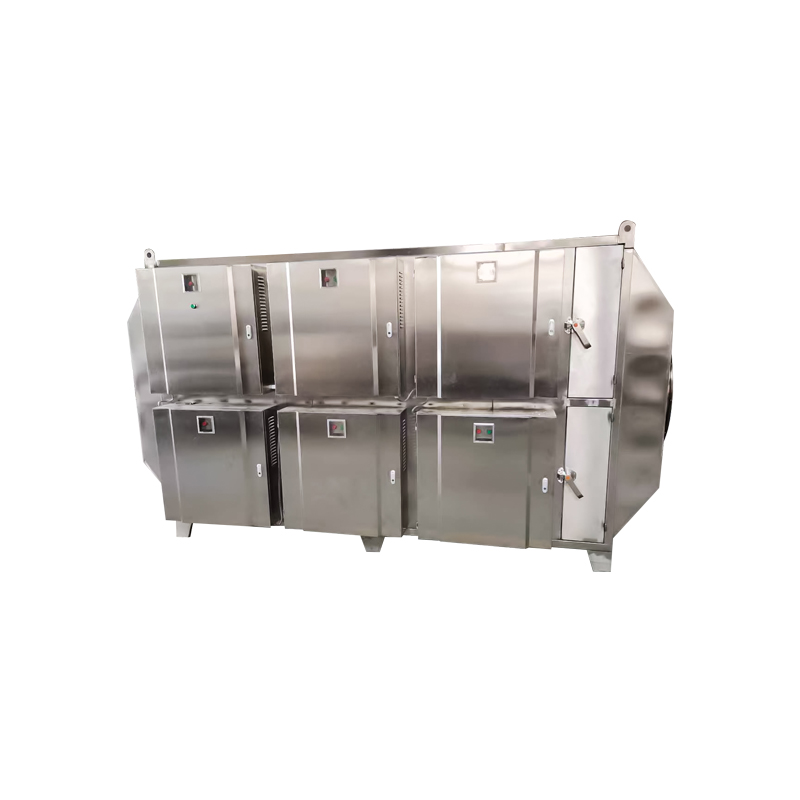
Stainless steel becomes necessary when gas temperature is well above the limit of PP or FRP, when the chemical load is strongly oxidizing, or when the stream contains particulate that can erode plastic surfaces. Grade 304 handles many dilute acid applications; 316L adds molybdenum, which improves resistance to chlorides and pitting. Stainless steel costs more and weighs more, but it copes with intermittent high-temperature operation better than FRP, which can develop microcracks under repeated thermal cycling. For high-temperature or high-strength duties, the 304 stainless steel horizontal washing tower is the recommended configuration.
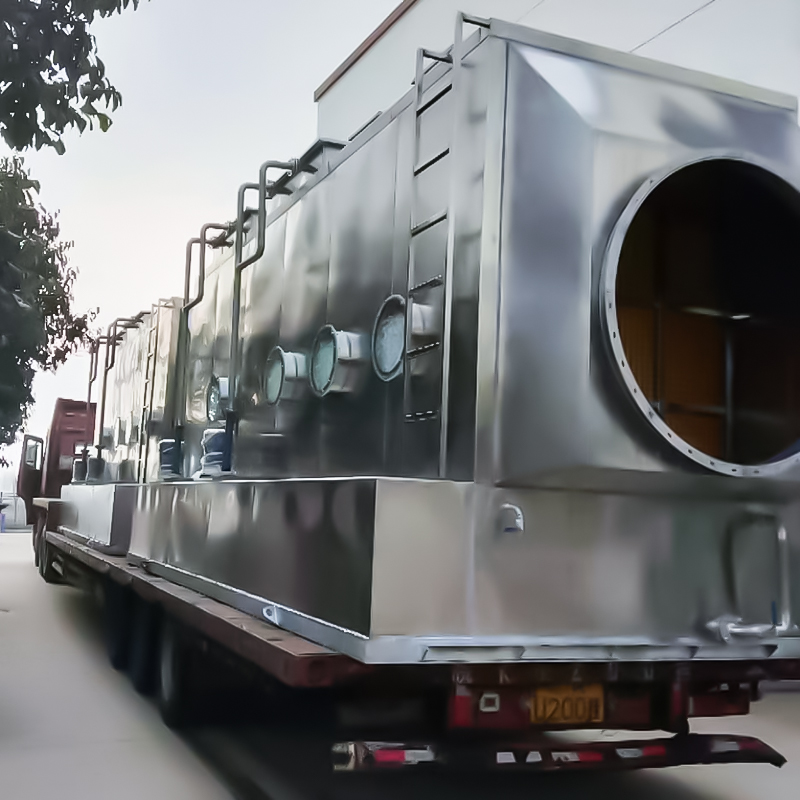 Wholesale 304 stainless steel horizontal scrubber tower Suppliers, Exporter, ComHangzhou Lvran Environmental Protection Group Co., Ltd. Is China Wholesale 304 stainless steel horizontal scrubber tower Suppliers, Expor...View Product →
To get a reliable proposal, the vendor needs more than a fan curve. Provide the actual gas flow rate under operating conditions, the pollutant identity and inlet concentration, the required outlet concentration or removal efficiency, the gas temperature and humidity, and the particulate load in the stream.
Frequent specification mistakes explain most poor scrubber performance. Ignoring the actual gas temperature can push a PP scrubber past its working limit. Assuming the fan will absorb the added pressure drop of the packing and mist eliminator leads to underpowered systems. And placing the mist eliminator where the horizontal air stream is not evenly distributed creates localized carryover. Before ordering, check the liquid circulation rate against the pollutant load: if the neutralization calculations demand more caustic than the specified dosing pump can deliver, the system will never reach the guaranteed efficiency.
Environmental agencies, including the US EPA, regard wet scrubbing as a standard control technique for acid gases because performance is predictable and measurable when the liquid chemistry is monitored. The practical consequence is that chemical scrubber selection should be based on inlet loading and target efficiency, not on the size of the fan or the diameter of the vessel. Equally important, the choice of scrubbing solution determines how effectively each acid gas is removed: HCl absorbs readily into water, while SO2 and Cl2 respond best to a controlled alkaline solution.
A scrubber alone does not guarantee compliance. The complete train includes a capture hood, corrosion-resistant ducting, the scrubber itself, an induced draft fan, a pH control and dosing package, and a stack. Many failures trace back to an incompatible match between the scrubber pressure drop and the fan curve.
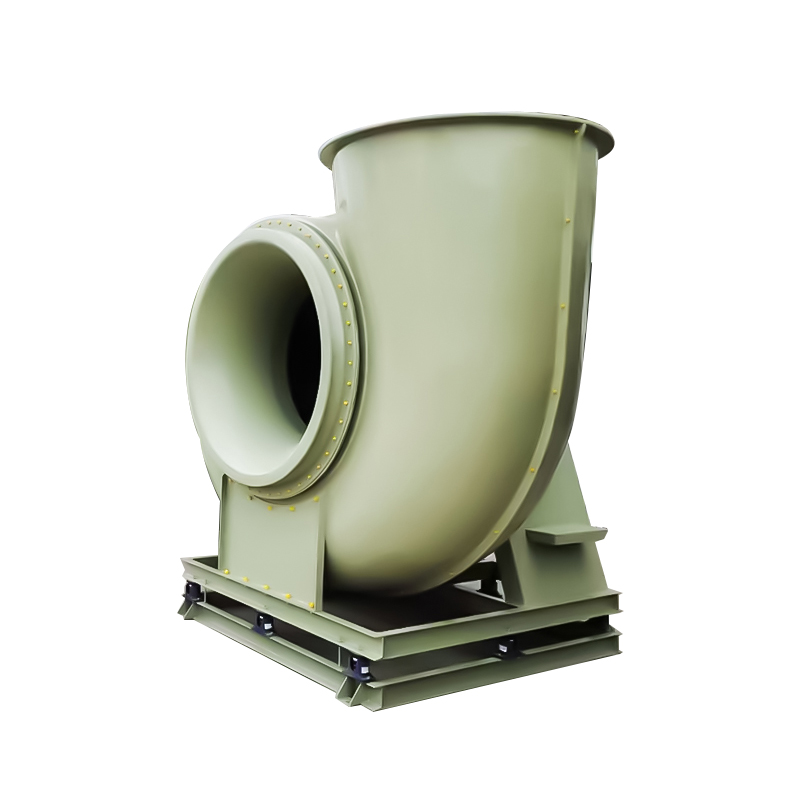
Plant engineers should therefore evaluate suppliers who can deliver the scrubber, fan, and dosing accessories as one system. The fan downstream of the mist eliminator must be rated for saturated, slightly corrosive air. The material discipline applied to the scrubber shell should extend to the ducting and fan casing; otherwise the first corroded elbow becomes the weak point of the installation. Manufacturers that also produce fans, air ducts, and automatic dosing systems can coordinate these components in a single package, which simplifies installation, commissioning, and troubleshooting.
Start the buying process with your pollutant list, gas temperature, available floor space, and local emission limits. If ceiling height is the binding constraint, choose a horizontal layout; if floor space is the binding constraint, go vertical. Match the shell material to the chemical environment, and keep the mist eliminator, liquid circulation rate, and pH control in the specification, because these details determine real-world performance more than vessel diameter.
Work with a supplier who treats the scrubber as part of a complete system and can back the design with manufacturing and installation experience. A reliable manufacturer will ask about actual inlet conditions, present packing depth and liquid-to-gas ratio as engineering decisions, and support the installation after commissioning. When your operating data is ready, talk to an engineer about your exhaust conditions and ask for a proposal that includes the fan, ducting, and dosing package rather than a bare vessel.
Request for a call today