English
 русский
 عربى
عربى 中文简体
中文简体How Biological Treatment Equipment Controls Odors and VOCs in Industrial Air
HOME / NEWS / Industry News / How Biological Treatment Equipment Controls Odors and VOCs in Industrial Air

Content
A food processing facility receives a complaint about a rotten-egg smell from the neighborhood every time its wastewater sump is agitated. The plant already operates a caustic scrubber, but chemical consumption is high, the liquid waste stream needs disposal, and the odor persists during peak loading. This is the typical scenario where biological treatment equipment becomes the most practical answer.
Biological treatment equipment uses naturally occurring microorganisms to oxidize odorous and organic pollutants into carbon dioxide, water, and harmless mineral salts. For dilute, high-volume air streams containing hydrogen sulfide, ammonia, mercaptans, or VOCs, a well-designed biological system can reach removal efficiencies above 90 percent while consuming far less energy and chemical reagent than thermal oxidation or wet chemical scrubbing.
All biological waste gas treatment systems rely on the same principle: polluted air is passed through a wetted bed where microorganisms grow as a biofilm. The microorganisms metabolize the pollutants, converting them to cell biomass, carbon dioxide, and water. Sulfur-based compounds such as hydrogen sulfide and mercaptans are oxidized to sulfate, while nitrogen-based compounds such as ammonia are nitrified to nitrate.
Most industrial odor control applications use aerobic degradation, in which oxygen is supplied with the air stream. The reaction is exothermic, so heat is released, but the pollutant concentrations in typical odor streams are low enough that temperature rise is minimal. The practical result is a destruction process that produces no spent adsorbent, no residual chemical sludge, and no secondary combustion products.
The filter media is the physical support for the biofilm and the place where pollutant mass transfer happens. Organic media such as compost, bark, or wood chips provide natural nutrients and buffering, but they compact and degrade over time. Synthetic or inorganic media, such as structured plastic packing or ceramic rings, offer lower pressure drop and longer service life, but they require a recirculating liquid to supply moisture and nutrients.
Three configurations dominate the market: biofilters, biotrickling filters, and bioscrubbers. Each has a different balance of footprint, operating complexity, and tolerance for upset conditions.
In a biofilter, the humidified waste air passes upward or downward through a fixed bed of organic media. The biofilm grows directly on the media, and the media itself supplies nutrients. Biofilters are the most economical choice for very large air flows with low pollutant concentrations, such as exhaust from wastewater treatment plants, composting halls, or food processing. Empty bed residence times typically range from 30 to 90 seconds.
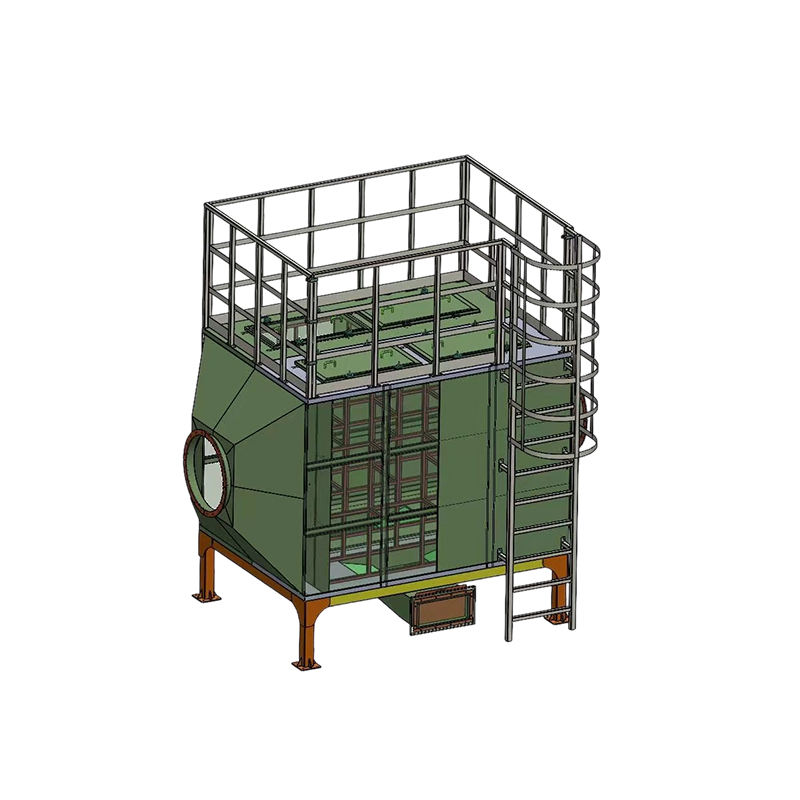
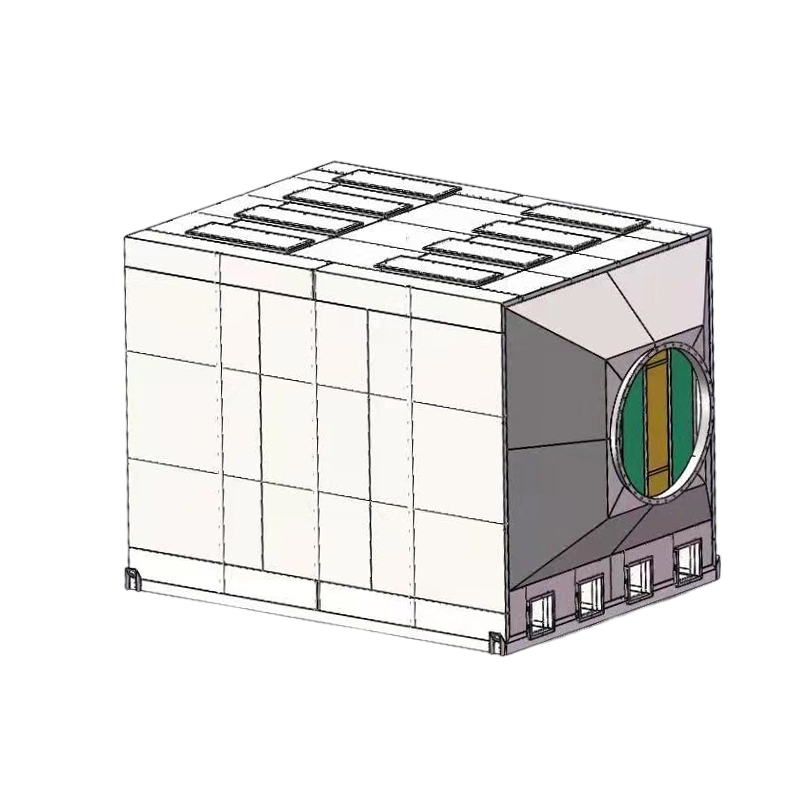
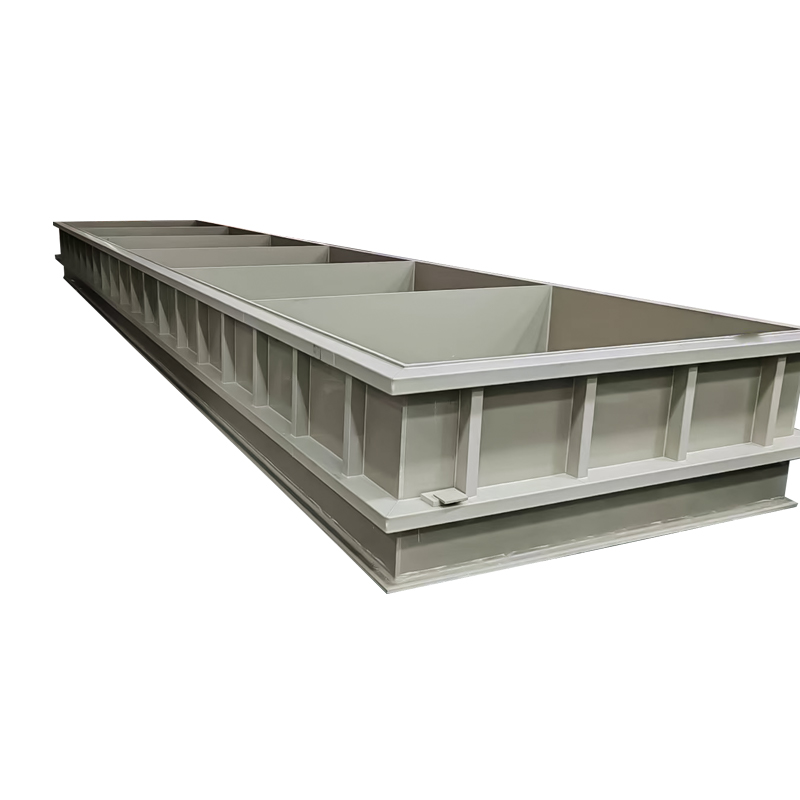
Packaged systems designed for industrial odor sources are often built as a biological deodorization box, which integrates the humidifier, biofilter bed, and blower connection in a compact steel structure.
 Wholesale Biological deodorization box Suppliers, Exporter, CompanyHangzhou Lvran Environmental Protection Group Co., Ltd. Is China Wholesale Biological deodorization box Suppliers, Exporter, Company, Pro...View Product →
A biotrickling filter uses a synthetic packing bed with a continuously recirculating water stream that supplies nutrients and removes inhibitory by-products. Because the liquid phase can be buffered and drained, this design handles acid-producing pollutants such as hydrogen sulfide more reliably than a conventional biofilter. It also tolerates higher and more variable pollutant loads.
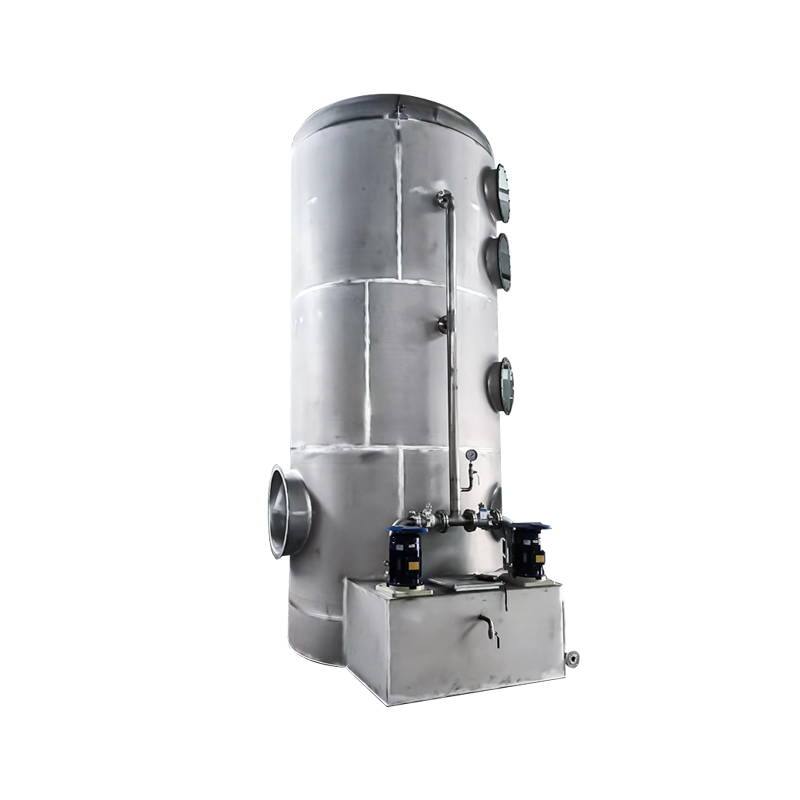
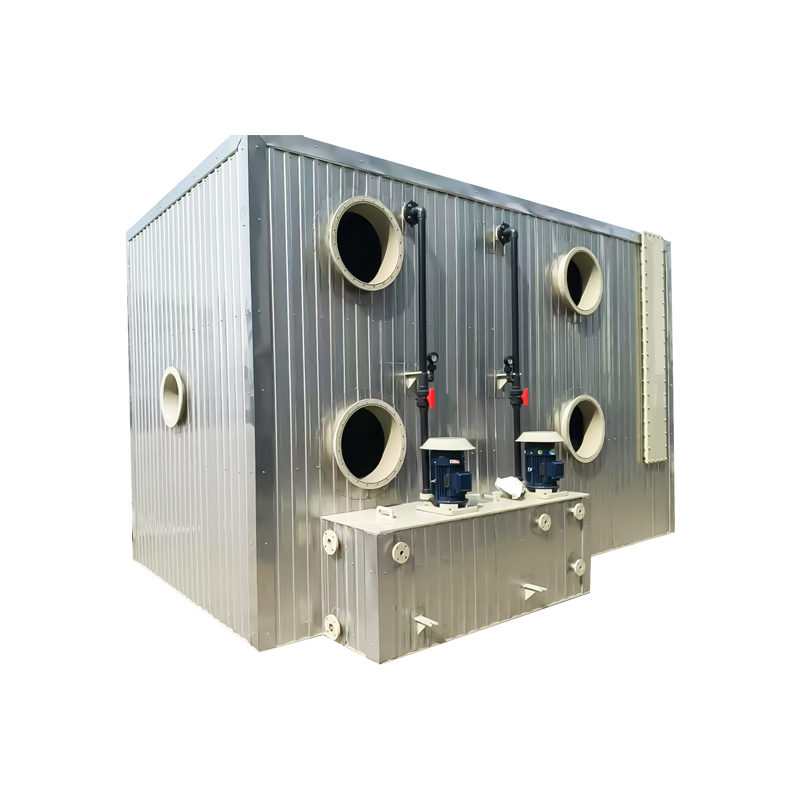
Industrial versions are commonly sold as biological drip filtration deodorizing equipment, with a packed tower, circulation pump, and dosing controls packaged for bolt-together installation.
 Wholesale Biological Drip Filtration Deodorizing Equipment Suppliers, Exporter, Hangzhou Lvran Environmental Protection Group Co., Ltd. Is China Wholesale Biological Drip Filtration Deodorizing Equipment Suppliers, Ex...View Product →
Bioscrubbers separate absorption from biological regeneration. The polluted air first contacts a scrubbing liquid in an absorption column, and the liquid, now enriched with pollutants, is fed to an aerated bioreactor where the microorganisms degrade them. This two-stage design performs best at higher pollutant concentrations and where water chemistry must be carefully controlled.
The table below summarizes the differences that matter when selecting biological treatment equipment.
| Parameter | Biofilter | Biotrickling filter | Bioscrubber |
|---|---|---|---|
| Media type | Organic (compost, bark) | Synthetic packing | Not required; liquid phase |
| Empty bed residence time | 30-90 seconds | 15-60 seconds | Depends on absorption step |
| Water recirculation | Humidification only | Continuous, with nutrients | Continuous, with bioreactor |
| Best suited for | High air flow, low concentration | Steady or variable H2S and VOC loads | Higher concentration, controlled water chemistry |
| Pressure drop | Low to medium | Medium | Medium to high |
| Operating complexity | Lowest | Moderate | Highest |
Biological treatment equipment is not a plug-and-play black box. Four parameters determine whether the system will meet the required removal efficiency over its operating life.
Upsets matter more than construction cost. A sudden spike of high-concentration solvent, a dry bed, or an extended shutdown can reduce biomass activity for days. Reliable operation requires a fan with stable airflow, a humidification system that cannot fail silently, and a monitoring plan that tracks pressure drop and outlet concentration.
Biological systems are the first choice when the air stream contains low concentrations of biodegradable pollutants at high flow rates and the operation is reasonably continuous.
If the inlet concentration exceeds roughly 5 grams per cubic meter, if the waste gas contains chlorinated compounds that are hard to degrade, or if the process runs only a few hours per week, thermal oxidation, catalytic combustion, or chemical scrubbing may be more reliable. The decision should be based on the full load profile, not on the average concentration. Guidance on configuring the overall treatment train is available in this odor and organic waste gas treatment design guide.
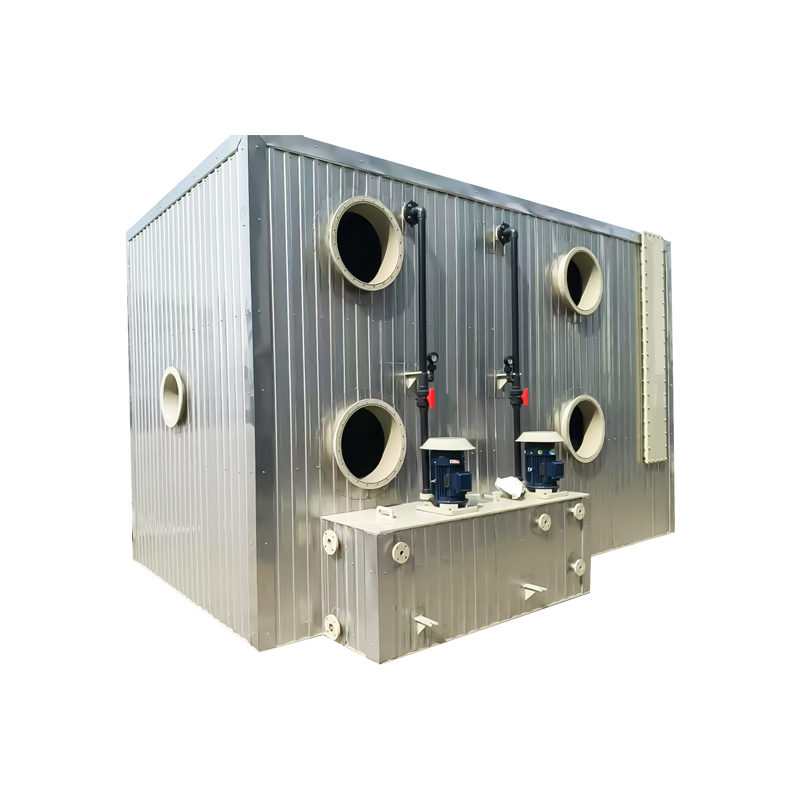
Selection of biological treatment equipment is a purchasing decision, but it is also an engineering decision. The corrosive, humid environment around a biofilter demands careful material selection. FRP and PP housings resist the acidic condensate that forms when hydrogen sulfide is oxidized; stainless steel is appropriate for higher temperatures or structural load-bearing parts. For example, an FRP biological deodorization filter resists the pitting and coating failure that can shorten the life of carbon steel equipment in wet acid-service applications.
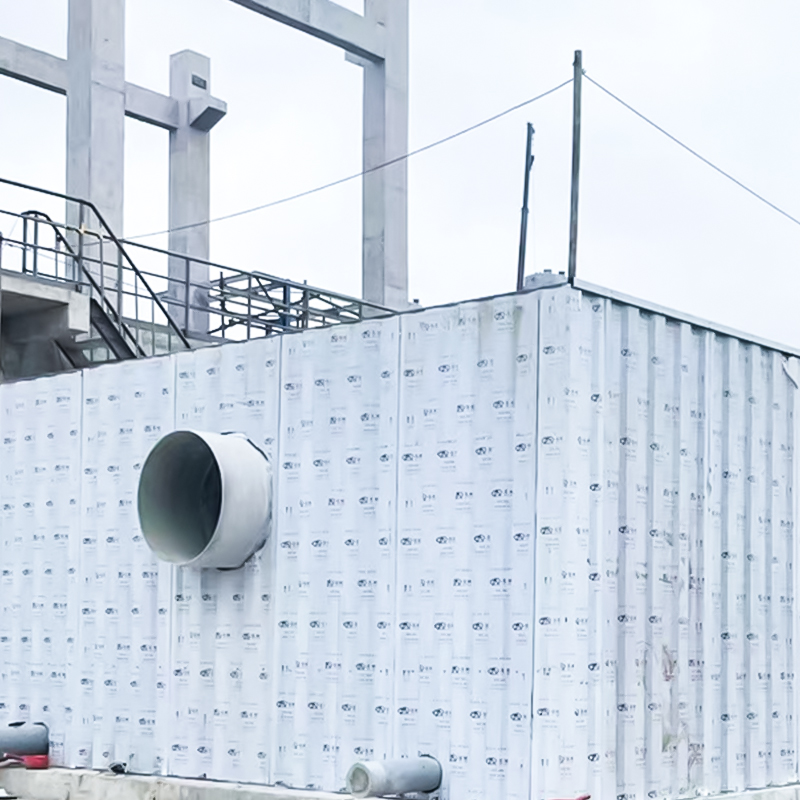 Wholesale FRP biological deodorization filter Suppliers, Exporter, CompanyHangzhou Lvran Environmental Protection Group Co., Ltd. Is China Wholesale FRP biological deodorization filter Suppliers, Exporter, Compa...View Product →
Before committing to a system, compare the full exhaust gas treatment train, not just the biofilter vessel. The fan, ducting, and upstream dust removal affect biological performance more than the biological equipment itself. A poorly designed inlet can carry aerosols or dust that clog the media, so a complete system approach is necessary.
Looking for a supplier that can deliver more than a single vessel is worthwhile. A manufacturer that also builds fans, ducts, and wet scrubbers can supply a complete, engineered system and take responsibility for the interaction between components. The available range of exhaust gas treatment systems and methods explains how the different stages are matched in practice.
Biological treatment equipment is no longer a niche technology. For industrial odor control and low-concentration VOC abatement, it is often the most reliable and least expensive option over a ten-year life cycle. The key is to treat it as a process system: define the load profile, select the right configuration, specify corrosion-resistant materials, and give the microbiology the moisture, nutrients, and stable conditions it needs.
If you are evaluating an odor complaint, planning a new production line, or replacing a chemical scrubber with high operating costs, the fastest way to a defensible decision is to review your actual emissions data and compare a biological solution with the alternatives. Our engineering team can help you request a site-specific biological treatment assessment and match the equipment to your airflow, pollutant profile, and compliance deadline.
Request for a call today