English
 русский
 عربى
 中文简体
Chemical Plant Equipment: How to Select Scrubbers, Adsorbers, and Fans That Last
HOME / NEWS / Industry News / Chemical Plant Equipment: How to Select Scrubbers, Adsorbers, and Fans That Last

Content
An EHS manager at a fine chemical plant called us after the third exhaust fan motor failed in twelve months. The plant had replaced the motor each time, but no one had questioned the carbon steel impeller in a chloride-laden vent stream. Within weeks of startup, pitting and vibration reappeared. That story is common in the chemical process industry. The real lesson is that chemical plant equipment is only reliable when every component—scrubber, adsorber, fan, duct, and control—is matched to the actual gas profile and operating conditions.
Before selecting a specific machine, write down what the exhaust stream actually contains. Chemical plant exhaust is not one homogeneous flow. Reactor vents can carry acid gas, storage tank breathers release solvent vapors, drying operations produce dust and humidity, and wastewater areas generate odorous sulfur compounds. Each of these conditions points to a different equipment family.
| Gas stream | Typical contaminants | Equipment family |
|---|---|---|
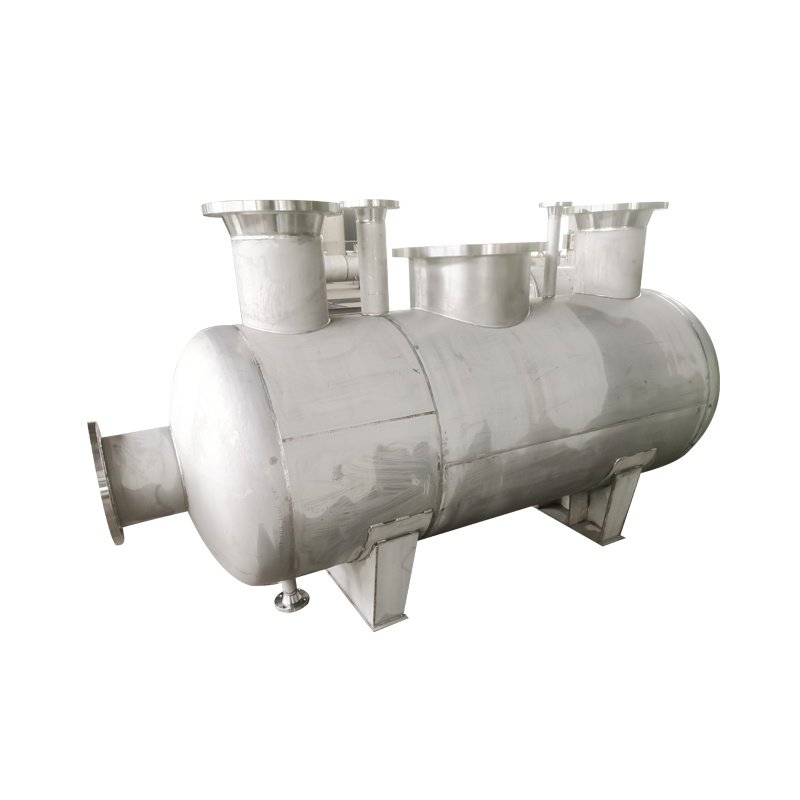
| Acid/alkali exhaust | HCl, H2SO4, NOx, NaOH mist | Spray towers, packed scrubbers, horizontal washers |
| Organic vapor / VOCs | Toluene, acetone, ethyl acetate, styrene | Activated carbon adsorbers, catalytic combustion, condensation |
| Odor | Ammonia, H2S, mercaptans, organic amines | Biological deodorizers, chemical scrubbers, UV/plasma |
| Dust-bearing exhaust | Resin dust, metal fines, catalyst powder | Bag filters, cartridge collectors, wet dust collectors |
Use the table as a screening tool, not as a final specification. A spray tower cannot remove solvent vapor, and an activated carbon bed is not designed for acid mist. The fastest way to overpay for chemical plant equipment is to choose a generic unit before the contaminant list is fixed.
For the same process, you can choose PP, PPH, PVC, FRP, carbon steel, 304 stainless steel, or 316L stainless steel. The right choice depends on the pollutant, concentration, temperature, and whether the stream is wet or dry. HCl scrubbing at moderate temperature is commonly handled in PP or FRP because these materials resist chloride attack and keep fabrication costs reasonable. If the gas enters hot, or contains abrasive droplets, a 304 or 316L stainless tower may be more durable. Carbon steel is usually the wrong default for corrosive exhaust, even when the initial quotation is attractive.
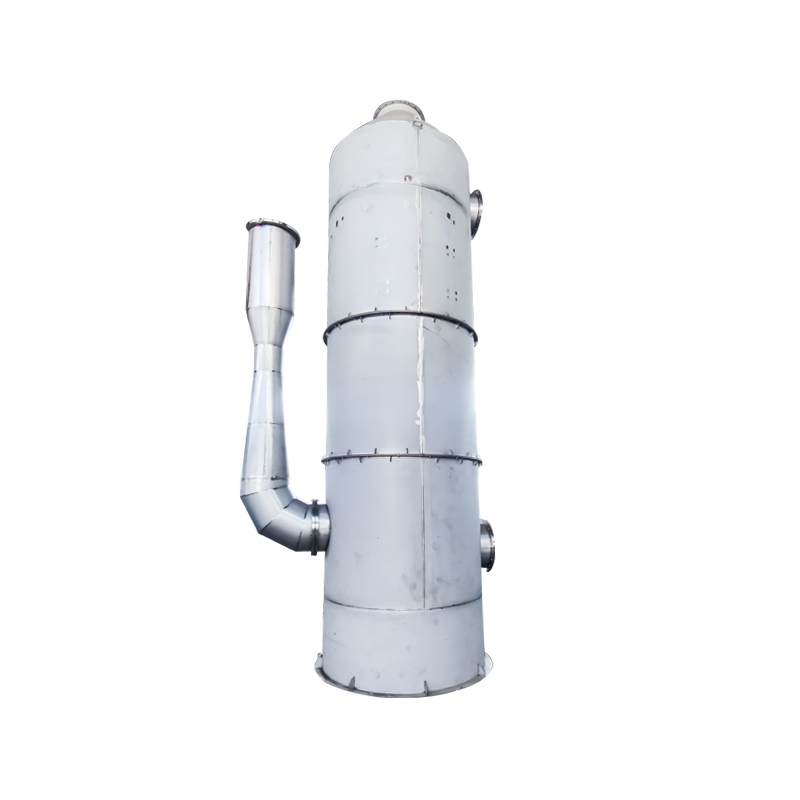
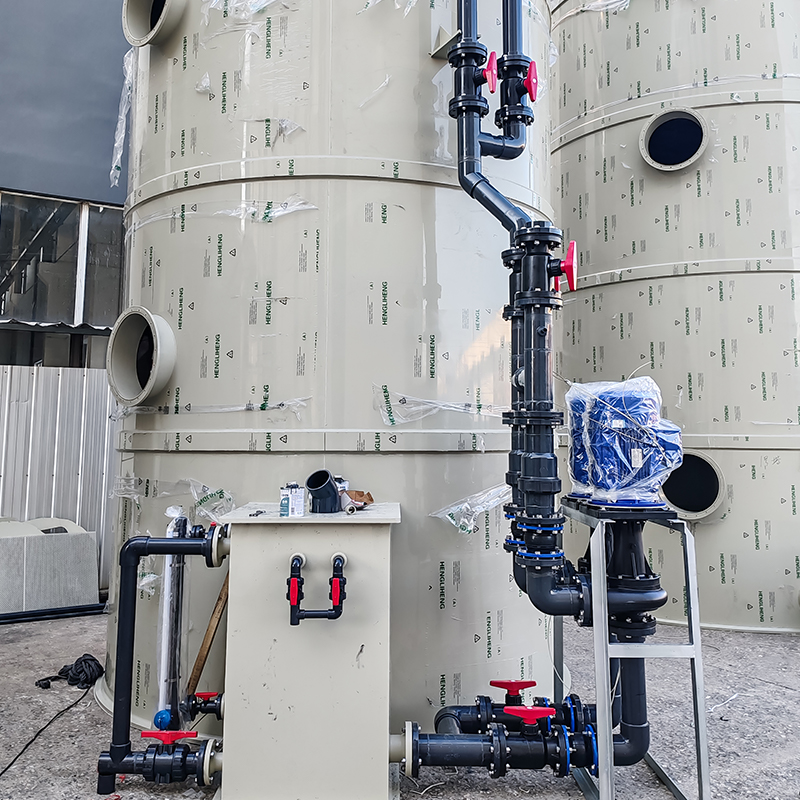 PP Spray Tower for Acidic Exhaust Gas TreatmentCheck this polypropylene spray tower if your process emits acidic gases like HCl at moderate temperatures. It uses atomized liquid for gas-liquid contact, and material choice, tower height, and nozzle coverage determine its removal efficiency.View Product →
Check the manufacturer's material specification against trace components, not just the main pollutant. A small amount of sulfuric acid mist creates a different corrosion environment than pure HCl gas. Also compare the design margin for temperature and pressure drop. Physical dimensions and inlet positions matter too; a packed tower needs enough height for gas-liquid contact, and a spray tower needs the right nozzle coverage. These details determine whether the unit meets the promised removal efficiency.
For organic vapor and odor control, the concentration and flow rate decide whether activated carbon adsorption, catalytic combustion, biological treatment, or a combination is the best fit. Activated carbon adsorption is often the first choice for low-to-moderate VOC loads at near-ambient temperature, especially when the plant can accept media replacement or regeneration. It is simple, predictable, and easy to integrate into an existing vent system.
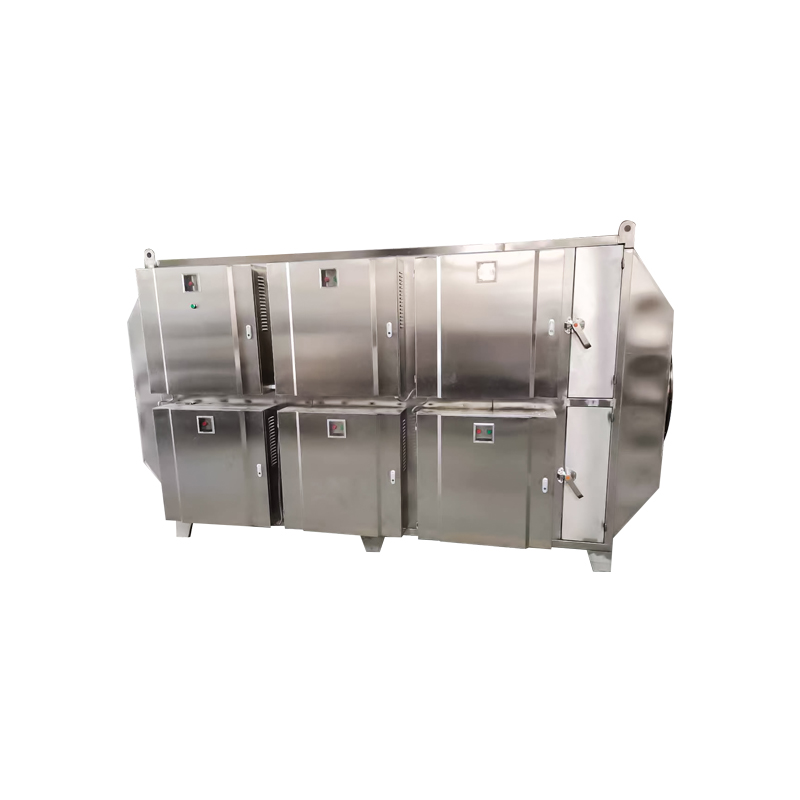
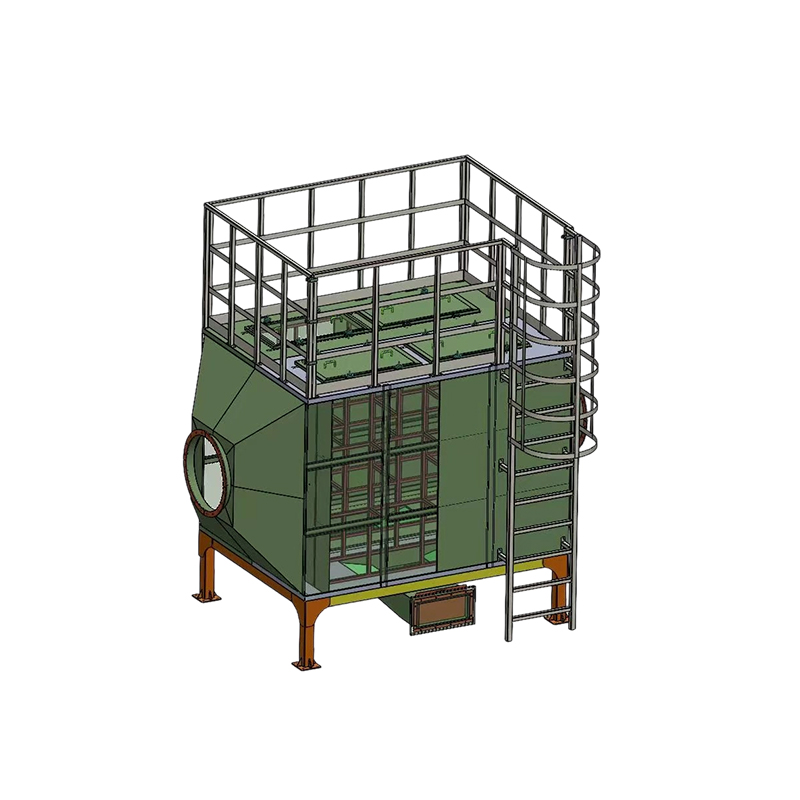
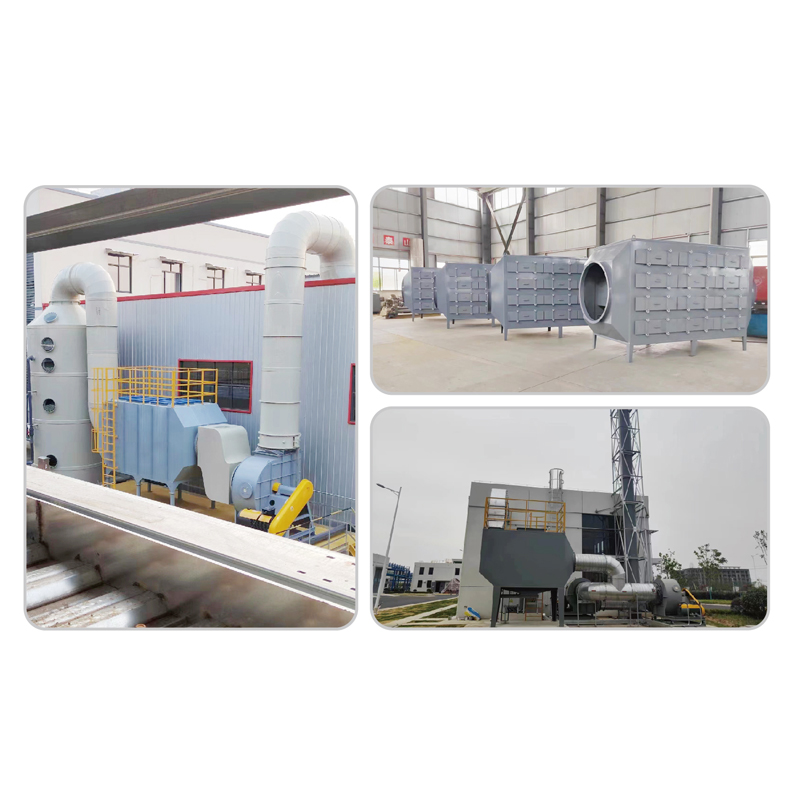 Activated Carbon Adsorption Unit for VOC ControlConsider this activated carbon adsorber for low-to-moderate VOC loads at near-ambient temperature. It works by adsorbing pollutants onto porous carbon surfaces and is simple to integrate into existing vent systems, though media replacement or regeneration is needed.View Product →
If the VOC load is high and continuous, catalytic combustion can destroy pollutants at a lower temperature than thermal oxidizers, reducing fuel cost. For large air volumes with low odor concentrations, biological deodorization is worth evaluating because the operating cost is mainly electricity and media maintenance. The decision should also consider whether the gas contains particulate or condensable material that could blind the carbon bed or poison a catalyst. In many chemical plants, a pre-filter or a quench stage is what makes the main unit work.
Chemical processes that produce dust—drying, blending, packaging, grinding, and catalyst handling—need collectors selected on particle size, loading, and safety. Bag filters and cartridge collectors are the common workhorses for dry dust. A pulse-jet bag filter handles high dust loads with automatic cleaning and is often specified for large process flows. A cartridge collector offers a larger filtration area in a compact footprint and can achieve very low emission levels for fine powders. Wet dust collectors are preferred when the dust is hygroscopic, soluble, or potentially explosive.
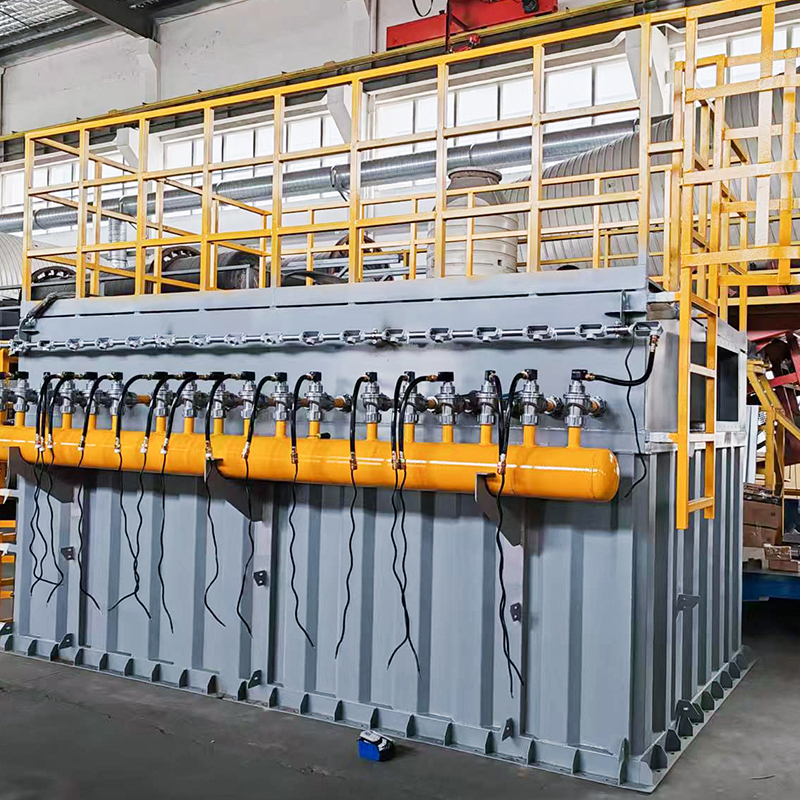 Pulse-Jet Baghouse Dust Collector for Dry DustThis baghouse is suited for fine, dry dust streams in chemical, mining, and industrial processes. Pay attention to the air-to-cloth ratio and dust explosivity requirements, as these affect differential pressure, fan capacity, and overall safety design.View Product →
Watch the air-to-cloth ratio. An undersized filter can look economical until the differential pressure rises and the fan cannot deliver enough capture velocity. Dust explosivity is another non-negotiable issue. Fine organic powders may require explosion venting, isolation valves, or spark-resistant construction. These requirements affect equipment cost, layout, and safety approval, so they should be part of the tender specification from the start.
A scrubber or adsorber is only as reliable as the fan and ductwork moving gas through it. Many chemical plant equipment failures trace back to a fan whose material, static pressure, or speed margin was never reviewed. Corrosive fumes can attack seals, bearings, and impellers quickly, so fan materials should follow the same corrosion logic as the treatment vessel. See our anti-corrosion fan material selection guide for a practical comparison of FRP, PP, and stainless steel fan options.
Ductwork deserves the same attention. A bad weld in FRP ducting can leak corrosive gas into a walkway. Missing drains can create liquid pooling that accelerates corrosion. Piping supports need to account for thermal expansion and vibration. An automatic dosing system can keep pH and oxidant levels stable in a chemical scrubber, preventing breakthrough during high-load shifts. These parts are not optional accessories; they are what make a treatment system run continuously.
Buying on invoice price alone is the most expensive habit in this industry. A lower-cost unit may use thinner walls, a smaller fan, or a less corrosion-resistant resin. Ask the supplier for the design basis in writing. At minimum, include these items in the technical review:
If the supplier cannot provide or explain these numbers, the proposal is incomplete. Installation quality also matters. A packed scrubber that is not level, or a duct system with no condensate drainage, will underperform no matter how good the internals are. A manufacturer that can handle design, fabrication, installation, and after-sales service from one interface is easier to hold accountable when a system problem appears.
Chemical plant equipment performs best when it is selected from a defined gas profile, realistic material compatibility, and a complete system view. Start with the contaminant list, choose the abatement process, then review fans, ductwork, controls, and maintenance access. If you are planning a new exhaust-gas project or troubleshooting an existing one, contact our engineering team with your process conditions and layout. The time spent defining the actual duty is never wasted; it is the difference between a system that barely passes startup and one that runs for years.
Request for a call today